Knowledge What is the primary function of a vacuum freeze dryer in PAA-HCl synthesis? Preserve Purity and Porosity
Author avatar

Tech Team · Kintek Solution

Updated 3 weeks ago

What is the primary function of a vacuum freeze dryer in PAA-HCl synthesis? Preserve Purity and Porosity


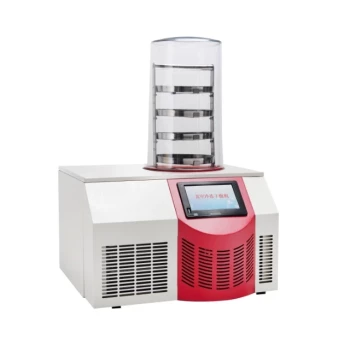
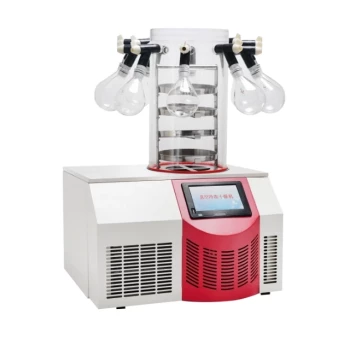
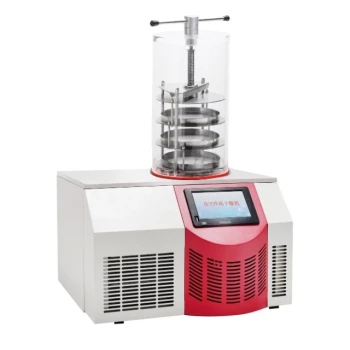
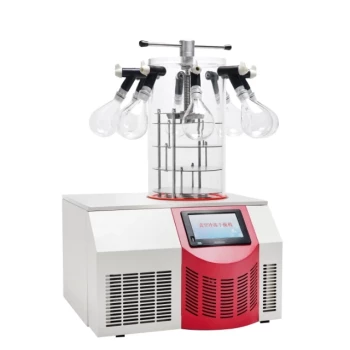
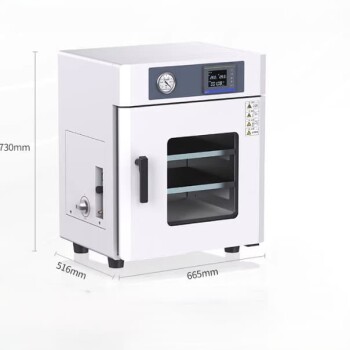
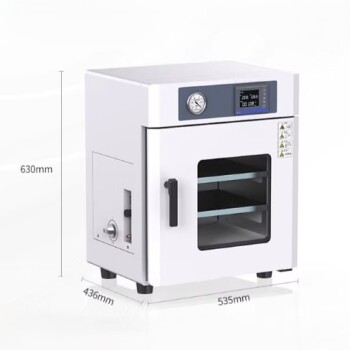
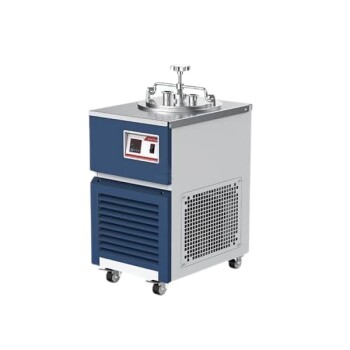
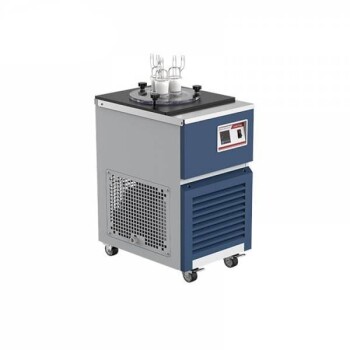
The primary function of a vacuum freeze dryer in the synthesis of Poly(allylamine hydrochloride) (PAA-HCl) dopants is to isolate pure, porous solid products directly from a solution.

This apparatus achieves separation by sublimating frozen solvents under controlled low-temperature and low-pressure conditions. Unlike traditional drying methods, it removes the solvent without passing through the liquid phase, effectively bypassing the risks associated with heat.

Core Insight: Vacuum freeze drying is not merely a separation technique; it is a preservation strategy. By avoiding high-temperature evaporation, the process prevents thermal decomposition and structural damage, ensuring the PAA-HCl retains the chemical stability and activity required for effective electrolyte doping.

The Mechanics of Material Preservation

The Sublimation Process

The vacuum freeze dryer operates on the principle of sublimation. It transitions the frozen solvent directly from a solid state to a gas state.

This occurs in a vacuum environment where the pressure is lowered below the triple point of the solvent. This ensures the material is never subjected to the stress of liquid evaporation or boiling.

Creating a Porous Architecture

When the solvent sublimates, it leaves behind the solid polymer structure. This results in a highly porous solid product rather than a dense, collapsed cake.

This porosity is often critical for the material's subsequent application as a dopant, as it enhances the surface area available for interaction.

Why Heat Avoidance is Critical

Preventing Thermal Decomposition

PAA-HCl is an organic polymer susceptible to degradation when exposed to high heat. Standard drying ovens utilize thermal energy that can break chemical bonds or alter the molecular weight of the polymer.

By maintaining low temperatures throughout the isolation process, the freeze dryer ensures the molecular structure of the PAA-HCl remains intact.

Maintaining Chemical Activity

For a material to function effectively as an electrolyte dopant, its chemical activity must be preserved. High temperatures can render the dopant inert or reduce its efficiency.

Freeze drying "locks in" the chemical properties of the synthesized material, ensuring reliable performance in the final application.

Understanding the Trade-offs

Time and Energy Intensity

While vacuum freeze drying offers superior material quality, it is generally slower and more energy-intensive than rotary evaporation or oven drying.

The process requires significant time to freeze the sample and slowly sublimate the solvent under vacuum.

Suitability for Scale

This method is ideal for high-value, heat-sensitive materials where purity is paramount. However, for materials that are thermally robust, the cost and time associated with freeze drying may not be justifiable.

Making the Right Choice for Your Goal

When synthesizing PAA-HCl dopants, the choice of drying method dictates the quality of the final electrolyte.

  • If your primary focus is Chemical Stability: Use vacuum freeze drying to completely avoid thermal decomposition and preserve the polymer's active sites.
  • If your primary focus is Material Structure: Rely on the sublimation process to create a porous solid that facilitates better integration as a dopant.

By prioritizing low-temperature processing, you ensure the synthesized PAA-HCl meets the rigorous standards required for high-performance electrochemical applications.

Summary Table:

Feature Vacuum Freeze Drying Traditional Oven Drying
Mechanism Sublimation (Solid to Gas) Evaporation (Liquid to Gas)
Temperature Controlled Low Temperature High Temperature
Material Structure Highly Porous & Stable Dense or Collapsed
Chemical Integrity Preserved (No Decomposition) Risk of Thermal Degradation
Primary Benefit Ideal for Heat-Sensitive Polymers Faster & More Energy Efficient

Elevate Your Material Synthesis with KINTEK Precision

Are you working with heat-sensitive polymers like PAA-HCl or developing next-generation electrolyte dopants? At KINTEK, we specialize in high-performance laboratory solutions designed to preserve the integrity of your research. From advanced vacuum freeze dryers and cold traps to high-temperature furnaces, autoclaves, and battery research tools, our equipment ensures your materials maintain their chemical activity and structural porosity.

Why choose KINTEK?

  • Comprehensive Portfolio: Including rotary furnaces, vacuum systems, and specialized crushing/milling equipment.
  • Advanced Research Support: High-quality electrolytic cells, electrodes, and consumables for electrochemical excellence.
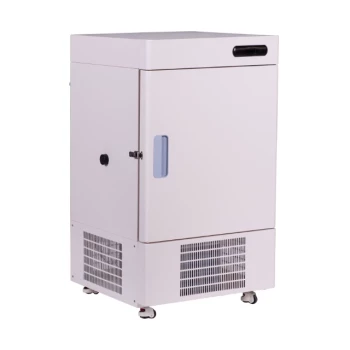
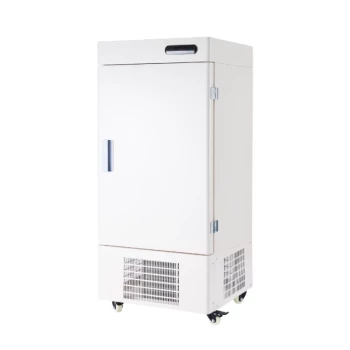
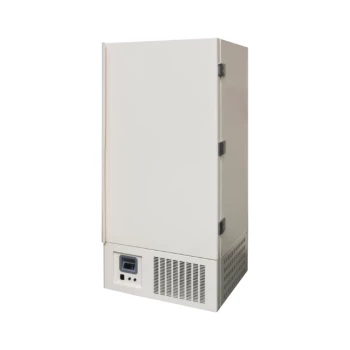
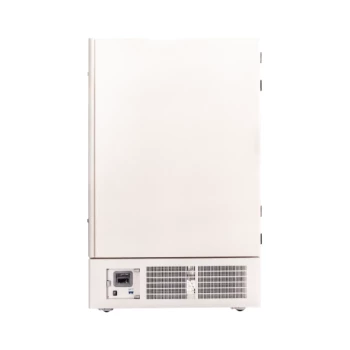
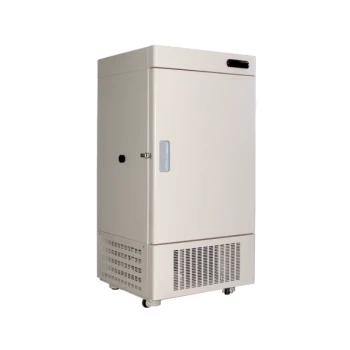
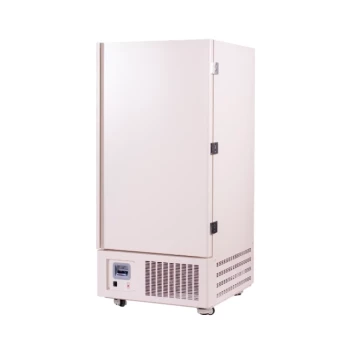
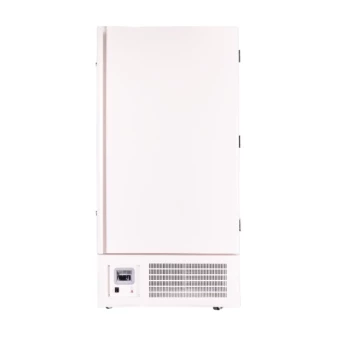
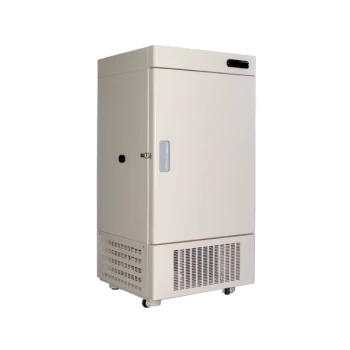
  • Reliability: Precision cooling solutions (ULT freezers) and robust hydraulic presses for material preparation.

Don't compromise on the quality of your dopants. Contact us today to find the perfect freeze dryer for your lab!

Related Products

People Also Ask

Related Products

High Performance Laboratory Freeze Dryer for Research and Development

High Performance Laboratory Freeze Dryer for Research and Development

Advanced laboratory freeze dryer for lyophilization, preserving sensitive samples with precision. Ideal for biopharmaceuticals, research & food industries.

Benchtop Laboratory Vacuum Freeze Dryer

Benchtop Laboratory Vacuum Freeze Dryer

Benchtop laboratory freeze dryer for efficient lyophilization of biological, pharmaceutical, and food samples. Features intuitive touchscreen, high-performance refrigeration, and durable design. Preserve sample integrity—consult now!

Benchtop Laboratory Freeze Dryer for Lab Use

Benchtop Laboratory Freeze Dryer for Lab Use

Premium benchtop laboratory freeze dryer for lyophilization, preserving samples with ≤ -60°C cooling. Ideal for pharmaceuticals & research.

Portable Digital Display Automatic Laboratory Sterilizer Lab Autoclave for Sterilization Pressure

Portable Digital Display Automatic Laboratory Sterilizer Lab Autoclave for Sterilization Pressure

Portable autoclave sterilization pressure is a device that uses pressure saturated steam to quickly and effectively sterilize items.

Laboratory Sterilizer Lab Autoclave Vertical Pressure Steam Sterilizer for Liquid Crystal Display Automatic Type

Laboratory Sterilizer Lab Autoclave Vertical Pressure Steam Sterilizer for Liquid Crystal Display Automatic Type

Liquid crystal display automatic vertical sterilizer is a safe, reliable and automatic control sterilization equipment, which is composed of heating system, microcomputer control system and overheating and overvoltage protection system.

Laboratory Sterilizer Lab Autoclave Pulse Vacuum Lifting Sterilizer

Laboratory Sterilizer Lab Autoclave Pulse Vacuum Lifting Sterilizer

The pulse vacuum lifting sterilizer is a state-of-the-art equipment for efficient and precise sterilization. It uses pulsating vacuum technology, customizable cycles, and a user-friendly design for easy operation and safety.

Desktop Fast Laboratory Autoclave Sterilizer 20L 24L for Lab Use

Desktop Fast Laboratory Autoclave Sterilizer 20L 24L for Lab Use

The desktop fast steam sterilizer is a compact and reliable device used for rapid sterilization of medical, pharmaceutical, and research items.

Laboratory High Pressure Steam Sterilizer Vertical Autoclave for Lab Department

Laboratory High Pressure Steam Sterilizer Vertical Autoclave for Lab Department

Vertical pressure steam sterilizer is a kind of sterilization equipment with automatic control, which is composed of heating system, microcomputer control system and overheating and overpressure protection system.

Portable High Pressure Laboratory Autoclave Steam Sterilizer for Lab Use

Portable High Pressure Laboratory Autoclave Steam Sterilizer for Lab Use

Portable autoclave sterilization pressure is a device that uses pressure saturated steam to quickly and effectively sterilize items.

Laboratory Horizontal Autoclave Steam Sterilizer Lab Microcomputer Sterilizer

Laboratory Horizontal Autoclave Steam Sterilizer Lab Microcomputer Sterilizer

The horizontal autoclave steam sterilizer adopts the method of gravity displacement to remove the cold air in the inner chamber, so that the content of steam cold air in the inner chamber is less, and the sterilization is more reliable.

Low-Temperature Water-Cooled Touchscreen Vibratory Ultrafine Pulverizer

Low-Temperature Water-Cooled Touchscreen Vibratory Ultrafine Pulverizer

Low-temperature water-cooled vibratory pulverizer for ultrafine grinding. Preserves material integrity. Ideal for labs and production. Learn more.

Lab Sterile Slapping Type Homogenizer for Tissue Mashing and Dispersing

Lab Sterile Slapping Type Homogenizer for Tissue Mashing and Dispersing

The slapping sterile homogenizer can effectively separate the particles contained in and on the surface of solid samples, ensuring that the mixed samples in the sterile bag are fully representative.

lab cryogenic grinding use liquid-nitrogen for pulverizing plastic raw materials and heat sensitive materials

lab cryogenic grinding use liquid-nitrogen for pulverizing plastic raw materials and heat sensitive materials

Discover the KT-CG01 Liquid Nitrogen Cryogenic Pulverizer, Ideal for Plastic and Heat-Sensitive Material Pulverization, Preserving Material Integrity and Delivering Ultra-Fine Results.

VHP Sterilization Equipment Hydrogen Peroxide H2O2 Space Sterilizer

VHP Sterilization Equipment Hydrogen Peroxide H2O2 Space Sterilizer

A hydrogen peroxide space sterilizer is a device that uses vaporized hydrogen peroxide to decontaminate enclosed spaces. It kills microorganisms by damaging their cellular components and genetic material.

Cold Isostatic Pressing Machine CIP for Small Workpiece Production 400Mpa

Cold Isostatic Pressing Machine CIP for Small Workpiece Production 400Mpa

Produce uniformly high-density materials with our Cold Isostatic Press. Ideal for compacting small workpieces in production settings. Widely used in powder metallurgy, ceramics, and biopharmaceutical fields for high-pressure sterilization and protein activation.

Laboratory Test Sieves and Vibratory Sieve Shaker Machine

Laboratory Test Sieves and Vibratory Sieve Shaker Machine

Efficiently process powders, granules, and small blocks with a high-frequency vibration sieve. Control vibration frequency, screen continuously or intermittently, and achieve accurate particle size determination, separation, and classification.

Automatic Lab Cold Isostatic Press CIP Machine Cold Isostatic Pressing

Automatic Lab Cold Isostatic Press CIP Machine Cold Isostatic Pressing

Efficiently prepare samples with our Automatic Lab Cold Isostatic Press. Widely used in material research, pharmacy, and electronic industries. Provides greater flexibility and control compared to electric CIPs.

High Shear Homogenizer for Pharmaceutical and Cosmetic Applications

High Shear Homogenizer for Pharmaceutical and Cosmetic Applications

Enhance lab efficiency with our high-speed Laboratory Emulsifier Homogenizer for precise, stable sample processing. Ideal for pharmaceuticals & cosmetics.

Rubber Vulcanizer Vulcanizing Machine Plate Vulcanizing Press for Lab

Rubber Vulcanizer Vulcanizing Machine Plate Vulcanizing Press for Lab

The Plate vulcanizing press is a kind of equipment used in the production of rubber products, mainly used for the vulcanization of rubber products. Vulcanization is a key step in rubber processing.

XRF & KBR steel ring lab Powder Pellet Pressing Mold for FTIR

XRF & KBR steel ring lab Powder Pellet Pressing Mold for FTIR

Produce perfect XRF samples with our steel ring lab powder pellet pressing mold. Fast tableting speed and customizable sizes for accurate molding every time.


Leave Your Message