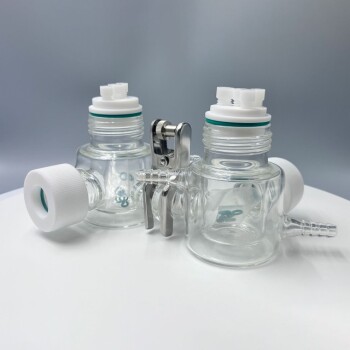
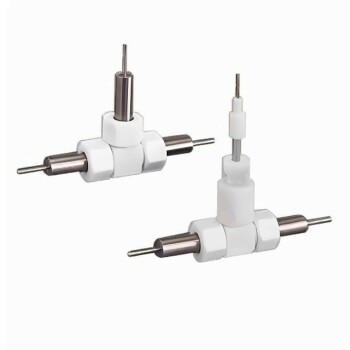
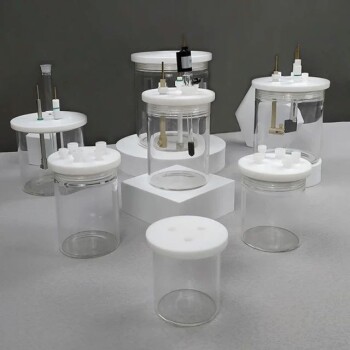
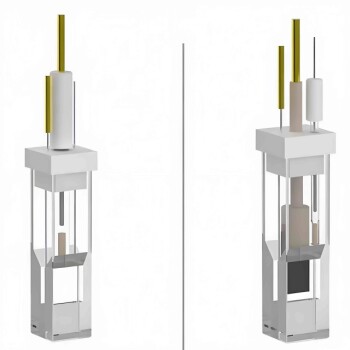
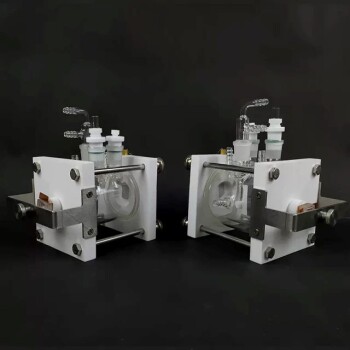
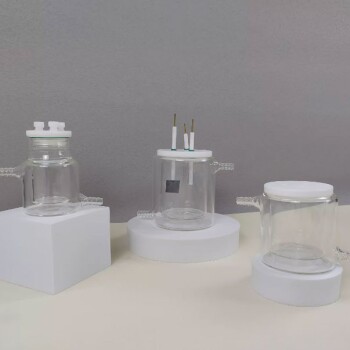
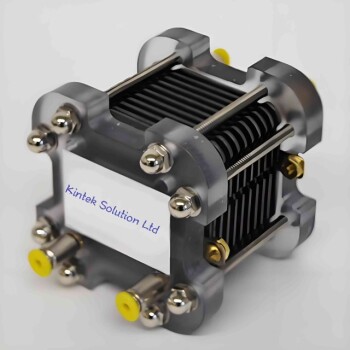
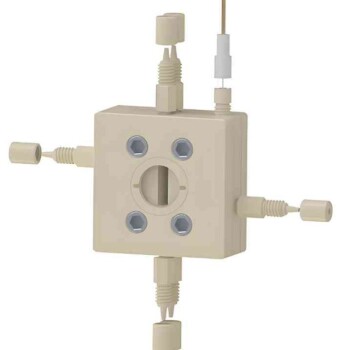
The primary role of high-precision electrochemical cells is to accurately simulate physiological environments to evaluate the durability and safety of porous nickel-titanium (NiTi) alloys. By conducting polarization curve tests within a phosphate-buffered solution, these cells provide the data necessary to determine the material's anodic behavior and corrosion resistance, which are the fundamental metrics for verifying biological compatibility.
High-precision cells function as a "biological proxy," using a stable three-electrode system to subject the alloy to controlled electrical stress. The resulting data determines whether a porous NiTi implant can survive the chemical realities of the human body without degrading.
Simulating the Biological Environment
The Role of Phosphate-Buffered Solutions
To predict how an implant will perform inside a patient, you cannot test it in a vacuum or simple water. High-precision cells utilize phosphate-buffered solutions as the testing medium.
This specific solution chemically mimics the pH and ion concentration of human body fluids. It ensures that the chemical reactions observed during testing are comparable to those that would occur in vivo.
Creating a Stable Testing Ground
The "high-precision" aspect of these cells refers to their ability to maintain a strictly controlled environment.
By isolating the porous NiTi alloy in this stable setup, researchers can attribute any degradation directly to the material's properties rather than environmental fluctuations.
The Mechanics of the Investigation
The Three-Electrode System
Reliable electrochemical data relies on a stable reference point. These cells employ a three-electrode system to achieve this.
This configuration separates the current-carrying function from the potential-measuring function. This separation is vital for obtaining noise-free data, especially when dealing with the complex surface area of porous materials.
Controlling Potential Scanning
The core activity of the cell is potential scanning. The system systematically changes the voltage applied to the NiTi alloy.
This process forces the material into different electrochemical states, effectively accelerating the "aging" process to see how the metal reacts to electrical and chemical stress over time.
Evaluating Material Performance
Analyzing Anodic Behavior
As the potential scan progresses, the cell records the anodic behavior of the alloy.
This data reveals how the NiTi surface reacts when it acts as an anode (the electrode where oxidation occurs). It indicates whether the material will form a protective oxide layer or actively dissolve.
Measuring Corrosion Resistance
The ultimate output of this testing is a quantification of corrosion resistance.
For porous NiTi alloys intended for medical use, high corrosion resistance is non-negotiable. If the cell detects instability or rapid corrosion, the material is deemed biologically incompatible.
Understanding the Trade-offs
Simulation vs. Biological Reality
While these cells are excellent at simulating chemical conditions, they are approximations of the human body, not perfect replicas.
A electrochemical cell cannot fully replicate the mechanical stresses, protein interactions, or cellular responses found in a living organism. It focuses strictly on chemical stability.
Complexity of Porous Geometries
Testing porous materials introduces specific technical challenges regarding current distribution.
Unlike flat surfaces, porous structures have internal surface areas that can be difficult for the electrical current to reach uniformly. High-precision equipment minimizes this error, but data interpretation must always account for the complex geometry of the sample.
Making the Right Choice for Your Goal
When reviewing data from these electrochemical investigations, tailor your focus to your specific objective:
- If your primary focus is Implant Safety: Prioritize the corrosion resistance metrics to ensure the material will not release toxic ions into the body.
- If your primary focus is Material Engineering: Analyze the anodic behavior and polarization curves to understand how surface treatments affect the stability of the oxide layer.
High-precision electrochemical testing is the gatekeeper for medical materials; it translates the complex chemistry of porous NiTi alloys into actionable safety data.
Summary Table:
| Feature | Function in NiTi Investigation | Benefit for Research |
|---|---|---|
| Three-Electrode System | Separates current and potential measurement | Provides noise-free, stable data for porous surfaces |
| Phosphate-Buffered Solution | Mimics human physiological pH and ions | Ensures chemical reactions are comparable to in vivo conditions |
| Potential Scanning | Systematically varies applied voltage | Accelerates aging to test long-term durability |
| Anodic Behavior Analysis | Monitors surface oxidation and dissolution | Determines if a protective oxide layer forms correctly |
| Corrosion Resistance Data | Quantifies material stability | Fundamental metric for verifying biological compatibility |
Advance Your Biomaterial Research with KINTEK
Precise electrochemical data is the bridge between material innovation and patient safety. At KINTEK, we provide the specialized laboratory equipment necessary to simulate complex physiological conditions with absolute accuracy.
Whether you are analyzing the anodic behavior of porous NiTi alloys or conducting high-pressure material synthesis, our comprehensive portfolio—including high-precision electrolytic cells, electrodes, and high-temperature high-pressure reactors—is designed to meet the rigorous demands of medical and metallurgical research.
Ready to elevate your laboratory's testing capabilities? Contact our technical experts today to discover how KINTEK’s precision tools can streamline your path to discovery.
References
- Yu. F. Yasenchuk, V.E. Gunther. Segregation in Porous NiTi Made by SHS in Flow Reactor. DOI: 10.18502/kms.v2i1.793
This article is also based on technical information from Kintek Solution Knowledge Base .
Related Products
- H-Type Double-Layer Optical Electrolytic Electrochemical Cell with Water Bath
- PTFE Electrolytic Cell Electrochemical Cell Corrosion-Resistant Sealed and Non-Sealed
- Super Sealed Electrolytic Electrochemical Cell
- Electrolytic Electrochemical Cell for Coating Evaluation
- Customizable Swagelok Type Test Cells for Advanced Battery Research Electrochemical Analysis
People Also Ask
- What is the overall structure of the H-type double-layer optical water bath electrolytic cell? Precision Design for Controlled Experiments
- How is the electrolyte managed in H-type electrolytic cells for specific reactions? Achieve Precise Control and High Purity
- What checks should be performed on the H-type electrolytic cell before use? Ensure Accurate Electrochemical Data
- What is important regarding temperature control for the H-type electrolytic cell? Ensure Precision and Data Integrity
- What is the overall structure of the H-type electrolytic cell? Understanding Dual-Chamber Electrochemical Designs