Vacuum freeze drying serves as a crucial intermediate step in the preparation of Polycaprolactone (PCL) foam patches to enable the loading of drugs that are poorly soluble in supercritical carbon dioxide ($SC$-$CO_2$). By removing organic solvents through sublimation, this process creates a solid polymer "pre-form" that encapsulates the drug. This prepares the material for subsequent foaming while protecting heat-sensitive active ingredients from thermal degradation.
The primary value of vacuum freeze drying in this context is its ability to decouple drug loading from the foaming process. It creates a solvent-free, solid precursor that allows drugs with low $SC$-$CO_2$ solubility to be successfully incorporated into PCL foams without compromising their biological activity.
Overcoming Solubility and Stability Challenges
Addressing Low Solubility in $SC$-$CO_2$
Supercritical carbon dioxide foaming is a powerful technique for creating porous polymers, but it has a significant limitation: many pharmaceutical drugs do not dissolve readily in $SC$-$CO_2$.
If a drug cannot dissolve in the foaming agent, it cannot be evenly distributed throughout the polymer matrix during the foaming process alone.
Creating the Polymer Pre-form
To solve this, the drug is first dissolved in a suitable organic solvent along with the PCL to create a homogeneous solution.
Vacuum freeze drying is then applied to this mixture. This effectively locks the drug into the polymer structure before the foaming stage begins, creating a solid precursor known as a pre-form.
The Mechanism of Solvent Removal
Removal via Sublimation
Unlike traditional drying methods that use heat to evaporate liquid solvents, vacuum freeze drying removes solvents through sublimation.
This means the solvent transitions directly from a solid (frozen) state to a gas, bypassing the liquid phase entirely.
Protecting Heat-Sensitive Drugs
Because sublimation occurs at low temperatures, the active pharmaceutical ingredients are never exposed to high heat.
This is vital for maintaining the bioactivity and efficacy of heat-sensitive drugs, which might otherwise degrade during standard thermal processing.
Understanding the Trade-offs
Increased Process Complexity
While effective, introducing vacuum freeze drying transforms the fabrication into a multi-stage process.
It requires preparing a solution, freezing it, drying it under vacuum, and then subjecting the resulting solid to supercritical $CO_2$ saturation. This is more time-consuming than direct foaming methods.
Solvent Selection Constraints
The success of this method relies heavily on the initial choice of organic solvent.
The solvent must be capable of dissolving both the PCL and the specific drug, while also being volatile enough to be completely removed via sublimation during the freeze-drying cycle.
Making the Right Choice for Your Goal
When designing a fabrication protocol for drug-loaded PCL foams, consider the specific properties of your active ingredient:
- If your primary focus is preserving biological activity: Utilize vacuum freeze drying to avoid thermal stress on heat-sensitive proteins or enzymes.
- If your primary focus is loading hydrophilic or polar drugs: Rely on this method to entrap drugs that are incompatible with non-polar supercritical carbon dioxide.
By using vacuum freeze drying to create a stable pre-form, you ensure that even difficult-to-process drugs can be effectively delivered through a high-quality PCL foam matrix.
Summary Table:
| Feature | Vacuum Freeze Drying Benefit |
|---|---|
| Drug Incorporation | Enables loading of drugs poorly soluble in $SC$-$CO_2$ |
| Temperature Control | Low-temperature sublimation prevents thermal degradation |
| Matrix Formation | Creates a stable solid polymer "pre-form" for foaming |
| Bioactivity | Preserves the efficacy of heat-sensitive active ingredients |
| Process Role | Decouples drug loading from the final foaming stage |
Elevate Your Pharmaceutical Research with KINTEK
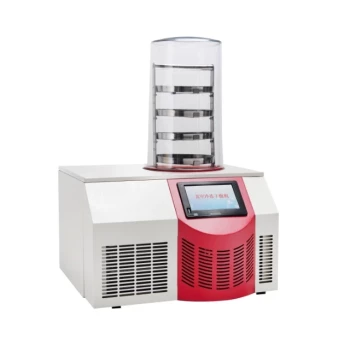
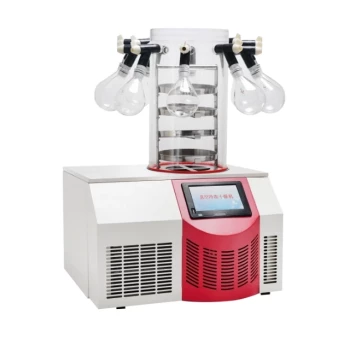
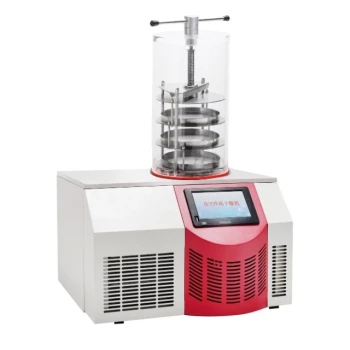
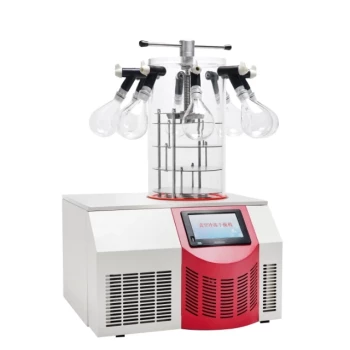
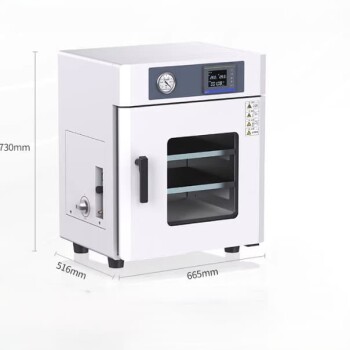
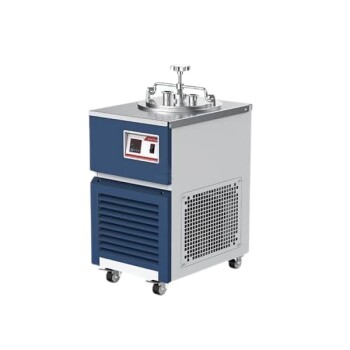
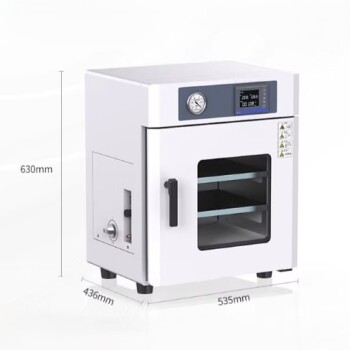
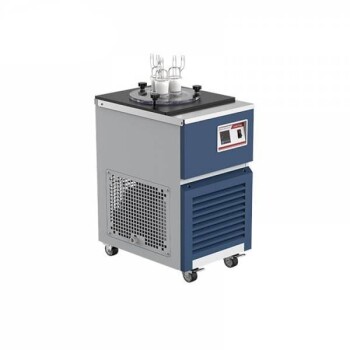
Are you developing advanced drug delivery systems like PCL foam patches? KINTEK specializes in high-precision laboratory equipment designed to meet the rigorous demands of material science and pharmacology. From our advanced freeze dryers (lyophilizers) that ensure the bioactivity of heat-sensitive ingredients to our supercritical $CO_2$ systems and homogenizers, we provide the tools you need for consistent, high-quality results.
Our comprehensive portfolio includes:
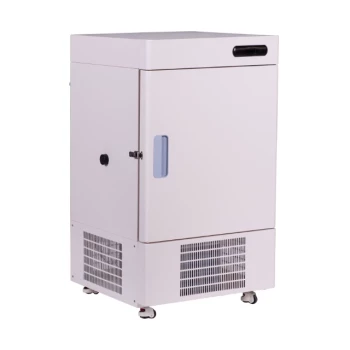
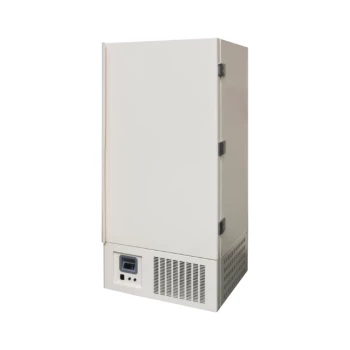
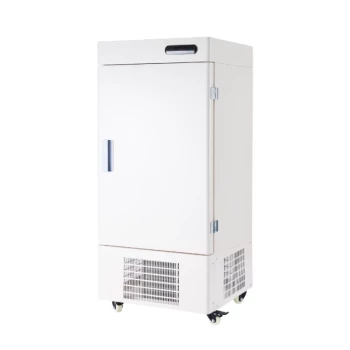
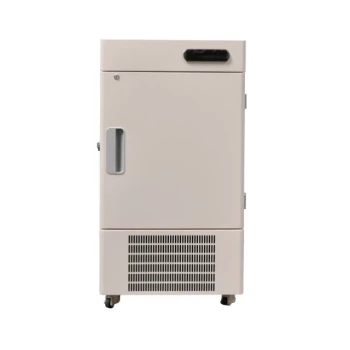
- Cooling Solutions: High-performance freeze dryers, cold traps, and ULT freezers.
- Processing Equipment: Crushing systems, milling tools, and hydraulic presses.
- Lab Essentials: Specialized ceramics, crucibles, and PTFE products.
Ready to optimize your fabrication protocol? Contact KINTEK today to discover how our expertise and equipment can streamline your research and production workflows!
References
- Yujin Zhou, Mengdong Zhang. Technical development and application of supercritical CO2 foaming technology in PCL foam production. DOI: 10.1038/s41598-024-57545-6
This article is also based on technical information from Kintek Solution Knowledge Base .
Related Products
- Benchtop Laboratory Vacuum Freeze Dryer
- High Performance Laboratory Freeze Dryer
- High Performance Laboratory Freeze Dryer for Research and Development
- Benchtop Laboratory Freeze Dryer for Lab Use
- Vacuum Cold Mounting Machine for Sample Preparation
People Also Ask
- What are the technical advantages of using a laboratory freeze dryer for porous carbon precursors? Preserve 3D Networks
- How do laboratory freeze dryers support scientific research? Preserve Sample Integrity for Reproducible Results
- Why is a laboratory freeze dryer preferred over traditional heating? Preserve Biochar Structure & Maximize Porosity
- What types of liquid samples can be processed using a laboratory freeze dryer? Preserve Your Sensitive Materials
- What role do laboratory freeze dryers play in the food industry? Unlock Superior Food Preservation