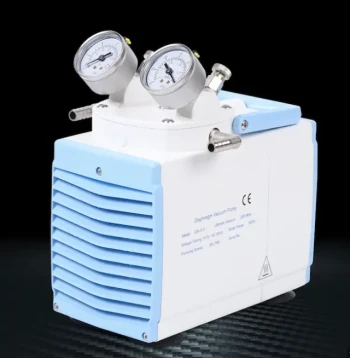
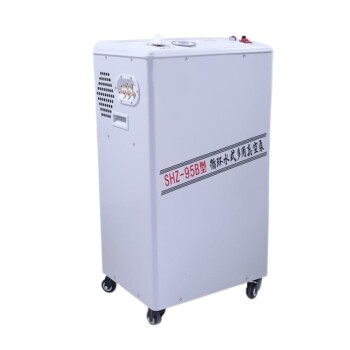
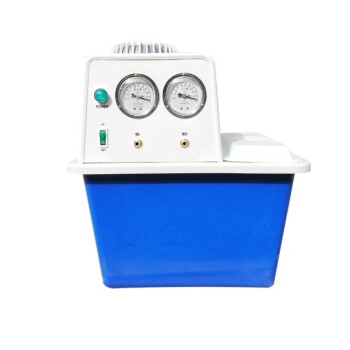
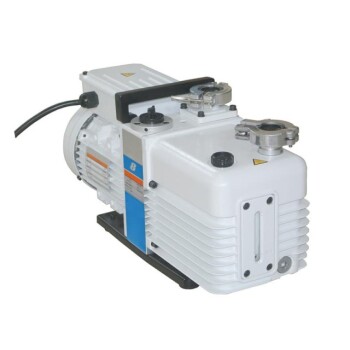
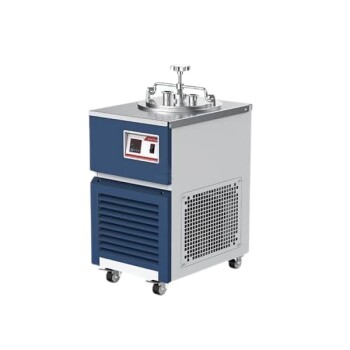
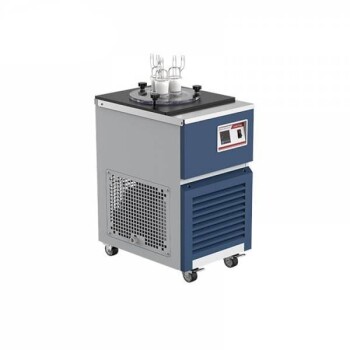
The primary purpose of using a vacuum pump is to evacuate the experimental system to a specific pressure threshold of 30 mbar or less before heating begins. This step is essential for removing air and, more critically, residual moisture such as the crystallization water found in hygroscopic salts like magnesium chloride. By eliminating these elements early, you prevent the salts from undergoing hydrolysis during the heating process.
The use of a vacuum is a fundamental control measure to prevent the formation of corrosive impurities like $MgOH^+$. Without this pre-treatment, residual moisture alters the chemical composition of the melt, invalidating the scientific integrity of the corrosion mechanism being studied.
Preserving Chemical Integrity
Removing Residual Moisture
Many chloride salts used in corrosion experiments, particularly magnesium chloride ($MgCl_2$), are prone to retaining water.
Even salts that appear dry can hold significant crystallization water within their structure.
Using a vacuum pump extracts this moisture from the salt and the surrounding environment before the temperature rises.
Preventing Hydrolysis
If water is present when the salts are heated, a chemical reaction known as hydrolysis occurs.
This reaction breaks down the salt structure rather than simply melting it.
Evacuating the system ensures that the heating process acts only on the dry salt, maintaining its chemical stability.
Ensuring Accurate Corrosion Mechanisms
Eliminating Corrosive Impurities
The hydrolysis of magnesium chloride leads to the formation of specific impurities, most notably magnesium hydroxy cations ($MgOH^+$).
These impurities are chemically reactive and create a different corrosive environment than the pure salt.
If these species are allowed to form, they introduce uncontrolled variables into the experiment.
Validating Scientific Data
The objective of these experiments is to understand the corrosion mechanism of the chloride salt itself.
If the corrosion is driven by impurities like $MgOH^+$, the study's conclusions regarding the salt are rendered inaccurate.
Proper evacuation ensures the data reflects the true behavior of the intended chemical system.
Common Pitfalls to Avoid
Insufficient Vacuum Pressure
Simply reducing pressure is often not enough; the system must reach 30 mbar or less.
A vacuum that is too weak may leave trace amounts of moisture, leading to partial hydrolysis and contaminated results.
Improper Timing
The evacuation process must be completed prior to heating.
Applying a vacuum after the temperature has already risen allows hydrolysis to start, at which point the chemical damage is irreversible.
Making the Right Choice for Your Experiment
To ensure high-fidelity results in your corrosion studies, adhere to the following operational standards:
- If your primary focus is chemical purity: Verify that your pump setup can reliably achieve and sustain a pressure of 30 mbar to fully strip crystallization water.
- If your primary focus is mechanism validation: Strictly enforce the pre-heating evacuation protocol to ensure that no $MgOH^+$ impurities are present to skew your corrosion data.
By rigorously controlling the atmosphere before thermal processing, you ensure that your observations are a result of the salt chemistry, not the artifacts of contamination.
Summary Table:
| Process Requirement | Target Metric | Scientific Purpose |
|---|---|---|
| Vacuum Threshold | ≤ 30 mbar | Ensure complete removal of crystallization water |
| Timing | Pre-heating | Prevent hydrolysis and salt degradation |
| Key Impurity Control | MgOH+ Prevention | Maintain chemical integrity of the molten salt |
| Experimental Focus | Mechanism Validation | Ensure data reflects salt chemistry, not contamination |
Elevate Your Corrosion Research with KINTEK Precision
Precise atmospheric control is the backbone of reliable materials science. KINTEK specializes in high-performance laboratory equipment designed to meet the rigorous demands of chemical research. From vacuum systems and high-temperature muffle or tube furnaces that ensure perfect pre-treatment conditions, to high-pressure reactors, autoclaves, and specialized crucibles, we provide the tools you need to prevent contamination and validate your findings.
Don't let residual moisture compromise your scientific integrity. Whether you require advanced crushing systems, hydraulic presses, or specialized ceramics, KINTEK delivers the quality and consistency your lab deserves.
Contact KINTEK Experts Today to find the perfect equipment solution for your high-temperature corrosion studies!
References
- Wenjin Ding, Thomas Bauer. Characterization of corrosion resistance of C/C–SiC composite in molten chloride mixture MgCl2/NaCl/KCl at 700 °C. DOI: 10.1038/s41529-019-0104-3
This article is also based on technical information from Kintek Solution Knowledge Base .
Related Products
- Oil Free Diaphragm Vacuum Pump for Laboratory and Industrial Use
- Circulating Water Vacuum Pump for Laboratory and Industrial Use
- Laboratory Vertical Water Circulating Vacuum Pump for Lab Use
- Laboratory Benchtop Water Circulating Vacuum Pump for Lab Use
- Laboratory Rotary Vane Vacuum Pump for Lab Use
People Also Ask
- What are some typical applications for oil-free diaphragm vacuum pumps? Ensure Process Purity in Your Lab
- What is an oil-free diaphragm vacuum pump? The Ultimate Guide to Clean, Low-Maintenance Vacuum
- How does an oil-free diaphragm vacuum pump work? A Guide to Clean, Contamination-Free Vacuum
- What are the advantages of using oil-free diaphragm vacuum pumps? Achieve Clean, Low-Maintenance Vacuum
- What factors should be considered when selecting an oil-free diaphragm vacuum pump? A Guide to Optimal Performance & Longevity