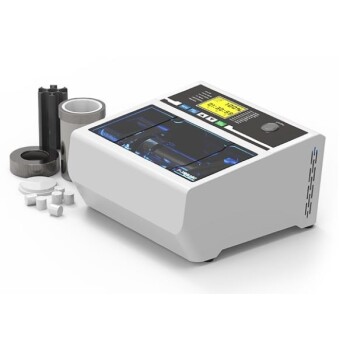
The primary purpose of using epoxy resin and laboratory mounting equipment is to isolate a precise working surface area on the U71Mn weld specimen while electrically insulating the rest of the sample. By encapsulating the cut metal in a non-conductive medium, you prevent unwanted corrosion on the sides or back of the sample. This ensures that all electrochemical data collected corresponds solely to the specific weld zone being investigated.
Mounting transforms a rough, irregular metal cut into a controlled electrochemical electrode. This process is essential for defining an exact surface area and eliminating "parasitic" signals that would otherwise render Impedance Spectroscopy (EIS) and polarization data unreliable.
Ensuring Data Integrity Through Isolation
Defining the Active Surface Area
In electrochemical testing, current density calculations depend entirely on a known, fixed surface area.
Epoxy mounting allows you to expose a specific geometric face of the U71Mn weld. This provides the mathematical constant required to convert raw current data into meaningful corrosion rate metrics.
Preventing Parasitic Corrosion
If a sample is submerged without mounting, the sides and back of the specimen are exposed to the electrolyte.
This creates "parasitic" reactions on surfaces that are not part of your study. These unwanted reactions generate noise that obscures the behavior of the actual weld zone you intend to test.
Targeting Specific Weld Regions
Weldments consist of distinct zones, such as the base metal, the heat-affected zone (HAZ), and the fusion zone.
Encapsulation allows you to orient the sample precisely. You can grind and polish the block to reveal only the specific microstructural region of the U71Mn weld required for the experiment.
The Role of Laboratory Mounting Equipment
Achieving a Hermetic Seal
Laboratory presses and cold mounting tools are used to ensure the epoxy bonds tightly to the metal perimeter.
A poor seal creates a gap between the metal and the resin. Electrolyte can seep into this gap, causing crevice corrosion that will invalidate your Electrochemical Impedance Spectroscopy (EIS) results.
Physical Stability for Preparation
The mounting process creates a standardized puck shape that is easy to handle.
This stability is critical during the subsequent grinding and polishing steps required to achieve the mirror finish necessary for high-quality electrochemical analysis.
Understanding the Common Pitfalls
Crevice Corrosion Risks
The interface between the U71Mn steel and the epoxy is the most critical weak point.
If the mounting equipment applies insufficient pressure or the sample is dirty, microscopic gaps will remain. These gaps act as artificial corrosion sites, leading to falsely high corrosion rate readings.
Electrical Connection Challenges
While the resin insulates the sample, a reliable electrical connection must be maintained to the back of the specimen.
Operators must ensure the mounting process accommodates a copper wire or conductive path. If this connection is compromised by the resin flow, the electrochemical workstation will record an open circuit.
Making the Right Choice for Your Goal
Correct mounting is not just a physical step; it is the foundation of your measurement accuracy.
- If your primary focus is obtaining pure EIS data: Prioritize a mounting method that guarantees zero gap formation between the resin and the metal to prevent crevice corrosion artifacts.
- If your primary focus is comparing different weld zones: Use the mounting process to carefully orient the sample, ensuring only the specific zone (e.g., HAZ vs. Base Metal) is exposed to the electrolyte.
By strictly controlling the exposed surface area with epoxy mounting, you convert a raw metal cut into a precision scientific instrument capable of yielding reproducible electrochemical data.
Summary Table:
| Feature | Purpose in Electrochemical Preparation | Impact on Results |
|---|---|---|
| Epoxy Resin | Electrical insulation & surface isolation | Prevents parasitic corrosion signals |
| Mounting Equipment | Creates a hermetic, gap-free seal | Eliminates crevice corrosion artifacts |
| Geometric Control | Defines precise working surface area | Enables accurate current density calculation |
| Sample Orientation | Isolates HAZ, Fusion, or Base Metal zones | Ensures zone-specific microstructural analysis |
Elevate Your Materials Research with KINTEK Precision
Achieve uncompromising data integrity in your electrochemical studies with KINTEK’s professional-grade laboratory solutions. Whether you are analyzing U71Mn weld zones or complex alloy microstructures, our comprehensive range of mounting equipment, hydraulic pellet presses, and high-performance consumables ensures a perfect, gap-free seal every time.
Beyond sample preparation, KINTEK specializes in a full suite of laboratory essentials, including high-temperature furnaces (muffle, vacuum, CVD), crushing and milling systems, and specialized electrolytic cells designed for advanced battery and corrosion research.
Ready to eliminate parasitic noise and ensure reproducible results? Contact KINTEK today to find the perfect equipment for your lab.
References
- Tingting Liao, Fei Chen. Microstructural Evolution and Micro-Corrosion Behaviour of Flash-Welded U71Mn Joints as a Function of Post-Weld Heat Treatment. DOI: 10.3390/ma16155437
This article is also based on technical information from Kintek Solution Knowledge Base .
Related Products
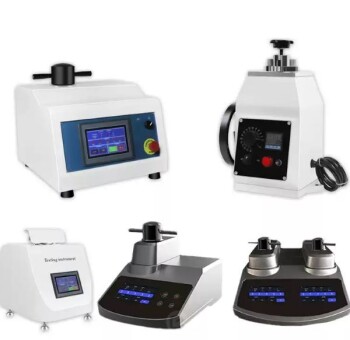
- Metallographic Specimen Mounting Machine for Laboratory Materials and Analysis
- Vacuum Cold Mounting Machine for Sample Preparation
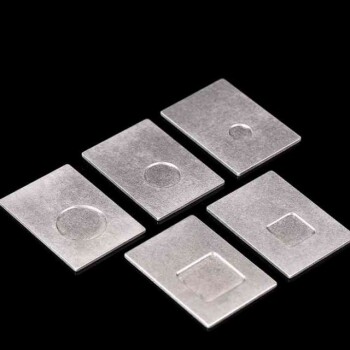
- Customizable XRD Sample Holders for Diverse Research Applications
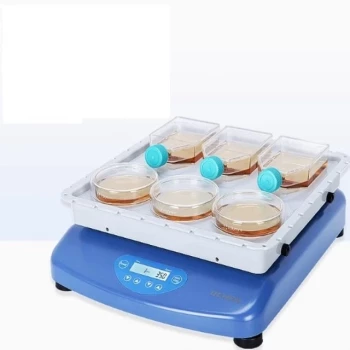
- Laboratory Oscillating Orbital Shaker
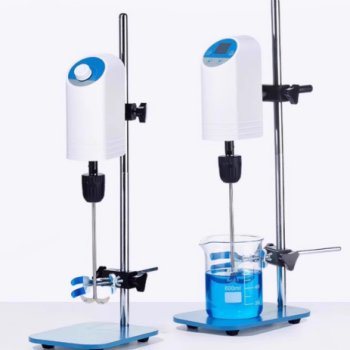
- High Performance Laboratory Stirrers for Diverse Applications
People Also Ask
- What is the purpose of using a metallographic mounting press for the hot mounting of oxidized zirconium samples? Guide
- What is the process of mounting in metallurgy? A Guide to Perfect Specimen Preparation
- What machine is used to press metal? Choose the Right Press for Your Application
- What key indicators does a laboratory pressure testing machine measure? Essential T91 Alloy Steel Weld Testing
- What is a hot mounting press machine? Precision Control for Metallurgy & Electronics Assembly