High-precision laboratory grinding and polishing systems serve a critical dual function in the preparation of nitriding specimens: creating a defect-free surface for analysis and optimizing the material for chemical processing. By utilizing graded diamond abrasive pastes, these systems process rough areas—such as weld reinforcements—down to a mirror-like finish with precision as fine as 3 μm.
Core Takeaway The value of this process extends beyond simple smoothing; by eliminating surface scratches and stress concentration points, high-precision polishing ensures that nitrogen ions can uniformly bombard and penetrate the steel matrix during plasma nitriding.
The Mechanics of Surface Preparation
Achieving a Mirror-Like Finish
The primary mechanical goal of these systems is to refine the specimen's surface topography. Using graded diamond abrasive pastes, the equipment systematically reduces surface roughness.
Eliminating Macro-Defects
This process is specifically capable of removing significant irregularities, such as weld reinforcement. It levels the specimen, transitioning it from a rough, welded state to a flat, controlled geometric form.
The Impact on Nitriding Efficiency
Enhancing Ion Bombardment
The success of plasma nitriding relies heavily on the interaction between the plasma and the material surface. A polished, scratch-free surface allows nitrogen ions to bombard the matrix uniformly.
Reducing Stress Concentrations
Surface scratches act as stress raisers, which can detrimentally affect both the coating process and the material's performance. High-precision polishing eliminates these stress concentration points.
Improving Penetration Uniformity
When the surface stress and roughness are minimized, the nitrogen penetration becomes consistent. This uniformity is vital for creating a reliable, high-quality nitrided layer across the entire stainless steel matrix.
Facilitating Material Analysis
Enabling Microstructural Observation
Beyond the physical processing, the mirror finish is a prerequisite for accurate analysis. It allows for clear microstructural observation using a metallographic microscope, which would be impossible on a rough or scratched surface.
Common Pitfalls to Avoid
The Risk of Residual Scratches
Failing to achieve the 3 μm precision level can leave micro-scratches behind. These imperfections distort metallographic analysis, leading to incorrect conclusions about the material's structure.
Non-Uniform Treatment Consequences
If the grinding process does not fully eliminate stress concentration points, the subsequent nitriding may be uneven. This results in inconsistent hardness profiles and potential weak points in the final treated component.
Making the Right Choice for Your Goal
To maximize the effectiveness of your specimen preparation, focus on the specific outcome you require:
- If your primary focus is Metallographic Analysis: Prioritize the mirror-finish quality to ensure optical clarity for accurate microstructural evaluation.
- If your primary focus is Nitriding Process Quality: Focus on eliminating stress concentration points to guarantee uniform ion penetration and a consistent hardened layer.
High-precision polishing is the bridge between a raw sample and a scientifically valid, chemically optimized component.
Summary Table:
| Preparation Stage | Technical Objective | Impact on Nitriding/Analysis |
|---|---|---|
| Grinding | Remove weld reinforcements & macro-defects | Leveling the matrix for uniform chemical processing |
| Polishing (3 μm) | Achieve mirror-like finish using diamond paste | Eliminates micro-scratches for clear microscopy |
| Surface Refinement | Eliminate stress concentration points | Ensures uniform nitrogen ion bombardment & penetration |
| Final Quality | Consistent surface topography | Guarantees reliable, high-quality nitrided layers |
Elevate Your Material Analysis with KINTEK Precision
Don't let surface imperfections compromise your research or nitriding quality. KINTEK specializes in advanced laboratory solutions designed for the most demanding specimen preparation. Our high-precision crushing and milling systems, combined with our premium ceramics and consumables, ensure your materials achieve the mirror-like finish required for uniform nitrogen penetration and flawless microstructural observation.
From high-temperature furnaces to specialized hydraulic presses and cooling solutions, KINTEK provides the comprehensive tools needed for superior metallurgy and battery research. Partner with the experts in laboratory efficiency.
Contact KINTEK Today to Optimize Your Preparation Workflow!
References
- Ferdinando Marco Rodrigues Borges, Rômulo Ríbeiro Magalhães de Sousa. Corrosion Resistance and Microstructural Evaluation of a Plasma Nitrided Weld Joint of UNS S32750 Super Duplex Stainless Steel. DOI: 10.1590/1980-5373-mr-2021-0087
This article is also based on technical information from Kintek Solution Knowledge Base .
Related Products
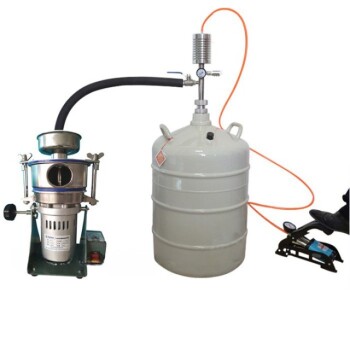
- Small Cryogenic Grinder Cryomill Cryogrinder with Liquid Nitrogen for Laboratory Use
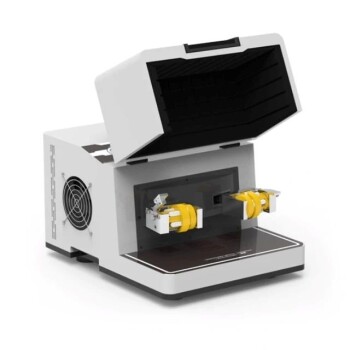
- Laboratory Hybrid Tissue Grinding Mill
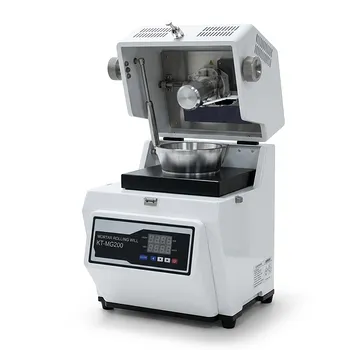
- Laboratory Grinding Mill Mortar Grinder for Sample Preparation
- Laboratory Jar Mill with Agate Grinding Jar and Balls
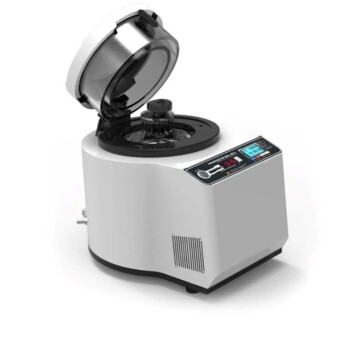
- Vibrating Disc Mill Small Laboratory Grinding Machine
People Also Ask
- What are the advantages of using a cryogenic grinder? Achieve Nanoscale Precision for All-Solid-State Battery Cathodes
- Why is a cryogenic grinder required for cured alkyd resin HRMAS NMR? Ensure Structural Integrity & Sample Precision
- What is the role of a cryogenic grinder in PET recycling? Transform Waste into High-Reactive Micron Powders
- What is cryogenic grinding of crumb rubber? Achieve Fine, High-Quality Rubber Powder
- What food is cryogenic grinding? The Ultimate Guide to Preserving Flavor & Aroma