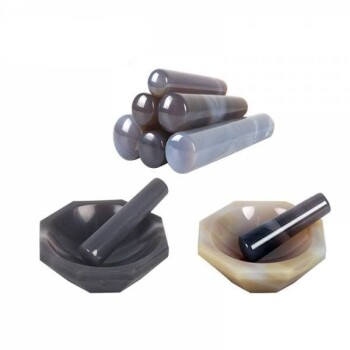
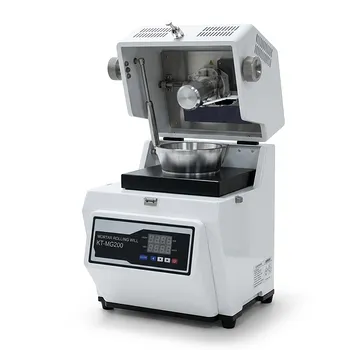
Alumina mortars are the industry standard for grinding Yttrium Oxide precursors primarily due to their exceptional hardness and chemical stability. This choice allows for the effective breakdown of dried bulk materials and soft agglomerates without introducing metallic contaminants. Maintaining this level of purity is critical, as even trace metal impurities can compromise the quality of the final ceramic product.
The selection of alumina prevents metallic contamination that would otherwise ruin the optical transparency of Yttrium Oxide ceramics. It offers the necessary hardness to refine particle size while ensuring the chemical integrity of the precursor remains intact.
The Critical Need for Purity
Avoiding Metallic Contamination
Standard metal mortars introduce a significant risk of contamination through abrasion. During the grinding process, microscopic metallic particles can be shed into the powder.
For transparent Yttrium Oxide ceramics, this is catastrophic. Metallic impurities act as light-scattering centers or colorants, drastically reducing optical transmission. Alumina eliminates this source of failure.
Chemical Compatibility
Alumina is highly wear-resistant and chemically inert regarding Yttrium Oxide precursors. This ensures that the grinding process is purely physical, not chemical.
By using a ceramic mortar, you ensure the stoichiometry of your powder remains consistent. This stability is essential for predicting sintering behavior and final material properties.
Mechanical Requirements for Precursors
Breaking Soft Agglomerates
During the drying stage, precursor materials often clump together to form "soft agglomerates." If left untreated, these clumps lead to uneven density in the final part.
An alumina mortar provides the rigid surface necessary to crush these agglomerates. This ensures the powder flows uniformly during the subsequent pressing or forming stages.
Refining Particle Size
To achieve high density, the starting powder must be fine and uniform. Alumina possesses the high hardness required to effectively pulverize the dried bulk material.
This refinement reduces the particle size to a range suitable for sintering. A finer particle size generally drives the densification process, leading to a stronger, more transparent ceramic.
Understanding the Trade-offs
Wear Resistance vs. Contamination
While alumina is chosen for its wear resistance, no grinding media is perfectly immune to abrasion. Extended, overly vigorous grinding can introduce trace amounts of alumina into the mixture.
However, in the context of Yttrium Oxide, trace alumina is significantly less detrimental than metallic iron or steel. It does not carry the same risk of causing magnetic or optical defects.
Manual Processing Limitations
Using a mortar and pestle is typically a manual or low-speed process. While it offers excellent control over purity for small batches, it may not be scalable for mass production without automated milling equivalents.
Making the Right Choice for Your Goal
Selecting the correct grinding apparatus is about prioritizing the final material properties over processing speed or cost.
- If your primary focus is Optical Transparency: Use alumina to strictly eliminate metallic impurities that cause scattering and discoloration.
- If your primary focus is Sintering Density: rely on the hardness of alumina to thoroughly pulverize agglomerates, ensuring a uniform microstructure.
Choosing the right grinding media is a foundational step that secures the purity and structural integrity of your high-performance ceramics.
Summary Table:
| Feature | Alumina Mortar Benefits | Impact on Yttrium Oxide |
|---|---|---|
| Hardness | High wear resistance | Effectively breaks soft agglomerates and refines particle size |
| Purity | Non-metallic composition | Prevents metallic contamination that ruins optical transparency |
| Chemical Stability | Chemically inert | Maintains stoichiometry and ensures consistent sintering behavior |
| Material Integrity | Low-abrasion surface | Minimizes the introduction of unwanted light-scattering centers |
Elevate Your Material Research with KINTEK Precision Solutions
Don't let impurities compromise the optical transparency and structural integrity of your high-performance ceramics. At KINTEK, we understand that the foundation of superior material science lies in the quality of your processing tools.
We specialize in high-quality laboratory equipment and consumables designed for the most demanding applications. Whether you are refining Yttrium Oxide precursors or developing next-generation battery technologies, our range of alumina mortars, crushing and milling systems, and ceramic crucibles ensures your powders remain pure and consistent. Beyond sample preparation, KINTEK offers a comprehensive portfolio including:
- High-Temperature Furnaces: Muffle, vacuum, and CVD systems for precise sintering.
- Hydraulic Presses: Pellet and isostatic presses for uniform material density.
- High-Pressure Solutions: Autoclaves and reactors for advanced synthesis.
- Lab Essentials: PTFE products, sieving equipment, and cooling solutions.
Ready to optimize your lab's performance? Contact our technical experts today to find the perfect equipment tailored to your research goals and experience the KINTEK advantage.
Related Products
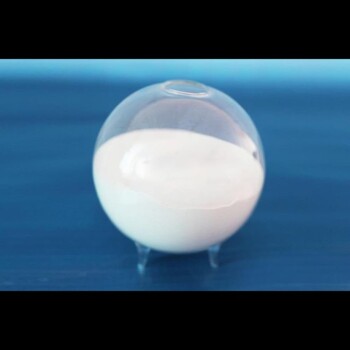
- High Purity Alumina Granulated Powder for Engineering Advanced Fine Ceramics
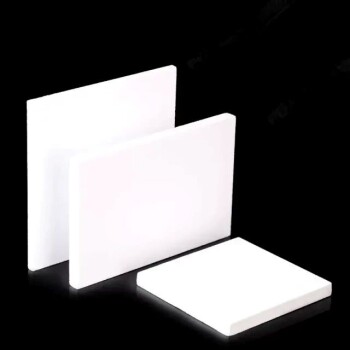
- High Temperature Wear-Resistant Alumina Al2O3 Plate for Engineering Advanced Fine Ceramics
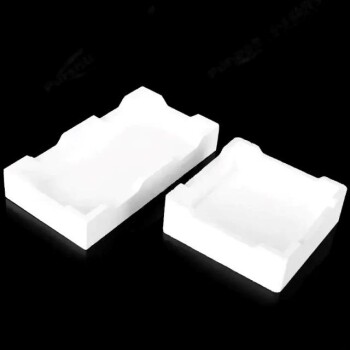
- Advanced Engineering Fine Ceramics Alumina Ceramic Saggar for Fine Corundum
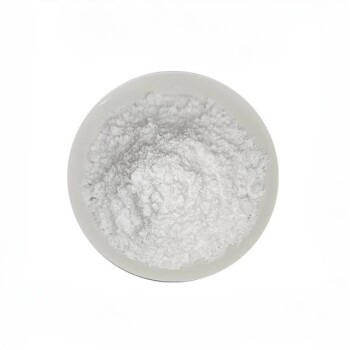
- Advanced Engineering Fine Ceramics Low Temperature Alumina Granulation Powder
- Engineering Advanced Fine Alumina Al2O3 Ceramic Crucible for Laboratory Muffle Furnace
People Also Ask
- What is the function of high-purity alumina powder in pack cementation? Ensure Uniform Aerospace Blade Coatings
- How should alumina powder be selected for polishing a disc electrode, and what is the procedure for removing scratches? Achieve a Perfect Mirror Finish
- What are the properties and handling precautions for alumina powder as a polishing material? Achieve a Flawless Finish with Precision
- Why is it necessary to apply alumina powder to graphite molds for TiC10/Cu-Al2O3? Ensure Smooth Release.
- What measures should be taken to prevent cross-contamination when using different sizes of alumina powder?