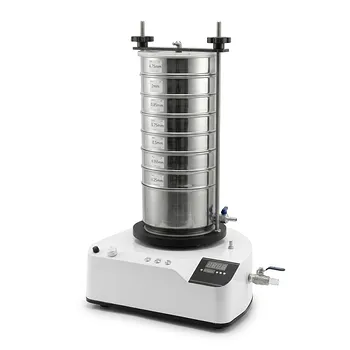
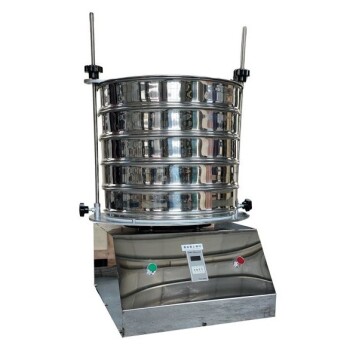
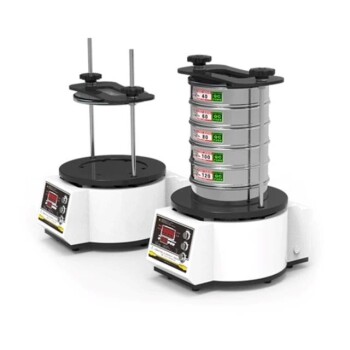
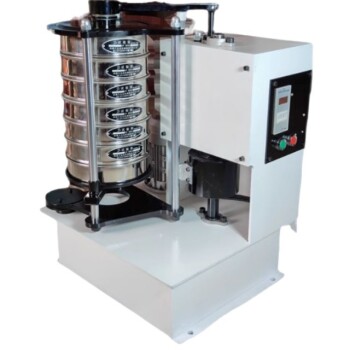
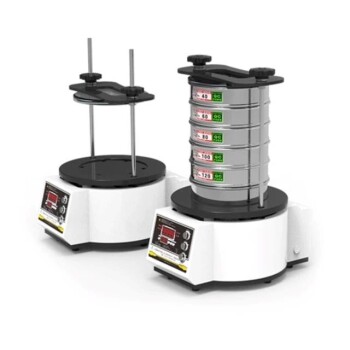
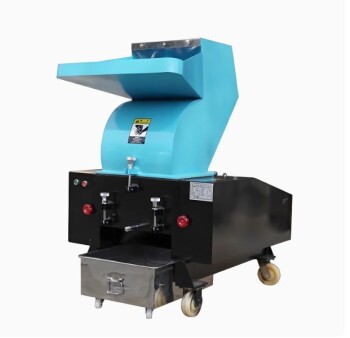
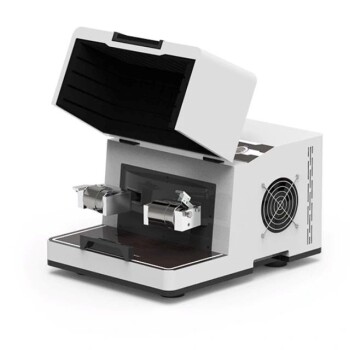
Standardized sieving is the foundational step in ensuring the chemical and physical predictability of Attapulgite-based catalysts. During the pretreatment of Attapulgite (ATP), industrial sieving equipment is used to achieve a strictly uniform particle size distribution. This uniformity is critical because it stabilizes the specific surface area available for subsequent acid leaching and metal loading, ultimately ensuring that catalytic activity remains consistent across the entire batch.
Core Takeaway: The primary purpose of industrial sieving in ATP pretreatment is to eliminate particle size variability, which serves as the prerequisite for uniform chemical modification and reliable catalytic performance.
The Role of Particle Size in Chemical Modification
Stabilizing Specific Surface Area
In the modification of Attapulgite, the specific surface area (SSA) dictates how effectively the material interacts with reagents. Uniform particle size ensures a stable SSA during the critical acid leaching phase, preventing localized over-processing or under-processing of the raw material. This consistency allows for predictable pore structure development, which is essential for high-performance supports.
Ensuring Uniform Metal Ion Distribution
When ATP is used as a catalyst support, metal ions must be distributed evenly across its surface to maintain activity. Consistent fineness of the ATP powder ensures that the contact area between the carrier and the reaction reagents remains stable during the impregnation process. Without this uniformity, the resulting catalyst would suffer from "hot spots" or inactive zones, leading to poor experimental repeatability.
Impact on Process Dynamics and Kinetics
Optimizing Heat and Mass Transfer
Precise particle size control is vital for achieving uniform heat transfer during thermal treatment processes. In industrial applications, particles that are too large may have cold cores, while those too small may overheat, altering the material’s structural integrity. Standardized sieving ensures that every particle experiences the same thermal history, which is critical for maintaining stable reaction kinetics.
Maintaining Stable Bed Pressure
For catalysts evaluated in fixed-bed reactors, particle size directly influences the bed pressure drop. Using industrial sieving to maintain a specific mesh range (such as 40-60 mesh) prevents the accumulation of "fines" that can clog the system. This stability is essential for accurate data collection and prevents mechanical strain on the reactor setup.
Understanding the Trade-offs and Limitations
Material Loss and Processing Costs
Achieving a highly narrow particle size distribution inevitably leads to material rejection. The "overs" and "unders" that fall outside the target specification represent a loss of raw material that must be recycled or disposed of. This requires a balance between the precision required for the catalyst's performance and the economic yield of the pretreatment process.
Mechanical Wear and Mesh Blinding
Industrial sieving equipment is subject to significant mechanical wear, especially when processing abrasive minerals like Attapulgite. Furthermore, fine particles can cause "blinding" or clogging of the sieve meshes, which reduces efficiency and can lead to inconsistent sizing if the equipment is not maintained properly.
How to Apply Sieving Standards to Your Project
To maximize the efficacy of Attapulgite pretreatment, your sieving strategy should align with your ultimate technical requirements:
- If your primary focus is catalytic activity and repeatability: Use high-precision industrial sieves to narrow the particle size distribution, ensuring a stable contact area for acid leaching and metal loading.
- If your primary focus is reactor efficiency and longevity: Prioritize the removal of fine fragments and oversized particles to maintain a stable pressure drop and prevent reactor clogging.
- If your primary focus is kinetic accuracy: Ensure the particle size is small enough to minimize internal mass transfer limitations while remaining large enough to facilitate uniform heating.
By treating industrial sieving as a critical chemical control point rather than a simple mechanical task, you ensure the integrity and scalability of the resulting catalyst.
Summary Table:
| Key Factor | Impact on ATP Pretreatment | Benefit for Catalyst Preparation |
|---|---|---|
| Particle Uniformity | Stabilizes Specific Surface Area (SSA) | Consistent acid leaching and chemical modification |
| Metal Loading | Ensures even distribution of ions | Prevents "hot spots" and ensures batch repeatability |
| Thermal Dynamics | Optimizes heat and mass transfer | Uniform structural integrity during thermal treatment |
| Reactor Dynamics | Maintains stable bed pressure | Prevents clogging and system strain in fixed-bed reactors |
Elevate Your Material Research with KINTEK Precision
Precision in particle sizing is the foundation of high-performance catalysis. At KINTEK, we provide the specialized tools necessary to ensure your Attapulgite pretreatment meets industrial standards. Whether you are optimizing catalytic activity or ensuring reactor longevity, our comprehensive range of equipment is designed for accuracy and durability.
Our laboratory and industrial solutions include:
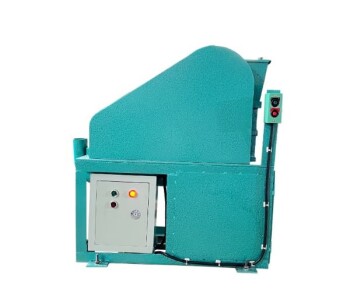
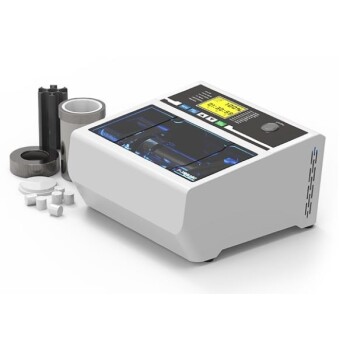
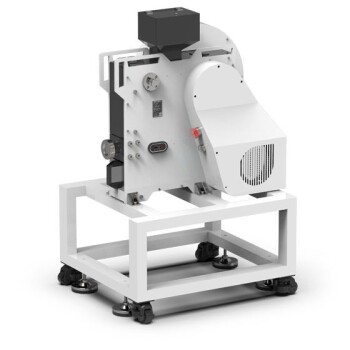
- Material Processing: High-precision industrial sieving equipment, crushing and milling systems, and hydraulic presses (pellet, hot, isostatic).
- Thermal Treatment: A full suite of high-temperature furnaces (muffle, tube, vacuum, CVD, PECVD) and cooling solutions like ULT freezers and freeze dryers.
- Reaction & Synthesis: High-temperature high-pressure reactors, autoclaves, and electrolytic cells.
- Essential Consumables: PTFE products, technical ceramics, and high-purity crucibles.
Don't let particle variability compromise your results. Partner with KINTEK for reliable equipment that ensures consistent experimental repeatability and scalability.
Contact KINTEK Today to Optimize Your Lab Workflow
References
- Jianping Shang, Hua‐Jun Fan. Kinetics of Catalytic Oxidation of Methylene Blue with La/Cu Co-Doped in Attapulgite. DOI: 10.3390/ma16052087
This article is also based on technical information from Kintek Solution Knowledge Base .
Related Products
- Three-dimensional electromagnetic sieving instrument
- Laboratory Vibratory Sieve Shaker Machine for Dry and Wet Three-Dimensional Sieving
- Laboratory Test Sieves and Sieving Machines
- Laboratory Test Sieves and Vibratory Sieve Shaker Machine
- Laboratory Wet Three-Dimensional Vibratory Sieve Shaker Machine
People Also Ask
- Why is sieving equipment essential for the classification of processed bio-activated carbon? Optimize Performance
- What are the limitations of sieving? Understanding the Constraints of Particle Size Analysis
- What are advantages and disadvantages of sieving method? A Guide to Reliable & Cost-Effective Particle Sizing
- How is sieving important? The Critical Role of Particle Size Analysis in Quality Control
- What is sieving and how does it work? A Guide to Accurate Particle Size Analysis