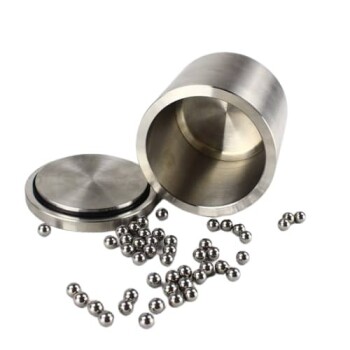
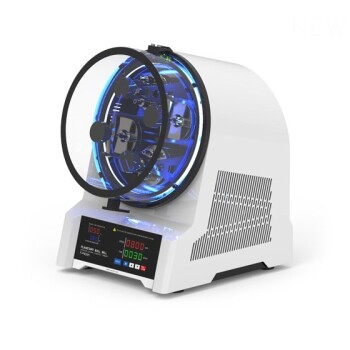
High-energy ball milling with stainless steel media is essential for creating a homogenous metal-ceramic composite. Using stainless steel jars and balls for 24 hours ensures the uniform dispersion of the YSZ ceramic phase within the SS430L metal matrix. This process is critical because it enables the Zener pinning effect during sintering, which inhibits metal grain growth to maintain the high porosity required for the metal support.
The use of high-strength stainless steel grinding media provides the mechanical energy necessary to force ceramic particles into a metal matrix, creating a structural foundation that prevents the composite from over-densifying during heat treatment.
The Mechanics of High-Energy Impact
Achieving Uniform Phase Dispersion
The primary objective of the 24-hour milling cycle is to ensure that the YSZ ceramic particles are not just mixed, but deeply embedded within the SS430L powder.
High-speed rotation transfers significant kinetic energy to the metal balls, which repeatedly strike the powder against the jar walls.
This process triggers continuous cycles of plastic deformation, fracturing, and cold welding, which are necessary to distribute the brittle ceramic phase evenly throughout the ductile metal phase.
Kinetic Energy and Particle Refinement
Stainless steel media are chosen for their high density and hardness, which maximize the impact force during each collision.
At speeds such as 400 rpm, these impacts provide the "mechanical forging" needed to refine the particle size of the components.
The 24-hour duration is specifically calibrated to reach a steady state where the ceramic phase is sufficiently fine and well-distributed to function effectively in the subsequent processing steps.
The Strategic Importance of Zener Pinning
Inhibiting Grain Growth
During the sintering process that follows milling, metal grains naturally tend to grow larger, which would normally decrease the material's porosity.
By using ball milling to achieve a fine dispersion of YSZ, these ceramic particles act as physical barriers at the metal grain boundaries.
This phenomenon, known as Zener pinning, exerts a "pinning force" that prevents the boundaries from moving, effectively locking the grain size in place.
Maintaining Structural Porosity
For applications involving SS430L metal supports, high porosity is often a functional requirement for gas permeability.
Without the uniform dispersion of YSZ facilitated by the stainless steel milling media, the metal grains would merge and consolidate too thoroughly.
The mechanical energy provided by the ball milling ensures the YSZ is positioned perfectly to maintain the open-pore structure during high-temperature consolidation.
Understanding the Trade-offs
Contamination and Material Compatibility
While stainless steel media are highly wear-resistant, the intense mechanical action over 24 hours inevitably introduces trace amounts of iron-based impurities into the powder.
However, since the base material (SS430L) is itself a stainless steel alloy, this "contamination" is chemically compatible and often negligible compared to using alumina or zirconia media.
If ultra-high purity were the priority over structural porosity, the wear from the jars might necessitate secondary cleaning steps like acid washing.
Energy Consumption vs. Homogeneity
A 24-hour milling time is energy-intensive and can lead to significant heat buildup within the grinding jars.
If the milling time is too short, the Zener pinning effect will be inconsistent, leading to localized areas of low porosity.
Conversely, exceeding the necessary milling time can lead to excessive work hardening of the SS430L powder, which may complicate the subsequent pressing or shaping stages.
How to Apply This to Your Project
Recommendations for Composite Preparation
- If your primary focus is maximizing gas permeability: Ensure the full 24-hour milling duration is met to guarantee the YSZ is fine enough to trigger the Zener pinning effect.
- If your primary focus is minimizing external impurities: Use stainless steel media specifically when working with iron-based matrices like SS430L to maintain chemical consistency.
- If your primary focus is preventing powder agglomeration: Select a specific ball-to-powder weight ratio and ball size (such as 10mm) to balance high-impact energy with efficient material flow.
By utilizing the mechanical strength of stainless steel media to force a uniform ceramic dispersion, you create a composite powder capable of maintaining its critical microstructural features through the rigors of high-temperature sintering.
Summary Table:
| Key Feature | Functional Role | Scientific Outcome |
|---|---|---|
| Stainless Steel Media | High-density impact & forging | Uniform ceramic dispersion in metal matrix |
| 24-Hour Duration | Reach steady-state refinement | Continuous plastic deformation & cold welding |
| Zener Pinning Effect | Physical barrier at grain boundaries | Inhibits grain growth during sintering |
| Material Compatibility | Chemically similar to SS430L | Minimizes functional contamination risks |
| Kinetic Energy (400 rpm) | Mechanical size reduction | Maintains required structural porosity |
Optimize Your Composite Synthesis with KINTEK Precision
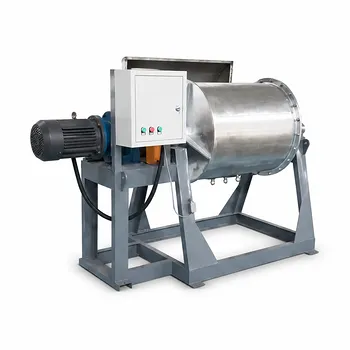
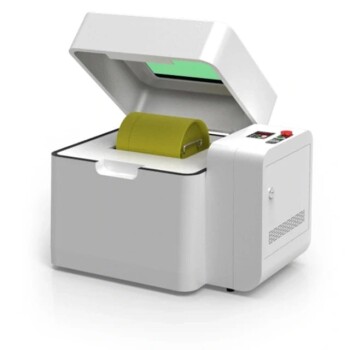
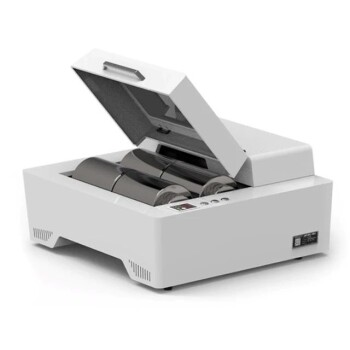
Achieving the perfect Zener pinning effect requires reliable, high-energy milling equipment. KINTEK specializes in advanced laboratory solutions, offering high-performance crushing and milling systems—including specialized stainless steel, ceramic, and tungsten carbide grinding jars and media—to ensure your SS430L and YSZ composites meet exact porosity and homogeneity standards.
Beyond milling, our comprehensive portfolio supports your entire workflow with:
- High-Temperature Furnaces: Muffle, vacuum, and atmosphere furnaces for precise sintering.
- Hydraulic Presses: Pellet and isostatic presses for high-density shaping.
- Advanced Reactors: High-temperature high-pressure autoclaves for specialized material synthesis.
Ready to enhance your lab's efficiency and material quality? Contact KINTEK today to consult with our experts on the right equipment for your research goals.
References
- Shengjie Fu, Liangzhu Zhu. Fabrication, property and performance evaluation of Stainless Steel 430L as porous supports for metal supported solid oxide fuel cells. DOI: 10.3389/fenrg.2023.1127900
This article is also based on technical information from Kintek Solution Knowledge Base .
Related Products
- Laboratory Ball Mill Jar Mill with Metal Alloy Grinding Jar and Balls
- Stainless Steel Laboratory Ball Mill for Dry Powder and Liquid with Ceramic Polyurethane Lining
- Laboratory Jar Ball Mill with Alumina Zirconia Grinding Jar and Balls
- Laboratory Jar Mill with Agate Grinding Jar and Balls
- Laboratory Single Horizontal Jar Mill
People Also Ask
- What is the function of a laboratory ball mill in the preparation of AMMCs? Optimize Dispersion & Grain Refinement
- What is the primary function of a laboratory ball mill in the modification of sulfide-based solid electrolytes with LiPO2F2?
- What is the function of a laboratory ball mill in the pretreatment of waste tire char (WTC)? Optimize Material Reactivity
- What is the primary function of a laboratory ball mill in Rice Husk Ash (RHA) modification? Achieve Peak Densification
- How do laboratory ball mills facilitate the mechanochemical synthesis of ZIF-8? Solvent-Free Synthesis Explained