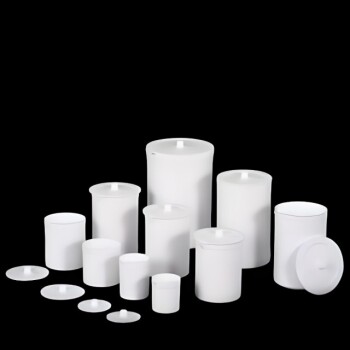
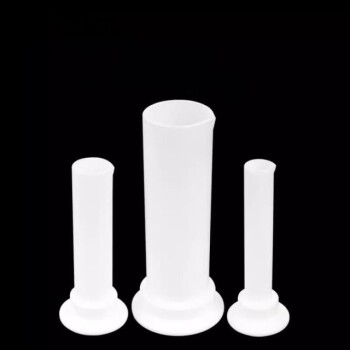
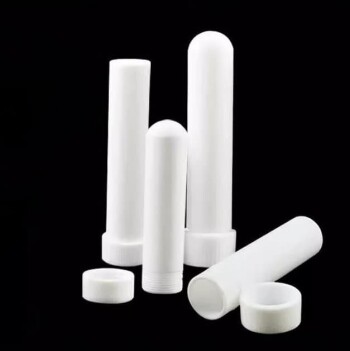
In the synthesis of $\text{Bi}_2\text{Se}_3/\text{Bi}_2\text{O}_3@\text{Bi}$ composites, the stainless steel reactor with a PTFE liner serves as a pressurized thermal chamber that enables precursors to react and crystallize at temperatures far exceeding the solvent's boiling point. Specifically, it allows the reaction to occur at $180^\circ\text{C}$ in solvents like ethylene glycol, while the liner ensures the mixture remains free of metallic impurities and stable under strong alkaline conditions.
The core role of this equipment is to provide a "solvothermal" environment where high pressure and temperature drive chemical reactions that are impossible at atmospheric pressure. The PTFE-lined reactor acts as both a pressure vessel for structural safety and a chemically inert barrier to ensure product purity and structural integrity.
Engineering a Controlled High-Energy Environment
Maintaining the Liquid Phase Above Boiling Points
The stainless steel shell provides the mechanical strength required to contain the high internal pressures generated during heating. This allows solvents like ethylene glycol to remain in a liquid state at $180^\circ\text{C}$, well above their atmospheric boiling point.
Facilitating Complete Reaction and Crystallization
Under these high-pressure conditions, the solubility of precursors increases significantly, allowing them to fully react and form the composite structure. This environment is essential for the transition from raw chemical precursors to highly crystalline $\text{Bi}_2\text{Se}_3/\text{Bi}_2\text{O}_3@\text{Bi}$ nanoparticles.
Accelerating Reaction Kinetics
The combination of heat and pressure increases the kinetic energy of the molecules within the vessel. This acceleration ensures that the complex core-shell structures and specific crystal planes required for the composite are formed efficiently and uniformly.
The Critical Function of the PTFE Liner
Chemical Stability in Alkaline Conditions
Solvothermal synthesis of bismuth-based composites often involves strong alkaline conditions that would be corrosive to bare metal. The PTFE (polytetrafluoroethylene) liner is exceptionally inert, allowing it to withstand these harsh pH levels without degrading.
Preventing Metallic Contamination
If the reaction fluid were in direct contact with the stainless steel walls, metal ions could leach into the solution. The liner acts as a protective barrier, ensuring that no unwanted iron, chromium, or nickel impurities are introduced into the synthesized nanoparticles.
Protecting the Structural Integrity of the Reactor
Beyond protecting the product, the liner protects the stainless steel exterior from corrosion. By preventing the reaction fluids from attacking the steel shell, the liner extends the life of the equipment and prevents dangerous structural failures under pressure.
Understanding the Trade-offs
Temperature and Pressure Limitations
While PTFE is chemically resilient, it has a lower thermal threshold than the steel shell, typically limited to $220^\circ\text{C}–250^\circ\text{C}$. Exceeding these temperatures can cause the liner to soften or "creep," potentially compromising the seal or contaminating the sample.
Thermal Lag and Cooling Rates
The thick walls of a stainless steel reactor introduce thermal mass, meaning the internal temperature may lag behind the oven’s set point. This necessitates precise timing and calibrated heating protocols to ensure the precursors reach the target $180^\circ\text{C}$ for the required duration.
Scaling and Volume Constraints
Because the reaction must occur in a sealed, high-pressure state, the vessel cannot be filled to capacity; a filling degree (usually 60-80%) must be maintained. This limits the throughput of a single batch, making it a "batch process" rather than a continuous one.
How to Apply This to Your Project
Making the Right Choice for Your Goal
To achieve the best results in your solvothermal synthesis, consider your primary objective:
- If your primary focus is product purity: Always inspect the PTFE liner for scratches or discoloration before use, as even minor cracks can lead to metallic contamination from the steel shell.
- If your primary focus is high crystallinity: Ensure the reactor is tightly sealed and the heating ramp is slow enough to allow uniform thermal distribution within the ethylene glycol solvent.
- If your primary focus is safety and longevity: Never exceed the pressure and temperature ratings of the specific reactor model, and allow the vessel to cool completely to room temperature before opening.
By carefully managing the interplay between the structural strength of the steel and the chemical inertness of the PTFE, you can consistently produce high-quality bismuth-based composites with the desired nanostructures.
Summary Table:
| Component/Feature | Role in Solvothermal Synthesis | Key Benefit |
|---|---|---|
| Stainless Steel Shell | High-pressure mechanical containment | Enables reactions at $180^\circ\text{C}$ (above boiling point) |
| PTFE Liner | Chemically inert protective barrier | Prevents metallic contamination and alkaline corrosion |
| Sealed Design | High-energy liquid-phase environment | Increases precursor solubility and reaction kinetics |
| Filling Degree | 60-80% volume management | Ensures safety and optimal pressure distribution |
Elevate Your Synthesis Precision with KINTEK
Achieve uncompromising purity and structural integrity in your nanomaterial research. KINTEK specializes in high-performance laboratory equipment, offering a premium range of high-temperature high-pressure reactors and autoclaves specifically designed for solvothermal synthesis.
Whether you need robust stainless steel vessels, high-purity PTFE liners, or advanced thermal solutions like CVD and muffle furnaces, our equipment ensures consistent results and maximum safety. From battery research tools to ceramic crucibles and hydraulic presses, we provide the complete ecosystem for your lab's success.
Ready to optimize your Bi2Se3 synthesis? Contact our technical experts today for a tailored equipment solution!
References
- Juncheng Han, Dongbo Wang. Construction of Bouquet-like Bi2Se3/Bi2O3@Bi Composites with High Interfacial Charge Separation for the Degradation of Atrazine. DOI: 10.3390/ma16051896
This article is also based on technical information from Kintek Solution Knowledge Base .
Related Products
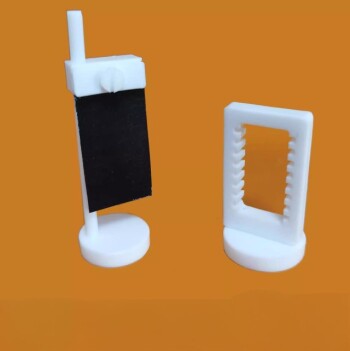
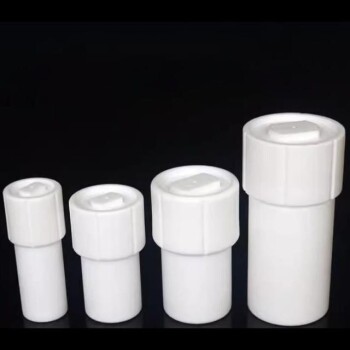
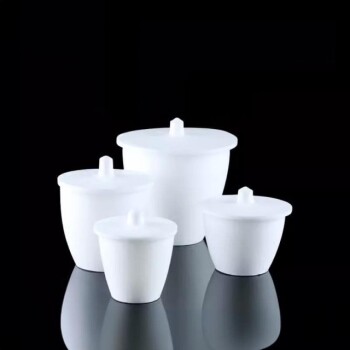
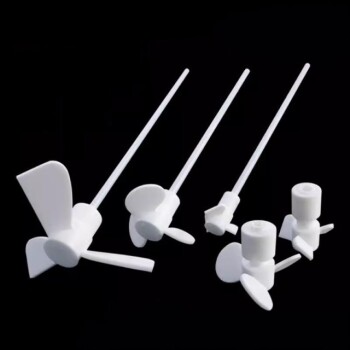
- Custom PTFE Teflon Parts Manufacturer for Hydrothermal Synthesis Reactor Polytetrafluoroethylene Carbon Paper and Carbon Cloth Nano-growth
- Stainless High Pressure Autoclave Reactor Laboratory Pressure Reactor
- High Pressure Laboratory Autoclave Reactor for Hydrothermal Synthesis
- Customizable High Pressure Reactors for Advanced Scientific and Industrial Applications
- Mini SS High Pressure Autoclave Reactor for Laboratory Use
People Also Ask
- What is the function of a PTFE reactor in MXene etching? Ensure Safe, High-Purity MAX Phase Conversion
- Why is a PTFE reactor required for titanium-based nano-ceramic coating solutions? Ensure Chemical Inertness & Purity
- Why must a Polytetrafluoroethylene (PTFE) reactor be used for Ti3C2TX MXene etching? Ensure Safety and Purity
- Why are PTFE reactors preferred for silver phosphate glass testing? Ensure Purity and Kinetic Accuracy
- What are the advantages of using polytetrafluoroethylene (PTFE) liners in hydrothermal synthesis reactors? High Purity