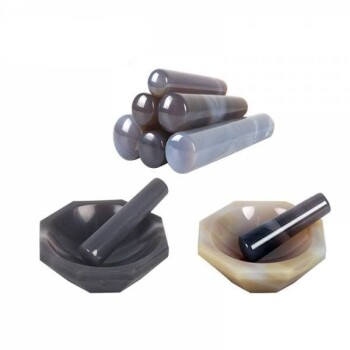
The primary role of grinding spent catalysts in a ceramic crucible is to mechanically reduce the material to a fine powder, typically reaching a particle size of 80 mesh. This physical transformation significantly increases the specific surface area, ensuring the solid material makes thorough and immediate contact with the sulfuric acid and sodium chloride leaching system.
Increasing the surface area is not merely a preparatory step; it is the critical factor that minimizes internal diffusion delays, enabling leaching rates to reach as high as 99 percent.
Optimizing Reaction Kinetics
Targeting Specific Particle Sizes
The process relies on precision. By grinding the spent catalyst to a specific standard, such as 80 mesh, you convert a heterogeneous solid into a uniform powder.
Maximizing the Solid-Liquid Interface
This reduction in size exposes a vastly larger surface area of the catalyst to the solvent. This ensures that the leaching agents—specifically sulfuric acid and sodium chloride—can interact with the maximum amount of material simultaneously.
Breaking Down Physical Barriers
Minimizing Internal Diffusion Delays
Large particles act as physical barriers to chemical reactions. They suffer from internal diffusion delays, where the solvent struggles to penetrate the core of the material.
Ensuring Thorough Contact
Grinding eliminates these diffusion bottlenecks. By pulverizing the material in the crucible, you remove the physical resistance that would otherwise slow down the extraction process.
Understanding the Process Criticality
The Foundation of High Recovery
This pretreatment is not optional for high-efficiency operations. It is described as a foundational step because the subsequent chemical reactions depend entirely on this physical preparation.
The Link to Yield
Without adequate grinding, the leaching agents cannot access the valuable metals trapped inside larger particles. Proper grinding is directly correlated with achieving recovery rates of up to 99 percent.
Making the Right Choice for Your Goal
To maximize the efficiency of your catalyst recovery process, consider the following application of this principle:
- If your primary focus is maximizing yield: rigorous grinding to at least 80 mesh is non-negotiable to achieve near-total leaching (99%).
- If your primary focus is process speed: ensure the specific surface area is maximized to eliminate diffusion delays that act as the rate-limiting step in the reaction.
Precise physical preparation is the gateway to unlocking the full chemical potential of the leaching system.
Summary Table:
| Process Factor | Impact on Leaching Efficiency |
|---|---|
| Target Particle Size | 80 mesh (Fine Powder) |
| Surface Area | Maximized for solid-liquid interface |
| Internal Diffusion | Minimized to prevent reaction bottlenecks |
| Primary Goal | 99% recovery rate of valuable metals |
| Leaching Agents | Sulfuric acid & Sodium chloride system |
Maximize Your Material Recovery with KINTEK
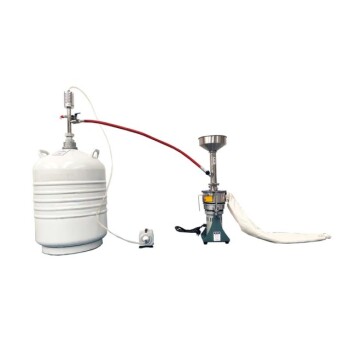
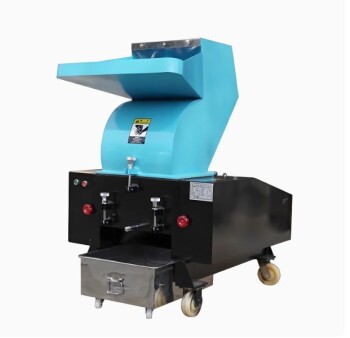
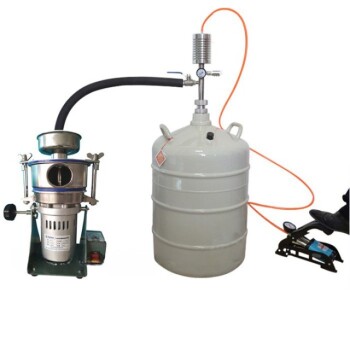
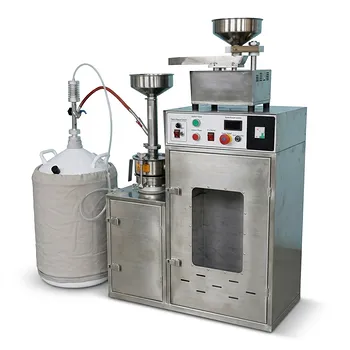
Ready to optimize your catalyst recovery and laboratory workflows? KINTEK specializes in premium laboratory equipment designed for precision and durability. Whether you need high-performance crushing and milling systems to achieve the perfect 80-mesh grind, or durable ceramic crucibles for your thermal processes, we have the solutions to drive your efficiency.
From high-temperature furnaces and hydraulic presses to PTFE products and ceramics, our comprehensive portfolio supports every stage of your research and production. Don't let processing bottlenecks limit your yields. Contact us today to explore our full range of solutions!
References
- Jinjiao Wang, Qin Gao. Improved Palladium Extraction from Spent Catalyst Using Ultrasound-Assisted Leaching and Sulfuric Acid–Sodium Chloride System. DOI: 10.3390/separations10060355
This article is also based on technical information from Kintek Solution Knowledge Base .
Related Products
- Three-dimensional electromagnetic sieving instrument
- High Energy Planetary Ball Mill Milling Machine for Laboratory
- Liquid Nitrogen Cryogenic Grinder Mill Cryomill Airflow Ultrafine Pulverizer
- Powerful Plastic Crusher Machine
- Small Cryogenic Grinder Cryomill Cryogrinder with Liquid Nitrogen for Laboratory Use
People Also Ask
- Why is sieving equipment essential for the classification of processed bio-activated carbon? Optimize Performance
- What are the limitations of sieving? Understanding the Constraints of Particle Size Analysis
- What are advantages and disadvantages of sieving method? A Guide to Reliable & Cost-Effective Particle Sizing
- How is sieving important? The Critical Role of Particle Size Analysis in Quality Control
- What is sieving and how does it work? A Guide to Accurate Particle Size Analysis