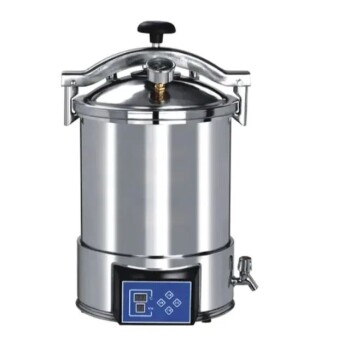
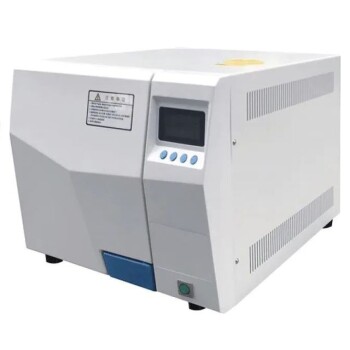
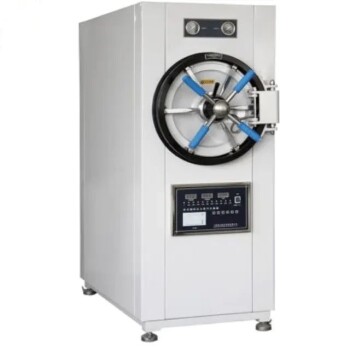
High-pressure high-level autoclaves serve as the critical simulation engine for testing the resilience of 9Cr–1Mo steel against carbon dioxide corrosion. These devices are designed to replicate harsh industrial service conditions by maintaining precise gas compositions—specifically CO2, CO, and CH4—at constant flow rates. By sustaining pressures up to 4.24 MPa and temperatures reaching 600 °C, they allow researchers to observe material behavior over extended periods, such as 4580 hours.
The core value of this equipment is not just in heating the material, but in stabilizing a dynamic chemical environment. By strictly controlling pressure, temperature, and gas flow over thousands of hours, these autoclaves provide the foundational data needed to understand oxidation kinetics and the long-term structural evolution of the metal.
Creating a High-Fidelity Service Environment
Precise Control of Atmospheric Variables
The primary role of the autoclave is the rigorous regulation of the chemical atmosphere surrounding the steel sample.
The system does not simply hold gas; it maintains specific compositions of CO2, CO, and CH4 at constant flow rates.
This ensures that the chemical potential driving the reaction remains stable throughout the testing duration.
Replicating Extreme Physical Conditions
Accurate simulation requires replicating the physical stress of the operating environment.
The autoclave is engineered to sustain a high pressure of 4.24 MPa.
Simultaneously, it maintains elevated temperatures up to 600 °C, mimicking the thermal loads the steel would experience in actual service.
Analyzing Material Degradation Mechanisms
Investigating Oxidation Kinetics
The controlled environment serves as a platform for measuring the rate of chemical change.
Researchers use these setups to study oxidation kinetics, determining how quickly the steel reacts with the carbon dioxide environment.
This data is essential for predicting the lifespan of the material in real-world applications.
Tracking Microstructural Changes
Beyond surface oxidation, the autoclave enables the study of internal material changes.
Specifically, it facilitates the observation of carbide formation and the evolution of the metal-oxide interface.
Understanding these microstructural shifts is vital, as they often dictate the mechanical failure points of the steel.
Understanding the Operational Trade-offs
The Challenge of Long-Term Stability
The primary reference highlights exposure times extending to 4580 hours.
Running an autoclave at high pressures and temperatures for this duration presents significant operational challenges.
The equipment must possess exceptional stability; even minor fluctuations in temperature or gas flow over months of testing can introduce noise into the kinetic data, compromising the accuracy of the simulation.
Making the Right Choice for Your Goal
To maximize the value of high-pressure autoclave testing for 9Cr–1Mo steel, align your parameters with your specific research objectives.
- If your primary focus is oxidation kinetics: Prioritize the stability of gas flow rates to ensure constant reactant availability throughout the test.
- If your primary focus is microstructural evolution: Ensure the system can maintain precise thermal control at 600 °C to accurately simulate carbide precipitation mechanisms.
By precisely mimicking these harsh service environments, these autoclaves transform theoretical corrosion data into actionable predictions for material lifespan.
Summary Table:
| Parameter | Specification/Role |
|---|---|
| Temperature Range | Up to 600 °C |
| Pressure Capacity | Up to 4.24 MPa |
| Atmosphere Control | CO2, CO, and CH4 gas compositions |
| Test Duration | Sustained performance up to 4580+ hours |
| Key Measurements | Oxidation kinetics and carbide formation |
| Primary Objective | Simulating high-fidelity industrial service environments |
Elevate Your Material Research with KINTEK
Precise simulation of harsh environments is critical for predicting material lifespan and preventing failure. KINTEK specializes in advanced laboratory solutions, offering a comprehensive range of high-temperature high-pressure reactors and autoclaves designed to meet the rigorous demands of corrosion and oxidation studies.
Our expertise extends to a full suite of laboratory equipment, including high-temperature furnaces, crushing and milling systems, and hydraulic presses, providing researchers and industrial professionals with the tools needed for excellence. Whether you are studying oxidation kinetics in 9Cr–1Mo steel or developing next-generation alloys, KINTEK delivers the reliability and precision your work deserves.
Ready to optimize your testing environment? Contact our experts today to discover how KINTEK's high-pressure solutions can drive your research forward.
References
- Lawrence Coghlan, R.L. Higginson. Using a plasma FIB system to characterise the porosity through the oxide scale formed on 9Cr-1Mo steel exposed to CO2. DOI: 10.1007/s10853-022-07758-9
This article is also based on technical information from Kintek Solution Knowledge Base .
Related Products
- Mini SS High Pressure Autoclave Reactor for Laboratory Use
- Stainless High Pressure Autoclave Reactor Laboratory Pressure Reactor
- Desktop Fast High Pressure Laboratory Autoclave Sterilizer 16L 24L for Lab Use
- Portable High Pressure Laboratory Autoclave Steam Sterilizer for Lab Use
- Laboratory High Pressure Horizontal Autoclave Steam Sterilizer for Lab Use
People Also Ask
- Why use high-pressure reactors for molecular sieve synthesis? Unlock Superior Crystallinity and Framework Control
- What are the advantages of using a high-pressure reactor like an autoclave? Maximize Liquefaction Speed & Yield
- What is the function of a high-pressure reactor autoclave? Enhancing Cu/N Co-Doped Carbon Catalyst Synthesis
- Why are high-pressure reactors or autoclaves necessary for the synthesis of new functional materials? Unlock Precision.
- How are high-pressure reactors used to prepare metaphosphate electrocatalysts? Master In-Situ Precursor Growth