Rapid cooling serves as a critical bridge between the dynamic nature of liquid alloys and the static requirements of advanced analysis tools. By instantly quenching a high-temperature liquid alloy like lead-bismuth (Pb-Bi), researchers can trap its unique chemical structure in a solid form. This effectively creates a permanent "snapshot" of the liquid state that is compatible with vacuum-based surface analysis instruments.
Standard surface analysis techniques operate in a vacuum and require solid samples, making the direct study of liquids impossible. The core significance of a rapid cooling device is its ability to freeze chemical inhomogeneities—such as atomic clusters—in their liquid-state configuration, enabling the study of high-temperature fluid properties using solid-state tools.
Overcoming Analytical Limitations
The Solid-State Requirement
Advanced analysis tools, specifically Electron Spectroscopy for Chemical Analysis (ESCA), are designed to operate within a solid-state vacuum environment.
Introducing a high-temperature liquid directly into these systems is generally not feasible due to containment and vacuum stability issues.
Therefore, to utilize the high sensitivity of these instruments, the liquid alloy must be converted into a solid without losing its liquid characteristics.
Preserving the "Liquid" Identity
The fundamental challenge in solidifying an alloy is that slow cooling changes its structure.
As an alloy cools naturally, atoms reorganize, and the unique segregation present in the liquid phase disappears.
Rapid cooling devices solve this by quenching the sample, solidifying it so quickly that the atoms do not have time to rearrange.
Capturing Microstructural Details
Freezing Chemical Inhomogeneities
Liquid alloys are not perfectly uniform; they contain transient structures known as chemical inhomogeneities.
These include specific atomic clusters and localized component segregation that define the alloy's behavior at high temperatures.
The rapid cooling device acts like a camera shutter, locking these transient features into place within the solid matrix.
Enabling Advanced Microscopy
Once the sample is quenched, researchers can employ Scanning Photoelectron Microscopy (SPEM).
Because the rapid cooling preserved the micro-segregation mechanisms of the liquid, SPEM can map these features accurately.
This allows scientists to observe how the alloy behaves at high temperatures by analyzing a room-temperature solid.
Understanding the Trade-offs
The Necessity of Extreme Speed
The validity of this analysis is entirely dependent on the cooling rate.
If the cooling is merely "fast" rather than "extremely high," the sample will begin to crystallize or reorganize, destroying the liquid-state evidence.
Snapshot vs. Dynamic Observation
It is important to recognize that this technique provides a static representation of a dynamic process.
While it preserves the configuration, it does not show the live movement of atoms, but rather a frozen instance of their arrangement.
Making the Right Choice for Your Goal
To determine if this methodology fits your experimental design, consider your specific analytical targets.
- If your primary focus is studying liquid dynamics: You are capturing a static "frozen moment" of the microstructure, not live atomic movement.
- If your primary focus is using vacuum-based tools (ESCA/SPEM): Rapid cooling is the only viable method to make liquid alloys compatible with your instrumentation.
By successfully effectively freezing time, rapid cooling turns transient liquid phenomena into permanent, observable data.
Summary Table:
| Feature | Significance in Liquid Alloy Analysis |
|---|---|
| Mechanism | Instant quenching/freezing of high-temperature liquid state |
| Structural Preservation | Traps chemical inhomogeneities and atomic clusters in situ |
| Analytical Compatibility | Enables use of vacuum-based tools like ESCA and SPEM |
| Key Outcome | Converts dynamic liquid phenomena into observable solid-state data |
| Critical Requirement | Extremely high cooling rates to prevent crystallization |
Advance Your Material Science with KINTEK Precision
Transition seamlessly from dynamic liquid states to precise analytical data with KINTEK’s advanced laboratory solutions. Whether you are studying lead-bismuth alloys or complex chemical structures, our high-performance equipment ensures the integrity of your samples.
KINTEK specializes in supporting researchers with a comprehensive range of:
- High-Temperature Furnaces & Rapid Cooling Solutions: From muffle and vacuum furnaces to custom thermal processing.
- Advanced Reactors: High-temperature high-pressure reactors and autoclaves for demanding environments.
- Material Processing: Crushing, milling, and hydraulic presses for sample preparation.
- Lab Essentials: High-purity ceramics, crucibles, and cooling systems like ULT freezers.
Ready to elevate your research accuracy? Contact us today to find the perfect equipment for your laboratory needs!
References
- Eleonora Bolli, Alessio Mezzi. ESCA as a Tool for Exploration of Metals’ Surface. DOI: 10.3390/coatings10121182
This article is also based on technical information from Kintek Solution Knowledge Base .
Related Products
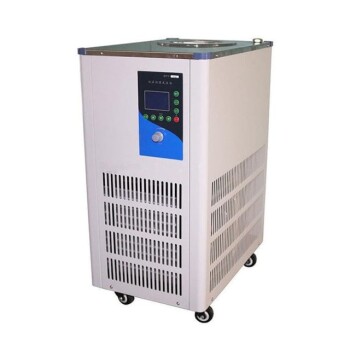
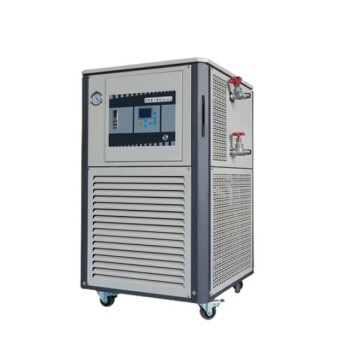
- 100L Chilling Circulator Cooling Water Circulator for Low Temperature Constant Temperature Reaction Bath Water Bath Cooling
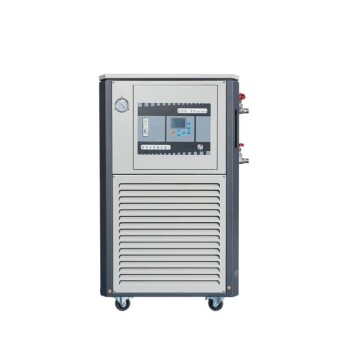
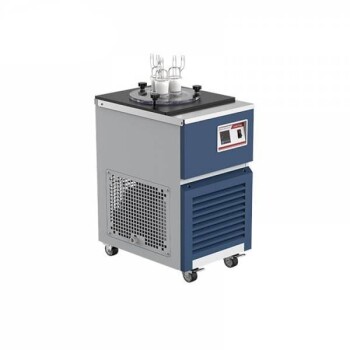
- 80L Chilling Circulator Cooling Water Circulator for Water Bath Cooling and Low Temperature Constant Temperature Reaction Bath
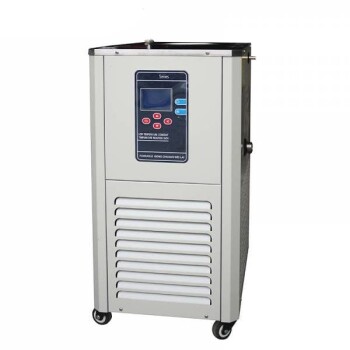
- 10L Heating Chilling Circulator Cooling Water Bath Circulator for High and Low Temperature Constant Temperature Reaction
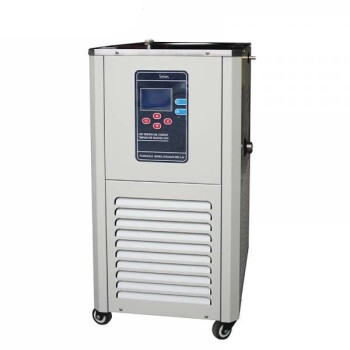
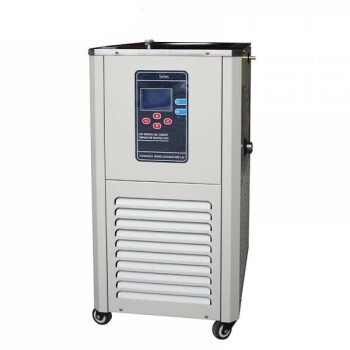
- 20L Chiller Water Bath Cooling Circulator Low Temperature Constant Temperature Reaction Bath
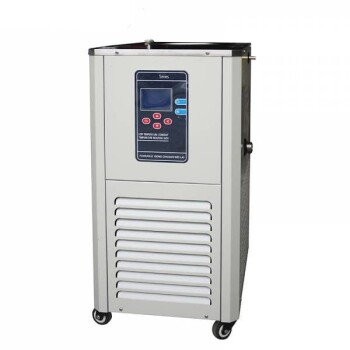
- 5L Chilling Circulator Cooling Water Bath Circulator for Low Temperature Constant Temperature Reaction Bath
People Also Ask
- What function does a circulating cooling chiller perform during the gas adsorption isotherm testing of nanoporous carbon?
- Why is a circulating water chiller required for Prussian Blue nanoparticles? Ensure Stability & Batch Reproducibility
- What is the purpose of a cooling circulation water bath system in electrochemical experiments? Enhance Lab Precision
- How does a constant temperature circulator support the leaching reaction of gold scrap? Optimize Gold Recovery Results
- How do constant temperature circulators impact weight-loss immersion tests? Ensure Precision in Corrosion Analysis