Knowledge What is the function of vacuum drying equipment in Li6PS5Cl composite preparation? Ensure High Ionic Conductivity
Author avatar

Tech Team · Kintek Solution

Updated 15 hours ago

What is the function of vacuum drying equipment in Li6PS5Cl composite preparation? Ensure High Ionic Conductivity


The primary function of vacuum drying equipment in the preparation of Li6PS5Cl-CuF2-LiNO3 composite solid electrolytes is the complete elimination of DME solvents following the wet mixing process. This procedure is typically conducted at a controlled temperature of 80°C to facilitate efficient evaporation without damaging the material structure.

Core Takeaway The vacuum drying stage is not simply about dehydration; it is a critical stabilization step required to preserve the electrochemical properties of the material. Failing to thoroughly remove residual solvents will directly degrade the sulfide electrolyte, significantly reducing ionic conductivity and compromising the overall chemical stability of the composite.

The Mechanism of Solvent Removal

Targeting DME Solvents

During the wet mixing phase of production, DME (Dimethoxyethane) is used as a solvent to blend the components. Once mixing is complete, the vacuum drying equipment is employed specifically to extract this solvent from the resulting mixture.

The Role of Vacuum and Temperature

The process relies on a vacuum environment combined with a specific thermal setting, typically 80°C. The vacuum lowers the boiling point of the DME solvent, allowing it to evaporate efficiently at this moderate temperature, ensuring deep drying without subjecting the delicate composite to excessive heat.

Why Complete Removal is Critical

Preserving Ionic Conductivity

The presence of even trace amounts of residual solvent acts as an impediment to ion transport. To achieve the high ionic conductivity required for effective solid-state battery performance, the electrolyte matrix must be completely free of liquid solvent residues.

Preventing Chemical Degradation

The sulfide component (Li6PS5Cl) within the composite is chemically sensitive. Residual DME solvents can act as a reactant, triggering unwanted side reactions with the sulfide electrolyte.

Ensuring Long-Term Stability

These side reactions do more than just lower performance; they fundamentally alter the chemical structure of the material. By ensuring the total removal of solvents, vacuum drying prevents these reactions, thereby securing the chemical stability of the final composite electrolyte.

Understanding the Trade-offs

The Risk of Incomplete Drying

The primary pitfall in this process is "good enough" drying. If the vacuum pressure is insufficient or the time duration is too short, trace solvents will remain trapped within the micro-structure of the composite.

Consequences of Process Failure

Unlike minor impurities, residual DME is active within the system. Retaining solvent leads to immediate degradation of the sulfide material, rendering the electrolyte chemically unstable and potentially unusable for high-performance applications.

Making the Right Choice for Your Goal

To ensure the success of your electrolyte preparation, focus on these specific outcomes:

  • If your primary focus is Maximizing Conductivity: Ensure the drying cycle is sufficiently long at 80°C under vacuum to remove every trace of DME, as solvent residues directly block ion movement.
  • If your primary focus is Chemical Stability: Prioritize the depth of the vacuum to lower the solvent boiling point, preventing high-heat damage while ensuring the sulfide component is not exposed to reactive solvents.

Precision in the drying phase is the defining factor between a stable, high-conductive electrolyte and a degraded material.

Summary Table:

Process Parameter Specification / Requirement Impact on Electrolyte
Target Solvent DME (Dimethoxyethane) Must be completely removed to prevent chemical reactions
Temperature 80°C (Controlled) Facilitates evaporation without damaging material structure
Environment High Vacuum Lowers boiling point for deep solvent extraction
Critical Goal Zero Residue Preserves ionic conductivity and long-term chemical stability

Elevate Your Battery Research with KINTEK Precision

Don't let residual solvents compromise your solid-state electrolyte performance. KINTEK specializes in advanced laboratory solutions designed for the rigorous demands of battery research. From high-performance vacuum drying ovens and high-temperature furnaces to precision hydraulic pellet presses and crushing and milling systems, we provide the tools you need to achieve maximum ionic conductivity and chemical stability.

Whether you are synthesizing sulfide electrolytes or testing new composite materials, our comprehensive range of equipment—including glove box-ready tools, crucibles, and cooling solutions—ensures your lab stays at the cutting edge of innovation.

Ready to optimize your electrolyte preparation? Contact KINTEK today to discuss how our specialized equipment can enhance your research results!

Related Products

People Also Ask

Related Products

Laboratory Scientific Electric Heating Blast Drying Oven

Laboratory Scientific Electric Heating Blast Drying Oven

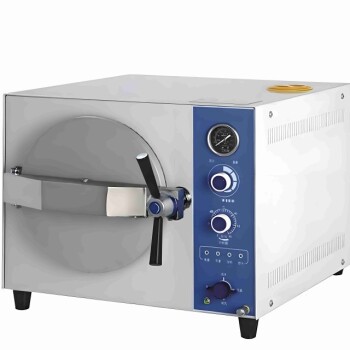
The desktop fast autoclave sterilizer is a compact and reliable device used for rapid sterilization of medical, pharmaceutical, and research items.

Vacuum Hot Press Furnace Machine for Lamination and Heating

Vacuum Hot Press Furnace Machine for Lamination and Heating

Experience clean and precise lamination with Vacuum Lamination Press. Perfect for wafer bonding, thin-film transformations, and LCP lamination. Order now!

Vacuum Heat Treat and Pressure Sintering Furnace for High Temperature Applications

Vacuum Heat Treat and Pressure Sintering Furnace for High Temperature Applications

Vacuum pressure sintering furnaces are designed for high temperature hot pressing applications in metal and ceramic sintering. Its advanced features ensure precise temperature control, reliable pressure maintenance, and a robust design for seamless operation.

Small Vacuum Heat Treat and Tungsten Wire Sintering Furnace

Small Vacuum Heat Treat and Tungsten Wire Sintering Furnace

The small vacuum tungsten wire sintering furnace is a compact experimental vacuum furnace specially designed for universities and scientific research institutes. The furnace features a CNC welded shell and vacuum piping to ensure leak-free operation. Quick-connect electrical connections facilitate relocation and debugging, and the standard electrical control cabinet is safe and convenient to operate.

Benchtop Laboratory Freeze Dryer for Lab Use

Benchtop Laboratory Freeze Dryer for Lab Use

Premium benchtop laboratory freeze dryer for lyophilization, preserving samples with ≤ -60°C cooling. Ideal for pharmaceuticals & research.

Vacuum Heat Treat Furnace with Ceramic Fiber Liner

Vacuum Heat Treat Furnace with Ceramic Fiber Liner

Vacuum furnace with polycrystalline ceramic fiber insulation liner for excellent heat insulation and uniform temperature field. Choose from 1200℃ or 1700℃ max. working temperature with high vacuum performance and precise temperature control.

Vacuum Cold Trap Chiller Indirect Cold Trap Chiller

Vacuum Cold Trap Chiller Indirect Cold Trap Chiller

Boost vacuum system efficiency and prolong pump life with our Indirect Cold Trap. Built-in chilling system with no need for fluid or dry ice. Compact design and easy to use.

Oil Free Diaphragm Vacuum Pump for Laboratory and Industrial Use

Oil Free Diaphragm Vacuum Pump for Laboratory and Industrial Use

Oil-free diaphragm vacuum pump for labs: clean, reliable, chemical-resistant. Ideal for filtration, SPE, and rotary evaporation. Maintenance-free operation.

Vertical High Temperature Graphite Vacuum Graphitization Furnace

Vertical High Temperature Graphite Vacuum Graphitization Furnace

Vertical high temperature graphitization furnace for carbonization and graphitization of carbon materials up to 3100℃.Suitable for shaped graphitization of carbon fiber filaments and other materials sintered in a carbon environment.Applications in metallurgy, electronics, and aerospace for producing high-quality graphite products like electrodes and crucibles.

Graphite Vacuum Furnace High Thermal Conductivity Film Graphitization Furnace

Graphite Vacuum Furnace High Thermal Conductivity Film Graphitization Furnace

The high thermal conductivity film graphitization furnace has uniform temperature, low energy consumption and can operate continuously.

Lab-Scale Vacuum Induction Melting Furnace

Lab-Scale Vacuum Induction Melting Furnace

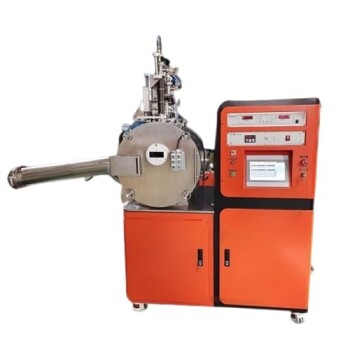
Get precise alloy composition with our Vacuum Induction Melting Furnace. Ideal for aerospace, nuclear energy, and electronic industries. Order now for effective smelting and casting of metals and alloys.

Dental Porcelain Zirconia Sintering Ceramic Vacuum Press Furnace

Dental Porcelain Zirconia Sintering Ceramic Vacuum Press Furnace

Get precise dental results with Dental Vacuum Press Furnace. Automatic temperature calibration, low noise tray, and touch screen operation. Order now!

Stainless Steel Quick Release Vacuum Chain Three-Section Clamp

Stainless Steel Quick Release Vacuum Chain Three-Section Clamp

Discover our stainless steel quick release clamp vacuum clamp, Ideal for high vacuum applications, Strong connections, reliable sealing, Easy installation, and durable design.

Horizontal High Temperature Graphite Vacuum Graphitization Furnace

Horizontal High Temperature Graphite Vacuum Graphitization Furnace

Horizontal Graphitization Furnace: This type of furnace is designed with the heating elements placed horizontally, allowing for uniform heating of the sample. It's well-suited for graphitizing large or bulky samples that require precise temperature control and uniformity.

Vacuum Cold Trap Direct Cold Trap Chiller

Vacuum Cold Trap Direct Cold Trap Chiller

Improve vacuum system efficiency and extend pump life with our Direct Cold Trap. No chilling fluid required, compact design with swivel casters. Stainless steel and glass options available.

Dental Porcelain Zirconia Sintering Ceramic Furnace Chairside with Transformer

Dental Porcelain Zirconia Sintering Ceramic Furnace Chairside with Transformer

Experience top-notch sintering with Chairside Sintering Furnace with Transformer. Easy to operate, noise-free pallet, and automatic temperature calibration. Order now!

Circulating Water Vacuum Pump for Laboratory and Industrial Use

Circulating Water Vacuum Pump for Laboratory and Industrial Use

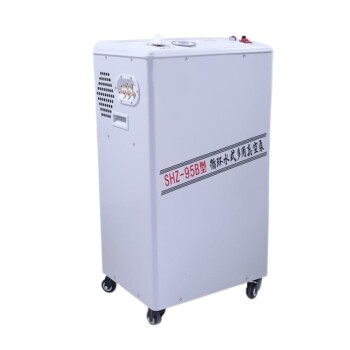
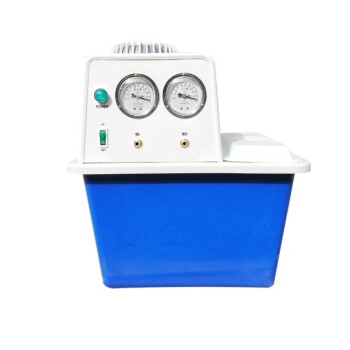
Efficient circulating water vacuum pump for labs - oil-free, corrosion-resistant, quiet operation. Multiple models available. Get yours now!

Graphite Vacuum Furnace Bottom Discharge Graphitization Furnace for Carbon Materials

Graphite Vacuum Furnace Bottom Discharge Graphitization Furnace for Carbon Materials

Bottom-out graphitization furnace for carbon materials, ultra-high temperature furnace up to 3100°C, suitable for graphitization and sintering of carbon rods and carbon blocks. Vertical design, bottom discharging, convenient feeding and discharging, high temperature uniformity, low energy consumption, good stability, hydraulic lifting system, convenient loading and unloading.

1200℃ Muffle Furnace Oven for Laboratory

1200℃ Muffle Furnace Oven for Laboratory

Upgrade your lab with our 1200℃ Muffle Furnace. Achieve fast, precise heating with Japan alumina fibers and Molybdenum coils. Features TFT touch screen controller for easy programming and data analysis. Order now!

High Pressure Laboratory Vacuum Tube Furnace Quartz Tubular Furnace

High Pressure Laboratory Vacuum Tube Furnace Quartz Tubular Furnace

KT-PTF High Pressure Tube Furnace: Compact split tube furnace with strong positive pressure resistance. Working temp up to 1100°C and pressure up to 15Mpa. Also works under controller atmosphere or high vacuum.


Leave Your Message