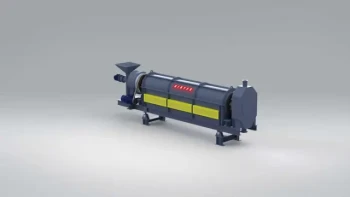
The hydrothermal carbonization (HTC) reactor is a specialized high-pressure vessel that converts corn stalks into "hydrochar," a high-energy solid fuel. By utilizing subcritical water as a medium, the reactor achieves deep carbonization at lower temperatures than traditional pyrolysis. This process creates a material with a highly ordered fiber structure and dense micropores, making it an ideal carbon source for industrial applications like steel manufacturing.
The technical significance of the HTC reactor lies in its ability to transform wet biomass into high-density solid fuel without energy-intensive pre-drying. By maintaining a subcritical water environment, the reactor facilitates unique chemical pathways that produce hydrochar with superior combustion reactivity and advanced adsorption properties.
The Mechanics of Subcritical Water Processing
Processing High-Moisture Feedstock
Unlike traditional thermal conversion, the HTC reactor operates in an aqueous environment at temperatures between 130°C and 250°C. This allows the system to process corn stalks and other biomass with high water content directly.
By eliminating the need for pre-drying raw materials, the HTC process significantly reduces the overall energy footprint of biomass conversion. This makes it an essential tool for the resource recovery of wet agricultural waste.
Accelerated Chemical Transformation
Within the reactor, water acts as both a solvent and a catalyst under autogenous pressure (typically between 2 and 10 MPa). This environment triggers a sequence of hydrolysis, dehydration, and decarboxylation reactions.
These reactions break down the complex macromolecules of the corn stalks more efficiently than dry heating. The result is a deep conversion into a carbon-rich material with enhanced dehydration properties and a high heating value.
Structural Evolution of the Hydrochar
Development of Ordered Micropores
The high-pressure environment of the HTC reactor ensures thermal uniformity, which is critical for developing a consistent internal structure. The resulting hydrochar possesses a highly ordered fiber structure and dense micropores.
These structural characteristics provide a significantly higher surface area compared to ordinary biochar. This increased porosity is what drives the material's superior combustion reactivity, making it a viable alternative to traditional coal.
Enrichment of Surface Functional Groups
The liquid-phase environment of the HTC reactor promotes the formation of abundant oxygen-containing functional groups. These include aromatic and oxygen-rich groups that are not typically found in high concentrations in dry-pyrolysis biochar.
These functional groups are technically significant because they determine the material's chemical reactivity. They allow the hydrochar to interact more effectively with other substances, whether for burning or filtering.
Enhancing Industrial Performance
Superior Combustion for Steel Manufacturing
The hydrochar produced from corn stalks is specifically optimized for blast furnace injection. Its dense structure and high reactivity support the low-carbon transition of the steel industry by replacing fossil-based coke.
Because the HTC reactor maintains a controlled, pressurized state, the resulting fuel burns more consistently. This stability is vital for maintaining the precise thermal gradients required in heavy industrial processes.
Optimized Adsorption for Environmental Remediation
The rich pore structure and surface functional groups significantly increase the material’s adsorption capacity. This makes hydrochar highly effective at capturing heavy metal ions, such as cadmium.
The technical precision of the HTC reactor allows engineers to "tune" the biochar properties for environmental cleanup. By adjusting the residence time and temperature, the reactor can produce a material tailored for specific pollutant removal.
Understanding the Trade-offs
Pressure Management and Equipment Cost
Operating a reactor under subcritical conditions requires high-specification materials to withstand constant pressure and potential corrosion. This can lead to higher initial capital expenditures compared to simple open-air or low-pressure kilns.
Process Wastewater Treatment
While the HTC reactor eliminates the need for drying, it generates a liquid byproduct that contains organic acids and dissolved carbon. This process water requires management or secondary treatment to ensure the overall operation remains environmentally neutral.
How to Apply This to Your Project
Making the Right Choice for Your Goal
- If your primary focus is Industrial Energy Substitution: Utilize the HTC reactor to produce hydrochar for blast furnace injection, as its high combustion reactivity directly reduces reliance on traditional coal.
- If your primary focus is Environmental Remediation: Leverage the reactor's ability to create abundant surface functional groups to produce high-capacity adsorbents for heavy metal removal.
- If your primary focus is Operational Efficiency: Use HTC technology to process high-moisture corn stalks immediately after harvest, bypassing the costs and time associated with traditional drying phases.
The technical integration of an HTC reactor transforms agricultural residues into a high-value, engineered carbon source that bridges the gap between waste management and industrial energy needs.
Summary Table:
| Feature | Technical Significance | Industrial Advantage |
|---|---|---|
| Subcritical Water Medium | Processes high-moisture biomass directly | Eliminates energy-intensive pre-drying |
| Autogenous Pressure | Facilitates hydrolysis & decarboxylation | Produces high-density solid fuel (Hydrochar) |
| Structural Control | Develops ordered micropores & high surface area | Superior combustion for steel manufacturing |
| Surface Chemistry | Enriches oxygen-containing functional groups | Optimized adsorption for heavy metal removal |
Scale Your Green Energy Transition with KINTEK
Unlock the full potential of biomass conversion with KINTEK’s precision-engineered high-temperature high-pressure reactors and autoclaves. Specifically designed to handle the rigorous subcritical conditions of hydrothermal carbonization, our equipment ensures uniform heat distribution and superior pressure management for consistent hydrochar quality.
Whether you are a researcher optimizing adsorption for environmental remediation or an industrialist seeking high-reactivity fuel for steel manufacturing, KINTEK provides the robust systems—from CVD and vacuum furnaces to specialized crushing and milling systems—needed to refine your process.
Ready to enhance your lab's efficiency and output? Contact us today to discuss your project requirements and discover how our advanced laboratory solutions can bring your material science goals to life!
References
- Shijie Wang, Shengli An. Review on the Application and Development of Biochar in Ironmaking Production. DOI: 10.3390/met13111844
This article is also based on technical information from Kintek Solution Knowledge Base .
Related Products
- High Pressure Laboratory Autoclave Reactor for Hydrothermal Synthesis
- Customizable Laboratory High Temperature High Pressure Reactors for Diverse Scientific Applications
- Electric Rotary Kiln Small Rotary Furnace for Activated Carbon Regeneration
- Customer Made Versatile CVD Tube Furnace Chemical Vapor Deposition Chamber System Equipment
- Electric Rotary Kiln Small Rotary Furnace Biomass Pyrolysis Plant
People Also Ask
- What role does a high-pressure reactor (autoclave) play in the synthesis of NiCuFe-LDH? Master Hydrothermal Growth
- What Role Does a High-Pressure Reactor or Autoclave Play in HA Catalyst Synthesis? Achieve High Surface Area Materials
- What equipment is required for hydrothermal synthesis of Ga0.25Zn4.67S5.08? Optimize Your Semiconductor Production
- What is the function of a high-pressure reactor in the hydrothermal synthesis of boehmite? Expert Process Insights
- What role does an autoclave play in the synthesis of MnO2 nanofibers? Mastering Hydrothermal Growth