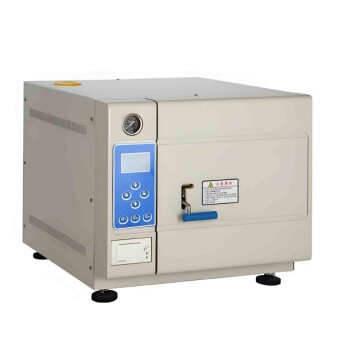
The technical value of a laboratory drying oven lies in its ability to strictly control moisture content and volatile compounds prior to high-temperature processing. By maintaining a precise thermal environment—typically between 60°C and 150°C—the oven ensures the complete removal of bound water and volatile organic compounds (VOCs) from solid waste. This pre-treatment is essential to prevent structural failures and safety hazards caused by rapid vaporization during the subsequent carbonization or pyrolysis stages.
While often viewed as a passive preparatory step, the drying oven acts as a critical gatekeeper for material integrity. It stabilizes raw waste materials before they enter high-heat reactors, preventing internal moisture from turning into high-pressure steam that would crack the material's structure or destabilize the reaction.
Optimizing the Pre-Carbonization State
Removal of Bound Water and VOCs
Solid waste materials naturally retain moisture and volatile organic compounds that are not removed by simple air drying.
A laboratory drying oven operates at controlled temperatures to target bound water—moisture trapped deep within the material's cellular or chemical structure.
By holding materials between 60°C and 150°C, the oven drives off these impurities without initiating the actual carbonization process.
Preventing Structural Damage
If raw waste is introduced to a high-temperature furnace while still containing moisture, the water undergoes rapid vaporization.
This sudden expansion from liquid to gas creates internal pressure spikes within the material.
The result is often structural damage, such as cracking or pore collapse, which compromises the mechanical strength and surface area of the final carbon product.
Ensuring Process Safety and Consistency
Mitigating Reactor Risks
Beyond material quality, the drying phase is a vital safety protocol for the laboratory workflow.
Rapid vaporization of moisture in a sealed high-temperature reactor can cause dangerous pressure fluctuations.
Pre-drying ensures that the material is chemically stable regarding moisture content, allowing for a predictable and safe pyrolysis reaction.
Dehydration of Finished Powders
The utility of the oven extends to the post-processing of carbon materials as well.
After carbonization, materials are often washed to remove ash or chemical activators, introducing water or solvents like ethanol back into the sample.
The oven provides constant-temperature dehydration to return the finished carbon powder to a completely dry state, ensuring no moisture interferes with downstream applications or characterization testing.
Understanding the Trade-offs
Thermal Degradation Risks
While removing moisture is critical, there is a risk of setting the drying temperature too high.
Exceeding the recommended 150°C limit during the drying phase can prematurely trigger the decomposition of organic components.
This unintended "pre-pyrolysis" can alter the chemical composition of the waste before the controlled carbonization step begins, leading to inconsistent results.
Energy vs. Throughput Efficiency
Laboratory drying is a time-intensive process that consumes energy to maintain a constant thermal environment.
Rushing this step by increasing heat reduces time but risks structural damage, while a lower temperature extends the timeline significantly.
Balancing drying duration against energy consumption and project timelines is a necessary logistical calculation.
Making the Right Choice for Your Goal
To maximize the quality of your carbon materials, tailor your drying protocol to your specific objectives:
- If your primary focus is Structural Integrity: Prioritize a lower temperature (e.g., 60-80°C) over a longer duration to gently remove moisture without stressing the material matrix.
- If your primary focus is Safety and Reactor Stability: Ensure the material reaches the higher end of the drying range (approx. 105-150°C) to guarantee the absolute removal of all bound water before pyrolysis.
- If your primary focus is Post-Treatment Purity: Use the oven to remove washing solvents (like ethanol) completely to prevent interference with surface area measurements or chemical applications.
Ultimately, the laboratory drying oven is not merely a heater, but a precision tool that defines the baseline quality and safety of your entire carbonization workflow.
Summary Table:
| Process Stage | Function of Drying Oven | Key Benefits |
|---|---|---|
| Pre-Treatment | Removal of bound water & VOCs (60°C - 150°C) | Prevents structural cracking & pore collapse |
| Reactor Prep | Stabilization of raw waste materials | Mitigates pressure spikes & ensures process safety |
| Post-Processing | Dehydration of finished powders/washed samples | Removes solvents to ensure high purity for testing |
| Quality Control | Controlled thermal environment | Prevents premature degradation of organic components |
Elevate Your Carbon Research with KINTEK Precision
Don't let moisture compromise your results. KINTEK specializes in advanced laboratory equipment designed to optimize every stage of your material synthesis. From high-precision laboratory drying ovens that ensure material integrity to our industry-leading high-temperature furnaces (muffle, tube, and vacuum) and high-pressure reactors, we provide the tools necessary for superior carbonization and pyrolysis outcomes.
Whether you are processing solid waste or developing advanced battery materials, our comprehensive range—including crushing and milling systems, PTFE consumables, and cooling solutions—is engineered for reliability and safety.
Ready to optimize your workflow? Contact our experts today to find the perfect equipment solution for your laboratory's needs.
References
- Gaurav Tatrari, Nanda Gopal Sahoo. Solid waste-derived carbon nanomaterials for supercapacitor applications: a recent overview. DOI: 10.1039/d0ma00871k
This article is also based on technical information from Kintek Solution Knowledge Base .
Related Products
- Laboratory Scientific Electric Heating Blast Drying Oven
- 56L Vertical Laboratory Vacuum Drying Oven
- 23L Laboratory Vacuum Drying Oven
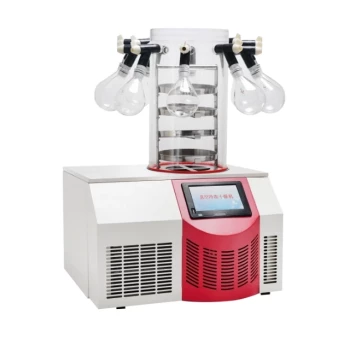
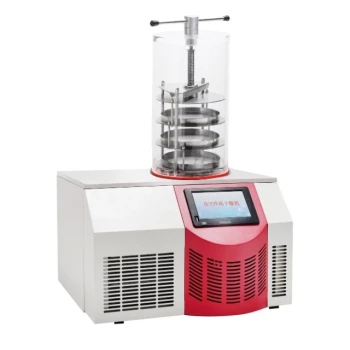
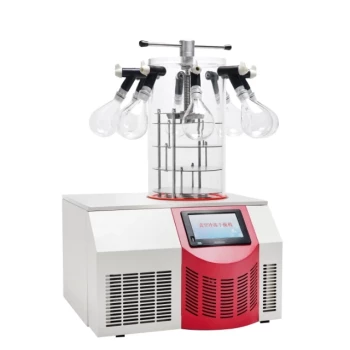
- High Performance Laboratory Freeze Dryer
- High Performance Laboratory Freeze Dryer for Research and Development
People Also Ask
- How does a laboratory electric drying oven contribute to the formation of the initial coating? Expert Insights
- What role does a precision laboratory drying oven play in the synthesis of GO-PANI nanocomposites? Protect Material Integrity
- What role does a laboratory drying oven play in the preparation of zinc oxide nanoparticle precursors?
- What is the necessity of using a laboratory drying oven when processing MoO3/GO composite nanopowders? Find out here.
- What is the role of a laboratory drying oven in cellulose citrate production? Ensure Material Stability & Purity