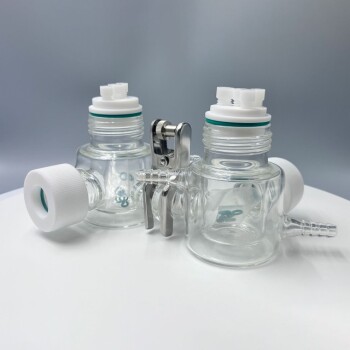
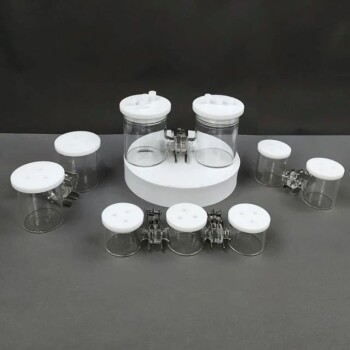
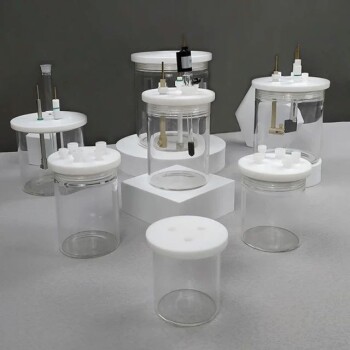
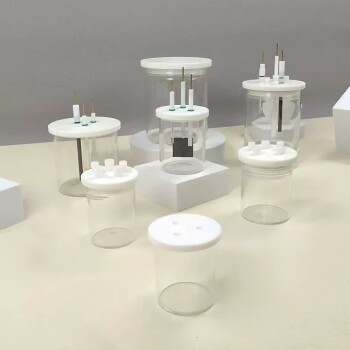
The typical volume range for a single chamber of a standard H-type electrolytic cell falls between 50ml and 500ml. While this range covers the majority of off-the-shelf laboratory requirements, manufacturers frequently offer customization services to accommodate experimental setups requiring significantly smaller or larger capacities.
The standard single-chamber capacity of 50ml to 500ml is designed to accommodate most benchtop electrochemical studies. However, for specialized applications involving scarce electrolytes or industrial scaling, custom fabrication is often necessary to bypass these standard limitations.
Analyzing Chamber Capacities
The Standard Operational Range
For most H-type electrolytic cells, the "off-the-shelf" configuration involves a single chamber volume of 50ml to 500ml.
This range is industry-standard because it provides a sufficient reservoir for electrolytes while remaining manageable for benchtop experimentation.
It ensures there is enough solution to maintain chemical stability during short-to-medium duration tests without requiring excessive quantities of reagents.
Options for Customization
While 50ml to 500ml is the norm, scientific requirements often deviate from these bounds.
Manufacturers acknowledge this by offering custom services for volumes outside the standard spectrum.
Whether you require a micro-volume cell (e.g., below 50ml) for scarce materials or a larger vessel for bulk electrolysis, these specifications can typically be fabricated upon request.
Critical Trade-offs in Volume Selection
Stability vs. Resource Consumption
Selecting the correct volume involves balancing chemical stability against resource efficiency.
Larger chambers (closer to 500ml) offer greater stability. The larger volume of electrolyte acts as a buffer, minimizing rapid changes in pH or reactant concentration during the experiment.
However, this stability comes at the cost of higher reagent consumption, which can be prohibitive if your electrolyte or catalyst is expensive.
Sensitivity vs. Handling
Smaller chambers (closer to 50ml) are highly efficient regarding materials. They are ideal when working with precious metal catalysts or synthesized electrolytes that are difficult to produce in large quantities.
The trade-off is sensitivity. In a smaller volume, reaction products accumulate faster, and reactant depletion occurs more quickly, which can alter the kinetics of your experiment sooner than in a large cell.
Making the Right Choice for Your Goal
To select the appropriate chamber volume, you must prioritize your specific experimental constraints.
- If your primary focus is standard electrochemical testing: Stick to the 50ml to 100ml range, as this balances reagent economy with sufficient volume for reliable three-electrode measurements.
- If your primary focus is long-term electrolysis or bulk synthesis: Opt for a 250ml to 500ml chamber to ensure concentration stability and prevent rapid depletion of reactants over time.
- If your primary focus is working with scarce or expensive materials: Request a customized small volume (below 50ml) to minimize waste, accepting that shorter experiment times may be necessary.
Ultimately, the ideal volume is the smallest amount that maintains a stable chemical environment for the duration of your specific test.
Summary Table:
| Volume Category | Typical Range | Best Use Case | Key Advantage |
|---|---|---|---|
| Micro/Small | < 50ml (Custom) | Precious or scarce electrolytes | Minimizes reagent waste |
| Standard | 50ml - 100ml | General electrochemical testing | Balance of economy & stability |
| Large | 250ml - 500ml | Bulk synthesis & long-term tests | High concentration stability |
| Industrial | > 500ml (Custom) | Scaling & pilot studies | Maximum chemical buffering |
Optimize Your Electrochemical Research with KINTEK
Precision starts with the right equipment. Whether you need a standard 50ml to 500ml H-type electrolytic cell or a custom-fabricated solution for specialized research, KINTEK provides the high-quality laboratory tools your projects demand.
Our extensive portfolio includes:
- Electrolytic cells and electrodes tailored to your volume requirements.
- Advanced battery research tools and high-performance consumables.
- High-temperature furnaces and HPC reactors for demanding material synthesis.
- Precision hydraulic presses and crushing/milling systems for sample preparation.
Don't let standard limitations hold back your innovation. Contact KINTEK today to discuss your specific volume requirements and discover how our expertise in laboratory consumables and equipment can enhance your lab's efficiency and accuracy.
Related Products
- H-Type Double-Layer Optical Electrolytic Electrochemical Cell with Water Bath
- H Type Electrolytic Cell Triple Electrochemical Cell
- Customizable PEM Electrolysis Cells for Diverse Research Applications
- Electrolytic Electrochemical Cell with Five-Port
- Super Sealed Electrolytic Electrochemical Cell
People Also Ask
- What is the overall structure of the H-type double-layer optical water bath electrolytic cell? Precision Design for Controlled Experiments
- How is the electrolyte managed in H-type electrolytic cells for specific reactions? Achieve Precise Control and High Purity
- What checks should be performed on the H-type electrolytic cell before use? Ensure Accurate Electrochemical Data
- What is important regarding temperature control for the H-type electrolytic cell? Ensure Precision and Data Integrity
- What is the overall structure of the H-type electrolytic cell? Understanding Dual-Chamber Electrochemical Designs