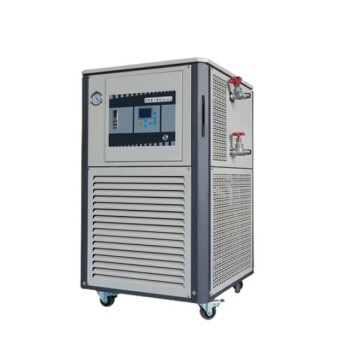
A high-temperature and high-pressure hydrothermal reactor provides a strictly controlled, sealed environment maintained specifically at 120 °C. By enclosing the reaction within a pressure-resistant chamber, the system facilitates the hydrothermal oxidation of copper plates in a solution of ammonium persulfate and sodium hydroxide, utilizing elevated pressure to significantly alter the reaction dynamics.
Core Insight The reactor’s sealed environment does more than simply heat the solution; it generates high pressure that is critical for accelerating chemical kinetics. This acceleration promotes the rapid generation of precursor ions and forces their subsequent dehydration, ensuring the successful crystallization of CuO nanofilms.
The Thermodynamic Environment
Sealed Chamber Dynamics
The fundamental condition provided by the reactor is a closed system. Unlike open-air heating, sealing the chamber allows the internal pressure to rise as the temperature increases to 120 °C.
Subcritical Solvent Behavior
This high-pressure environment prevents the solvent from boiling away, keeping it in a liquid state even at elevated temperatures. This increases the solubility of reactants and improves the contact between the solution and the solid copper substrate.
Accelerating Chemical Mechanisms
Driving Reaction Kinetics
The combination of high temperature and high pressure serves as a catalyst for the reaction rate. The environment accelerates the chemical kinetics of the oxidation process between the copper plates and the reactive solution (ammonium persulfate and sodium hydroxide).
Formation of Precursors
Under these specific thermodynamic conditions, the system promotes the generation of intermediate species. Specifically, it facilitates the formation of $[Cu(OH)_4]^{2-}$ precursor ions. These ions are the essential building blocks for the final nanomaterial.
From Precursor to Nanofilm
Dehydration and Crystallization
The reactor's conditions do not just create precursors; they drive the phase transformation. The environment forces the $[Cu(OH)_4]^{2-}$ ions to undergo dehydration.
Grain Formation
As water molecules are removed during dehydration, the material reorganizes into stable CuO crystal grains. This transition from a dissolved ionic state to a solid crystalline structure is the defining step in synthesizing the nanofilm.
Understanding the Trade-offs
While hydrothermal reactors offer precise control over crystallization, there are operational considerations to keep in mind.
Batch Processing Limitations
Hydrothermal synthesis is typically a batch process. Unlike continuous flow methods, the sealed nature of the reactor limits the volume of material that can be produced in a single run, potentially affecting scalability.
Safety and Precision
The requirement for high pressure necessitates rigorous safety protocols and equipment capable of withstanding significant stress. furthermore, deviations in temperature (even slightly away from 120 °C) can alter the pressure profile, potentially leading to inconsistent film morphology or incomplete crystallization.
Making the Right Choice for Your Synthesis
To ensure successful CuO nanofilm growth, tailor your approach based on your specific requirements:
- If your primary focus is reaction speed: Rely on the high-pressure environment to accelerate kinetics, reducing the time required for precursor saturation compared to ambient pressure methods.
- If your primary focus is film purity: Ensure the temperature is strictly maintained at 120 °C to guarantee the complete dehydration of $[Cu(OH)_4]^{2-}$ ions into pure CuO crystals without residual hydroxides.
The synthesis of high-quality CuO nanofilms relies on the reactor's ability to couple thermal energy with pressure to drive the dehydration of precursor ions.
Summary Table:
| Condition Provided | Role in CuO Synthesis | Impact on Result |
|---|---|---|
| 120 °C Temperature | Drives thermal oxidation and dehydration | Pure CuO crystal grain formation |
| High Pressure | Prevents solvent boiling & accelerates kinetics | Rapid $[Cu(OH)_4]^{2-}$ precursor generation |
| Sealed Chamber | Creates a closed thermodynamic system | Enhanced solubility and reactant contact |
| Aqueous Medium | Acts as a solvent for ionic species | Uniform nanofilm morphology |
Elevate Your Nanomaterial Research with KINTEK
Precise control over temperature and pressure is the cornerstone of high-quality CuO nanofilm synthesis. KINTEK specializes in providing state-of-the-art laboratory equipment designed for the most demanding hydrothermal applications. Our comprehensive portfolio includes:
- High-Temperature & High-Pressure Reactors and Autoclaves for flawless crystallization.
- Muffle, Tube, and Vacuum Furnaces for advanced material processing.
- Crushing, Milling, and Sieving Systems for precise sample preparation.
- Essential Consumables including high-purity ceramics, crucibles, and PTFE products.
Whether you are focusing on reaction kinetics or material purity, KINTEK offers the reliable tools needed to ensure consistent, scalable results for battery research, chemical engineering, and nanotechnology.
Ready to optimize your synthesis process? Contact KINTEK today to find the perfect solution for your lab!
References
- Mitsunori Yada, Yuko Inoue. Synthesis of CuO Quadrilateral Nanoplate Thin Films by Controlled Crystal Growth in a Two-Dimensional Microspace. DOI: 10.3390/asec2023-15364
This article is also based on technical information from Kintek Solution Knowledge Base .
Related Products
- Customizable Laboratory High Temperature High Pressure Reactors for Diverse Scientific Applications
- High Pressure Laboratory Autoclave Reactor for Hydrothermal Synthesis
- Manual High Temperature Heated Hydraulic Press Machine with Heated Plates for Lab
- Customizable High Pressure Reactors for Advanced Scientific and Industrial Applications
- Automatic High Temperature Heated Hydraulic Press Machine with Heated Plates for Lab
People Also Ask
- How do high-pressure and high-temperature reactors ensure the effective treatment of lignocellulosic wastewater in WAO?
- What equipment is required for high-pressure high-temperature reactions? Master Extreme Chemistry Safely
- How do you control high pressure in a reactor? A Guide to Safe & Stable Operation
- Why is argon better than nitrogen for inert atmosphere? Ensure Absolute Reactivity & Stability
- How does initial oxygen pressure affect the wet oxidation of pharmaceutical sludge? Master Your Oxidation Depth