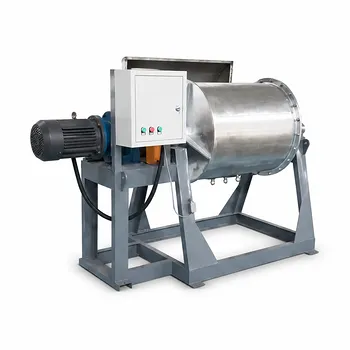
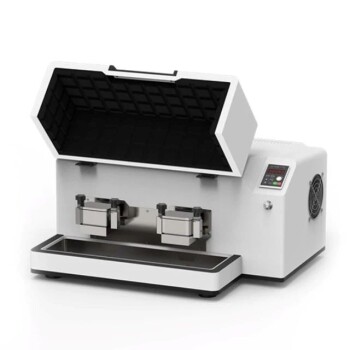
The physical environment within a planetary ball mill is defined by the generation of intense centrifugal forces, high-frequency mechanical impacts, and strong shear forces. This is created by a dual-rotation mechanism where grinding jars revolve around a central axis while simultaneously rotating on their own axes in the opposite direction.
Core Takeaway By converting kinetic energy into chemical potential, planetary ball mills allow for the breaking and reorganization of chemical bonds at room temperature. This mechanical activation effectively replaces the need for high-temperature thermal energy, enabling complex solid-state reactions through impact and shear rather than heat.
The Mechanics of Force Generation
Dual-Axis Rotation
The defining physical condition of a planetary ball mill is its complex motion. Grinding jars rotate around a central revolution axis while spinning on their own axes in the opposite direction.
Intense Centrifugal Fields
This counter-rotation generates massive centrifugal forces. These forces accelerate the grinding media (balls) to high speeds, creating an environment of high kinetic energy far exceeding that of simple gravity-based tumbling.
Impact and Shear Synergy
The motion forces the grinding media to collide with the jar walls and the material. This produces high-frequency impacts (compression) and strong shear forces (friction), which are the primary drivers for energy transfer into the solid reactants.
Microscopic Physical Changes
Particle Refinement
The mechanical collision and shear forces physically break down solid particles. This results in a significant increase in specific surface area, exposing more material to the reaction interface.
Structural Disorder and Defects
Beyond simple size reduction, the high-energy environment induces lattice defects and structural disorder. This mechanical activation expands lattice parameters and creates diffusion channels, which is particularly critical for enhancing ionic conductivity in solid electrolytes.
Atomic-Scale Mixing
The process achieves a high degree of uniformity at the microscopic level. By continuously fracturing and cold-welding particles, the mill forces components (such as precursors for ceramics or electrolytes) to mix at an atomic scale.
Understanding the Trade-offs
Crystallinity vs. Conductivity
A key trade-off in this process is the deliberate introduction of disorder. While traditional synthesis aims for perfect crystals, mechanochemical synthesis often targets a defect-rich structure to improve performance metrics like ionic conductivity or visible light response.
Mechanical Energy vs. Thermal Energy
This process trades thermal input for kinetic input. By driving reactions at room temperature, you avoid the need for high-temperature sintering, but you must precisely control the mechanical energy (e.g., rotational speed) to ensure phase purity without degrading the material.
Making the Right Choice for Your Goal
To leverage these physical conditions effectively, tailor your approach to your specific outcome:
- If your primary focus is Chemical Synthesis: Rely on the impact energy to break chemical bonds and drive solid-phase reactions at room temperature, bypassing the need for heat-treatment steps.
- If your primary focus is Material Performance: Utilize the shear forces to introduce lattice defects and ion doping, which can narrow bandgaps in photocatalysts or widen diffusion channels in solid electrolytes.
The planetary ball mill is not just a grinder; it is a kinetic reactor that substitutes heat with high-energy mechanical force to engineer material properties at the atomic level.
Summary Table:
| Physical Condition | Mechanism | Material Outcome |
|---|---|---|
| Centrifugal Forces | Dual-axis counter-rotation | High kinetic energy acceleration |
| High-Frequency Impact | Ball-to-wall/material collisions | Bond breaking & particle refinement |
| Strong Shear Forces | Friction between grinding media | Lattice defects & atomic-scale mixing |
| Mechanical Activation | Kinetic-to-chemical energy conversion | Low-temperature chemical synthesis |
Revolutionize Your Material Research with KINTEK
Unlock the full potential of mechanochemical synthesis with KINTEK’s high-performance planetary ball mills. Whether you are developing next-generation solid electrolytes, advanced ceramics, or high-surface-area catalysts, our precision crushing and milling systems provide the consistent energy input required for atomic-scale engineering.
Beyond milling, KINTEK specializes in a comprehensive range of laboratory solutions, including:
- Thermal Processing: Muffle, tube, and vacuum furnaces for controlled sintering.
- Sample Preparation: Hydraulic presses (pellet, hot, isostatic) and sieving equipment.
- Advanced Synthesis: CVD, PECVD systems, and high-temperature high-pressure reactors.
- Battery Research: Specialized tools, electrolytic cells, and high-purity consumables like PTFE and ceramics.
Ready to elevate your lab's efficiency and material performance? Contact our technical experts today to find the perfect equipment for your specific application.
References
- Adam A.L. Michalchuk, Vladimir V. Boldyrev. Tribochemistry, Mechanical Alloying, Mechanochemistry: What is in a Name?. DOI: 10.3389/fchem.2021.685789
This article is also based on technical information from Kintek Solution Knowledge Base .
Related Products
- High Energy Planetary Ball Mill for Laboratory Horizontal Tank Type Milling Machine
- Laboratory Planetary Ball Mill Rotating Ball Milling Machine
- High-Energy Omnidirectional Planetary Ball Mill Milling Machine for Laboratory
- High Energy Planetary Ball Mill Milling Machine for Laboratory
- Laboratory Horizontal Planetary Ball Mill Milling Machine
People Also Ask
- What is the role of a planetary ball mill in sulfide-based solid-state batteries? Engineer High-Performance Cathodes
- What are the parameters of a planetary ball mill? Master Speed, Time, and Media for Perfect Grinding
- What is the function of a planetary ball mill for nanostructured eutectic steel? Essential Prep for High-Strength Alloys
- What role does a planetary ball mill play in the preparation of NASICON-type solid electrolytes like LATP and LAGP?
- What is the function of a planetary ball mill in solid-state electrolyte prep? Milling vs. SDS Methods Explained