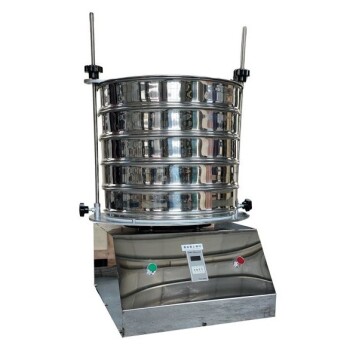
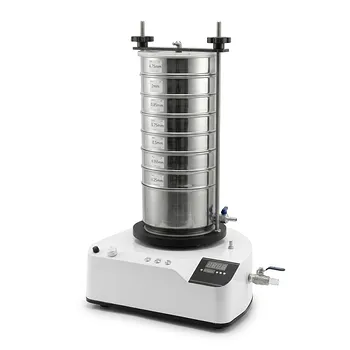
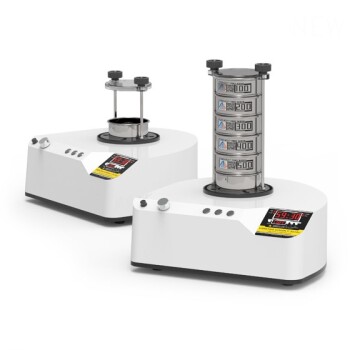
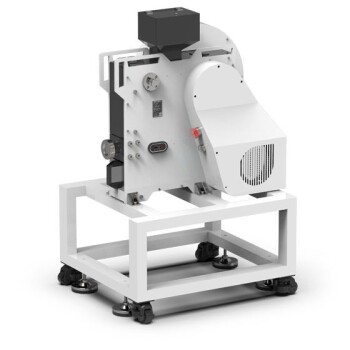
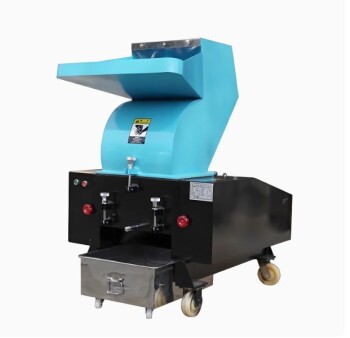
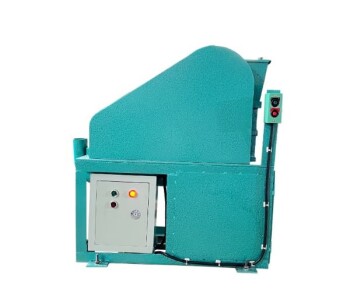
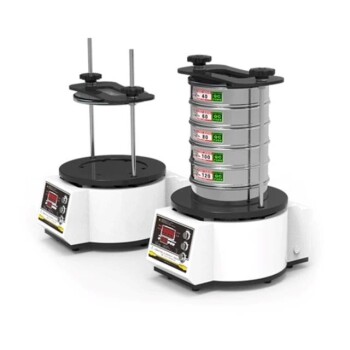
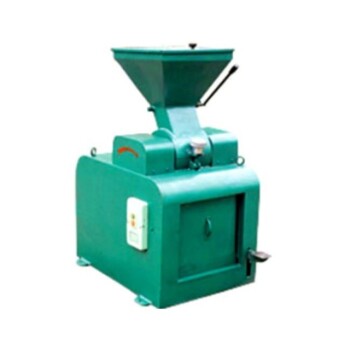
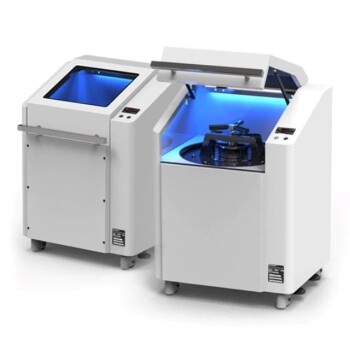
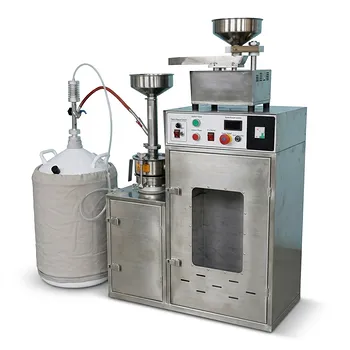
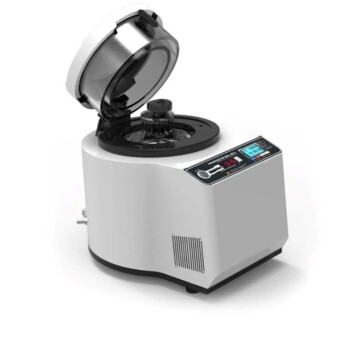
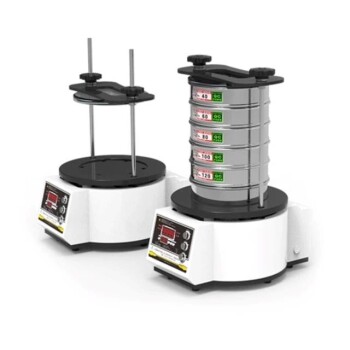
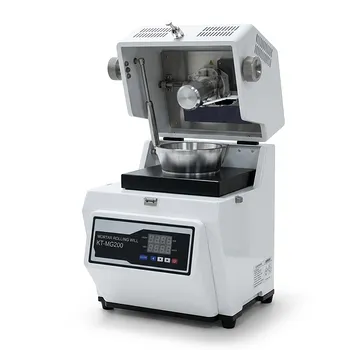
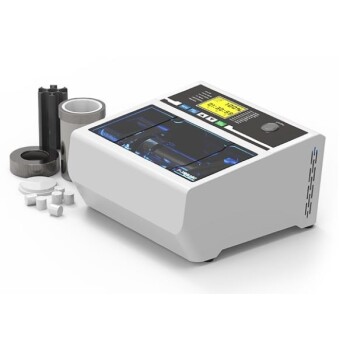
Crushing and sieving systems transform raw corn stalks into a standardized powder with a specific mesh size, typically 30-40 mesh (approximately 0.43 mm to 1.02 mm). This preliminary step is essential to increase the material's specific surface area and ensure particle uniformity. By doing so, researchers can achieve consistent heat transfer and uniform chemical reaction rates in downstream processes like pyrolysis, torrefaction, or biochemical pretreatment.
These systems serve as the critical bridge between raw agricultural waste and viable research feedstock by eliminating physical variability. They minimize heat and mass transfer resistance, allowing for precise control over reaction kinetics and the generation of reproducible experimental data.
Establishing a Uniform Physical Foundation
Size Classification and Standardization
The primary role of these systems is to convert heterogeneous, bulky corn stalks into a homogeneous powder. Using high-speed blades or hammers, the system pulverizes the stalks, while standard sieves classify the particles to ensure they fall within a narrow, predictable range. This standardization is vital for creating a "physical foundation" that allows for accurate comparisons across different research trials.
Increasing Specific Surface Area
Reducing the particle size significantly increases the specific surface area of the corn stalk material. A higher surface-area-to-volume ratio means that more of the biomass is exposed to the environment at any given time. This exposure is the fundamental driver for all subsequent thermal and chemical transformations.
Impact on Thermal and Chemical Reactions
Optimization of Heat and Mass Transfer
In thermal processes like pyrolysis and torrefaction, uniform particle size minimizes internal temperature gradients. Smaller, sieved particles allow heat to penetrate rapidly and evenly to the core of the material. This reduces heat and mass transfer resistance, ensuring the entire sample reacts at the same rate and preventing "cold spots" that could lead to incomplete reactions.
Overcoming Lignocellulosic Recalcitrance
Corn stalks possess a dense lignocellulosic structure that is naturally resistant to breakdown. Physical crushing shears the internal fibers, reducing the recalcitrance of the biomass. This allows chemical reagents, such as ammonia or subcritical water, to penetrate the internal structure more effectively, facilitating a more thorough and uniform hydrolysis or pretreatment.
Consistency in Kinetic Data
For researchers focused on combustion or reaction kinetics, sieving to precise ranges (such as 90–300 μm) is non-negotiable. Consistent particles ensure that combustion kinetic data remains stable and accurate. This allows laboratory-scale findings to be reliably used for simulating fuel reaction characteristics in industrial-scale mills or reactors.
Understanding the Trade-offs
Energy Consumption vs. Particle Size
There is a direct trade-off between the degree of fineness and the energy required for processing. While extremely fine particles (less than 0.25 mm) minimize mass transfer resistance, the energy cost to achieve this size in industrial settings can be prohibitive. Researchers must balance the need for precision with the practical scalability of their findings.
Potential for Material Loss and Dust
High-intensity crushing can generate significant amounts of fine dust or "fines" that may bypass sieves or become airborne. This can lead to a loss of material and potentially alter the chemical composition of the remaining sample if certain parts of the corn stalk (like the pith) pulverize more easily than others (like the rind).
How to Apply This to Your Research Goal
When selecting a crushing and sieving protocol, your target mesh size should align with your specific downstream application:
- If your primary focus is Torrefaction or Pyrolysis: Focus on achieving a 30-40 mesh size to optimize heat transfer and ensure the consistency of the resulting bio-char or bio-oil.
- If your primary focus is Pellet Production: Aim for a larger, uniform particle size (approximately 4mm) to provide a stable foundation for moisture regulation and close packing during molding.
- If your primary focus is Chemical Pretreatment: Prioritize high-shear crushing to reduce lignocellulosic recalcitrance, allowing for deep penetration of reagents into the fibers.
- If your primary focus is Kinetic Modeling: Use precision sieving to isolate narrow ranges (e.g., <90 μm) to eliminate variables caused by uneven particle sizes during combustion.
Standardizing the physical state of corn stalks is the most effective way to ensure that your biomass research results are both accurate and reproducible.
Summary Table:
| Feature | Function in Biomass Processing | Impact on Research |
|---|---|---|
| Crushing/Milling | Size reduction & fiber shearing | Overcomes recalcitrance & increases surface area |
| Sieving | Particle size classification | Ensures homogeneity & consistent heat transfer |
| Standardization | Achieving specific mesh (e.g., 30-40) | Guarantees reproducible data & stable kinetics |
| Mass Transfer | Reducing internal gradients | Eliminates cold spots in thermal reactions |
Elevate Your Biomass Research with KINTEK Precision
High-quality research outcomes start with perfectly prepared feedstock. KINTEK specializes in advanced crushing and milling systems and precision sieving equipment designed to transform raw corn stalks into standardized, high-performance biomass samples.
Our comprehensive laboratory solutions support your entire workflow—from pellet presses for density studies to high-temperature furnaces (muffle, tube, vacuum) and high-pressure reactors for advanced thermal and chemical analysis. Whether you are focused on pyrolysis, torrefaction, or kinetic modeling, KINTEK provides the reliability and precision you need to ensure reproducible results.
Ready to optimize your preliminary processing? Contact our experts today to find the perfect equipment for your lab!
References
- Lei Chen, Tianjin Li. Effect of Torrefaction on the Physiochemical Characteristics and Pyrolysis of the Corn Stalk. DOI: 10.3390/polym15204069
This article is also based on technical information from Kintek Solution Knowledge Base .
Related Products
- Laboratory Test Sieves and Sieving Machines
- Laboratory Vibratory Sieve Shaker Machine for Dry and Wet Three-Dimensional Sieving
- Three-dimensional electromagnetic sieving instrument
- Laboratory Jaw Crusher
- Powerful Plastic Crusher Machine
People Also Ask
- What are laboratory test sieves used for? A Guide to Particle Size Analysis
- How do you calculate the sieve test? Master Particle Size Distribution for Quality Control
- How does a lab test sieve contribute to biomass charcoal powder preparation? Achieve Uniform Particle Size
- What are the specifications for test sieves? A Guide to ASTM & ISO Standards for Accurate Particle Analysis
- What materials are required for sieving? Achieve Accurate Particle Size Analysis