High-precision stirrers and feeding systems are the critical control mechanisms that dictate the quality of catalyst preparation during coprecipitation. They function by ensuring anions and cations mix at a strictly controlled rate to reach a precise state of supersaturation. By simultaneously regulating feeding speed, pH, and temperature, these systems enable the uniform nucleation and growth of active metal components and supports in a single, integrated step.
True catalyst optimization is not just about the ingredients, but the kinetics of their combination. These high-precision systems prevent structural inconsistencies, enabling the creation of highly dispersed bimetallic or multimetallic catalyst systems that manual or low-precision methods cannot replicate.
Orchestrating Nucleation and Growth
Achieving Controlled Supersaturation
The primary function of the feeding system is to manage the flow of metal salt solutions to reach a state of supersaturation.
This state is the prerequisite for precipitation. By controlling the rate at which anions and cations interact, the system ensures that the chemical environment is primed for consistent solid formation rather than chaotic crashing out of solids.
Simultaneous Regulation of Variables
Beyond flow rate, these systems maintain tight control over pH values and temperature.
These variables must be kept constant to ensure that nucleation (the birth of particles) and crystal growth happen uniformly. This synchronization allows for the synthesis of complex catalyst structures in a single step.
The Impact of Microscopic Mixing
Preventing Component Agglomeration
High-precision stirring operates at a microscopic scale to ensure thorough homogenization of the solution.
Without this level of shear and mixing, active components tend to clump together. Effective stirring prevents this agglomeration, ensuring that the active sites on the catalyst remain accessible rather than buried inside large clusters.
Optimizing Support Integration
This mixing capability is vital when depositing active materials onto supports, such as magnetic Fe3O4 or aluminum powder.
The equipment facilitates the formation of uniformly distributed nanoscale particles (such as calcium oxide) directly on these supports. This results in composite nanocatalysts that exhibit extremely high surface activity and structural stability.
Common Pitfalls to Avoid
The Risk of Inconsistent Feeding
If the feeding system lacks precision, the solution may oscillate between under-saturation and over-saturation.
This fluctuation leads to uneven particle sizes and poor dispersion. A catalyst with inconsistent particle sizes will suffer from reduced efficiency and unpredictable reaction rates.
Overlooking Microscopic Homogeneity
It is a common error to assume that macroscopic mixing (visible swirling) equates to microscopic homogeneity.
Standard stirrers may move the bulk liquid but fail to mix at the nanoscale required for catalyst synthesis. This failure results in "hot spots" of concentration, leading to lower stability in the final composite material.
Making the Right Choice for Your Goal
When selecting equipment for coprecipitation, align the machine's capabilities with your specific catalytic requirements.
- If your primary focus is high surface activity: Prioritize stirring systems capable of microscopic-scale mixing to prevent agglomeration and maximize surface area.
- If your primary focus is complex multimetallic structures: Ensure your feeding system offers granular control over flow rates and pH to maintain a stable supersaturation state during the single-step growth phase.
Precision in the preparation phase is the single greatest predictor of performance in the final catalyst application.
Summary Table:
| Feature | Role in Coprecipitation | Impact on Catalyst Quality |
|---|---|---|
| High-Precision Feeding | Regulates metal salt flow and pH | Ensures uniform nucleation and prevents uneven particle sizes |
| Microscopic Stirring | High-shear homogenization | Prevents component agglomeration and maximizes surface activity |
| Climate Control | Constant temperature management | Maintains stable crystal growth for complex multimetallic structures |
| Integrated Regulation | Synchronized flow, pH, and temp | Enables single-step synthesis of stable, highly dispersed catalysts |
Elevate Your Catalyst Research with KINTEK Precision
Achieving the perfect state of supersaturation and microscopic homogeneity requires more than just standard laboratory tools. KINTEK specializes in advanced laboratory equipment designed for the most demanding chemical synthesis workflows.
Our high-precision systems ensure your coprecipitation processes yield catalysts with superior surface activity and structural stability. Beyond mixing and feeding, KINTEK offers a comprehensive range of solutions including:
- High-Temperature & High-Pressure Reactors & Autoclaves for advanced material synthesis.
- Crushing, Milling, and Sieving Equipment for precise particle size control.
- Rotary, Vacuum, and CVD Furnaces for thermal processing and catalyst activation.
- Electrolytic Cells and Battery Research Tools for electrochemical applications.
Don't let inconsistent kinetics compromise your research. Contact KINTEK today to discover how our specialized laboratory equipment and consumables can optimize your catalyst preparation and drive your innovation forward.
References
- Ahmed I. Osman, Mika Sillanpää. Biofuel production, hydrogen production and water remediation by photocatalysis, biocatalysis and electrocatalysis. DOI: 10.1007/s10311-023-01581-7
This article is also based on technical information from Kintek Solution Knowledge Base .
Related Products
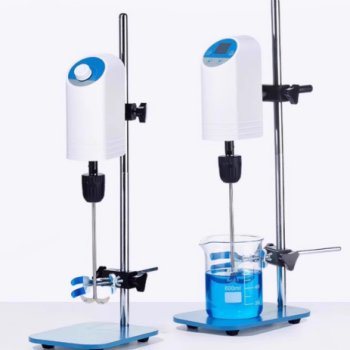
- High Performance Laboratory Stirrers for Diverse Applications
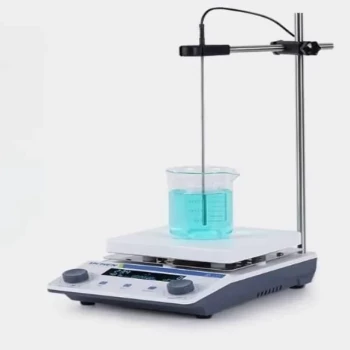
- Laboratory Small Constant Temperature Heated Magnetic Stirrer Heater and Stirrer
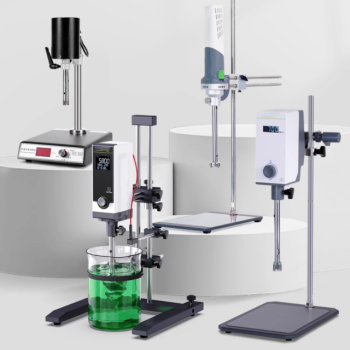
- High Shear Homogenizer for Pharmaceutical and Cosmetic Applications
- Custom PTFE Teflon Parts Manufacturer for Magnetic Stirring Bar
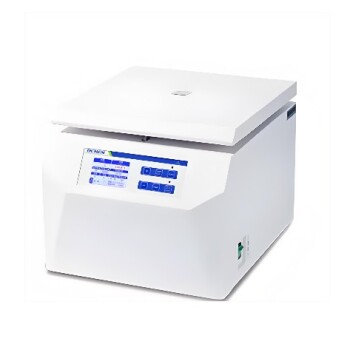
- High-Speed Desktop Centrifuge for Blood Sample Processing
People Also Ask
- How does a laboratory stirrer influence MOF product quality? Master Precision in Non-Solvothermal Synthesis
- What critical role does a Laboratory Stirrer play during leaching? Enhance Titanium-Magnesium Waste Recovery
- What is the primary function of laboratory stirring equipment in the preparation of compost leachate? Optimize Extraction
- What is a laboratory mixer? A Guide to Achieving Perfect Sample Homogeneity
- What is a laboratory mixer used for? Choose the Right Tool for Liquids or Solids