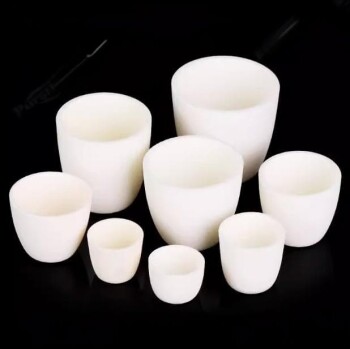
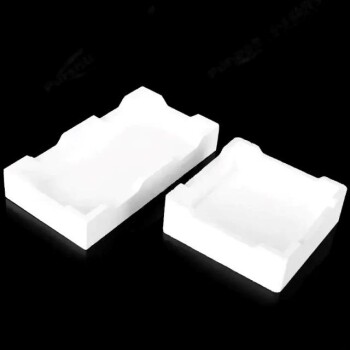
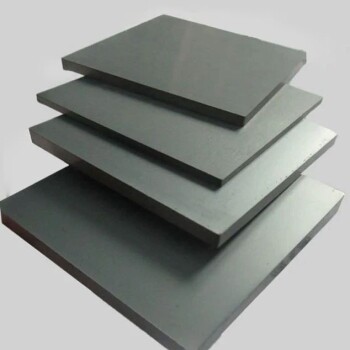
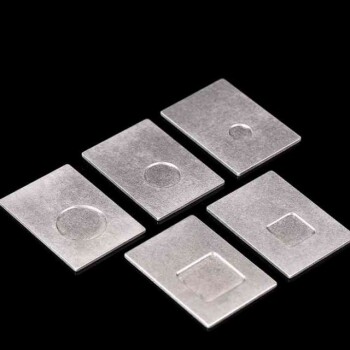
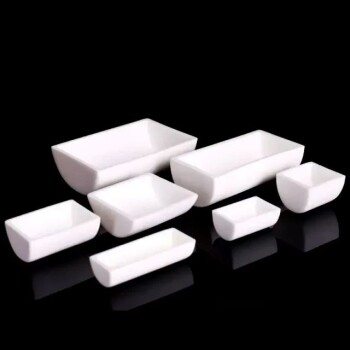
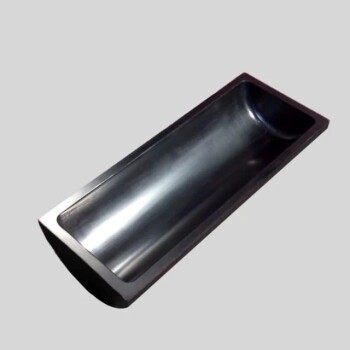
High-temperature ceramic sample carriers serve as the critical foundation for ash fusion analysis by providing a chemically inert and thermally stable platform for specimens. These carriers support ash cones or pyramids as they undergo phase changes at temperatures reaching 1500°C. Their primary role is to ensure that any deformation or melting observed is a result of the ash's intrinsic properties, rather than interactions with the testing environment or the support itself.
Ceramic sample carriers act as a neutral substrate that prevents chemical interference and physical sticking between the ash specimen and the analyzer components. By maintaining structural integrity at extreme temperatures, they guarantee the accuracy of fusion temperature measurements essential for evaluating fuel behavior and slagging potential.
The Structural Role of Ceramic Carriers
Providing a Refractory Support Base
High-refractory ceramic plates or boats provide the mechanical strength required to hold ash specimens in a fixed position during the heating cycle. This stability is vital as specimens transition from solid states to molten phases, where they are most vulnerable to movement.
Maintaining Specimen Geometry
The carrier supports the specific geometry of ash specimens, such as dense pyramid or cone shapes. By providing a flat, level surface, the carrier allows for the precise visual identification of deformation, softening, and fluid temperatures without external physical distortion.
Chemical and Thermal Integrity
Preventing Chemical Cross-Contamination
Ceramic materials like alumina are utilized for their superior chemical stability, which prevents them from reacting with the ash specimens. This ensures that no external impurities are introduced that could artificially lower or raise the melting points being measured.
Thermal Stability at Extreme Ranges
Carriers must withstand temperatures up to 1500°C without physical deformation or loss of mass. If the carrier were to warp or degrade, it would interfere with the specimen’s shape, leading to inaccurate data regarding the fuel's fusion characteristics.
Protection of Laboratory Equipment
Shielding Heating Elements and Furnace Tubes
The carrier acts as a barrier that prevents molten ash from sticking to or corroding the heating elements and furnace walls. This isolation is critical for preventing permanent damage to the ash fusion analyzer and extending the service life of high-cost components.
Facilitating Uniform Heat Distribution
Advanced ceramics ensure that samples are heated uniformly in various atmospheres, whether reducing or oxidizing. This consistency is necessary for achieving repeatable results across multiple testing cycles.
Understanding the Trade-offs
Thermal Shock and Fragility
While ceramic carriers are highly resistant to heat, they are often sensitive to rapid temperature changes (thermal shock). Cooling these components too quickly after a test can lead to cracking, necessitating a controlled cooling period that may slow down high-volume testing workflows.
Surface Texture and Adhesion
Despite their inertness, certain ash compositions with high fluxing agent content may still exhibit slight sticking if the carrier surface is too porous. Selecting a carrier with the appropriate density and surface finish is necessary to balance durability with ease of specimen removal.
Selecting the Right Carrier for Your Testing Goals
When choosing a ceramic carrier for ash fusion analysis, the specific requirements of your laboratory environment and the nature of the fuel being tested should guide your selection.
- If your primary focus is maximum temperature endurance: Prioritize high-refractory alumina plates that are rated for consistent use at 1500°C to ensure the carrier does not deform during peak heating.
- If your primary focus is analytical precision: Choose carriers with high chemical purity to eliminate the risk of trace element migration between the substrate and the ash specimen.
- If your primary focus is equipment longevity: Select carrier shapes, such as boats or recessed plates, that effectively contain molten slag and prevent it from overflowing onto the furnace floor.
The selection of a high-quality ceramic carrier is not merely a logistical detail, but a fundamental requirement for ensuring the integrity and repeatability of ash fusion characteristic data.
Summary Table:
| Key Role | Technical Benefit | Impact on Testing Accuracy |
|---|---|---|
| Structural Support | High refractoriness | Maintains specimen geometry up to 1500°C |
| Chemical Inertness | Prevents reactions | Eliminates contamination and false melting points |
| Equipment Protection | Physical barrier | Shields furnace tubes and elements from corrosive slag |
| Thermal Stability | Uniform heating | Ensures repeatable data across multiple testing cycles |
| Specimen Isolation | Neutral substrate | Prevents adhesion between ash and analyzer components |
Elevate Your Analytical Precision with KINTEK
Ensure the integrity of your ash fusion testing with high-performance laboratory consumables from KINTEK. As specialists in high-temperature environments, we provide the robust ceramic carriers, crucibles, and high-refractory PTFE products your lab needs to maintain structural and chemical stability at extreme ranges.
Beyond consumables, KINTEK offers a comprehensive suite of high-temperature furnaces (muffle, tube, vacuum, and atmosphere) and specialized equipment for battery research and material processing. Our solutions are designed to protect your investment—preventing equipment corrosion while delivering repeatable, high-accuracy results for your most demanding applications.
Ready to optimize your lab's performance? Contact our technical experts today to find the perfect fit for your testing requirements.
References
- Nikola Čajová Kantová, Alexander Čaja. Analysis of Ash Melting Temperatures of Agricultural Pellets Detected during Different Conditions. DOI: 10.3390/fire6030088
This article is also based on technical information from Kintek Solution Knowledge Base .
Related Products
- Arc-Shaped Alumina Ceramic Crucible High Temperature Resistant for Engineering Advanced Fine Ceramics
- Advanced Engineering Fine Ceramics Alumina Ceramic Saggar for Fine Corundum
- High Temperature Alumina (Al2O3) Furnace Tube for Engineering Advanced Fine Ceramics
- Silicon Carbide (SIC) Ceramic Plate for Engineering Advanced Fine Ceramics
- Engineering Advanced Fine Ceramics Alumina Crucibles (Al2O3) for Thermal Analysis TGA DTA
People Also Ask
- Why Use Alumina Crucibles & Powder Burial for NaSICON? Ensure Phase Purity and Prevent Elemental Volatilization
- What is the primary purpose of using alumina crucibles for LLTO ceramics? Optimize Your High-Temperature Sintering
- Why are alumina crucibles and mother powder essential for LATP sintering? Optimize Your Solid Electrolyte Performance
- Why are high-purity alumina crucibles used for liquid lead corrosion experiments? Ensure Data Accuracy at 550°C
- Primary considerations for choosing alumina crucibles and quartz tubes in indium intercalation: Ensure Material Purity