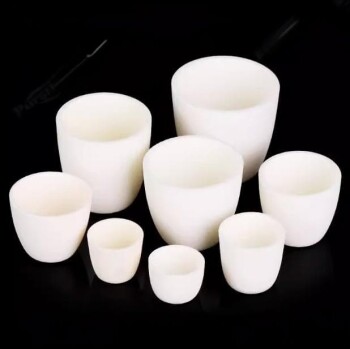
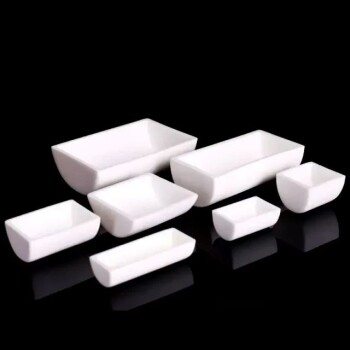
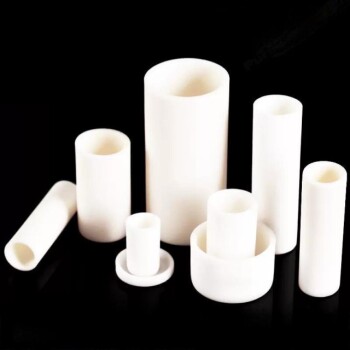
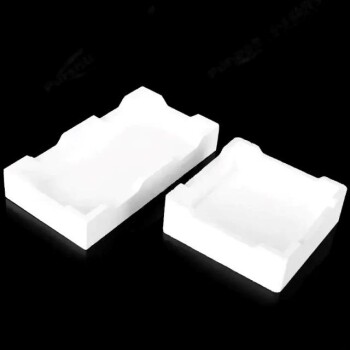
Alumina crucibles combined with the powder burial method are essential for maintaining the chemical stability of NaSICON ceramics during sintering. At processing temperatures near 1230°C, this technique is used primarily to arrest the volatilization of sodium and phosphorus, ensuring the material retains its intended composition and structural integrity.
High-temperature sintering poses a significant risk of elemental loss in NaSICON ceramics. The powder burial method counteracts this by creating a localized, saturated atmosphere that maintains accurate stoichiometry and ensures high phase purity.
The Challenge of High-Temperature Stability
The Risk of Component Volatilization
Sintering NaSICON ceramics requires temperatures of approximately 1230°C. At this intense heat, specific volatile components within the ceramic structure become unstable.
Targeted Elements: Sodium and Phosphorus
Without protection, the material suffers from the rapid loss of sodium and phosphorus. These elements are prone to evaporation, which alters the chemical balance of the ceramic and degrades its final properties.
Mechanism of the Powder Burial Method
Creating a Localized Atmosphere
The powder burial method involves surrounding the NaSICON sample with a "mother powder" inside the crucible. This creates a micro-environment that becomes rich in the very volatile components (sodium and phosphorus) that would otherwise escape.
Vapor Pressure Equilibrium
By saturating the immediate atmosphere with these elements, the method suppresses further volatilization from the sample itself. The high concentration of vapor outside the sample prevents the elements from migrating out of the ceramic body.
Ensuring Phase Purity
This equilibrium allows the ceramic to sinter without undergoing chemical decomposition. The result is high phase purity, meaning the crystalline structure forms exactly as intended without degrading into unwanted byproducts.
Surface Integrity and Homogeneity
Preventing Composition Segregation
Volatilization often occurs unevenly, affecting the surface of the ceramic first. The burial method protects the surface, preventing composition segregation where the outer layer has a different chemical makeup than the core.
Maintaining Accurate Stoichiometry
Stoichiometry refers to the precise ratio of elements within the material. Using alumina crucibles with powder burial ensures the final product retains the exact stoichiometric ratio required for optimal performance.
Understanding the Trade-offs
Process Complexity
While effective, the powder burial method introduces additional steps to the manufacturing process. It requires preparing sacrificial powder and careful packing of the crucible, which can reduce throughput compared to open-air sintering.
Material Consumption
This method consumes extra material in the form of the burial powder. This increases the overall cost of production, as a portion of your raw material is used solely to generate the protective atmosphere rather than becoming part of the final product.
Making the Right Choice for Your Goal
To achieve the best results with NaSICON ceramics, align your processing method with your quality requirements.
- If your primary focus is Phase Purity: Use the powder burial method to prevent the loss of sodium and phosphorus, ensuring a homogeneous crystal structure.
- If your primary focus is Surface Consistency: Employ this technique to eliminate surface segregation and ensure the exterior composition matches the core.
By controlling the local atmosphere inside the crucible, you transform a volatile process into a stable, reproducible manufacturing technique.
Summary Table:
| Feature | Purpose in NaSICON Sintering | Impact on Final Product |
|---|---|---|
| Powder Burial Method | Creates localized saturated atmosphere | Prevents Na and P volatilization |
| Alumina Crucible | Provides stable, high-temp containment | Ensures chemical stability at 1230°C |
| Vapor Equilibrium | Suppresses elemental migration | Maintains accurate stoichiometry |
| Surface Protection | Eliminates composition segregation | Ensures structural homogeneity |
Elevate Your Material Research with KINTEK's Advanced Thermal Solutions
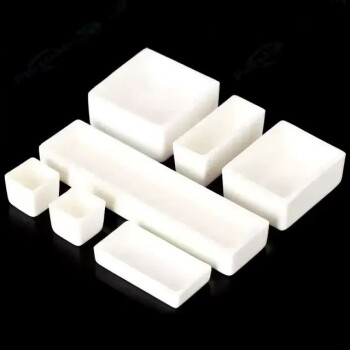
Precision in NaSICON sintering requires more than just high temperatures; it demands a controlled environment and superior equipment. KINTEK specializes in providing the high-performance laboratory tools you need to achieve high phase purity and consistent stoichiometry. From durable alumina crucibles and muffle furnaces to advanced crushing and milling systems for preparing your mother powder, we provide the complete ecosystem for your ceramic research.
Our comprehensive portfolio includes:
- High-Temperature Furnaces: Muffle, tube, and vacuum systems designed for stable sintering environments.
- Ceramics & Crucibles: Premium alumina and PTFE products tailored for chemical resistance.
- Material Processing: Hydraulic presses and milling systems for perfect sample preparation.
Don't let elemental volatilization compromise your results. Partner with KINTEK for reliable, high-quality laboratory equipment and consumables. Contact our technical experts today to find the perfect fit for your lab!
Related Products
- Arc-Shaped Alumina Ceramic Crucible High Temperature Resistant for Engineering Advanced Fine Ceramics
- Alumina Al2O3 Ceramic Crucible Semicircle Boat with Lid for Engineering Advanced Fine Ceramics
- Engineering Advanced Fine Ceramics Alumina Al2O3 Crucible With Lid Cylindrical Laboratory Crucible
- Engineering Advanced Fine Ceramics Alumina Crucibles (Al2O3) for Thermal Analysis TGA DTA
- Engineering Advanced Fine Alumina Al2O3 Ceramic Crucible for Laboratory Muffle Furnace
People Also Ask
- What is the primary purpose of using alumina crucibles for LLTO ceramics? Optimize Your High-Temperature Sintering
- Why are alumina crucibles and mother powder essential for LATP sintering? Optimize Your Solid Electrolyte Performance
- Why are high-purity alumina crucibles used for liquid lead corrosion experiments? Ensure Data Accuracy at 550°C
- Primary considerations for choosing alumina crucibles and quartz tubes in indium intercalation: Ensure Material Purity
- Why is an alumina crucible selected for the CaCl2-NaCl molten salt system? Ensure High Purity and Thermal Stability