Knowledge lab crucible Primary considerations for choosing alumina crucibles and quartz tubes in indium intercalation: Ensure Material Purity
Author avatar

Tech Team · Kintek Solution

Updated 2 weeks ago

Primary considerations for choosing alumina crucibles and quartz tubes in indium intercalation: Ensure Material Purity


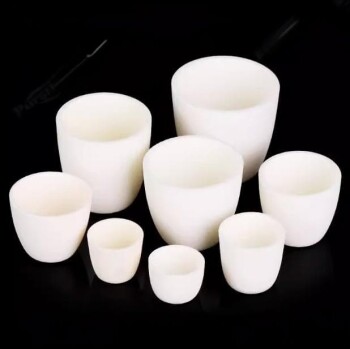
The primary considerations for selecting high-purity alumina crucibles and quartz tubes center on their chemical inertness and thermal stability at high temperatures. These materials are chosen because they prevent "vessel poisoning"—the diffusion of container components into the sample—which would otherwise disrupt the delicate atomic structure of two-dimensional indium layers. By resisting chemical erosion from molten indium and providing a stable, heat-permeable environment, these consumables ensure that the final product maintains its intended electronic properties.

Core Takeaway: High-purity alumina and quartz are essential because they provide a chemically neutral "clean room" environment, ensuring that the resulting 2D indium layers are free from trace impurities that would degrade their performance.

The Role of Chemical Inertness in High-Purity Environments

Preventing Vessel-to-Sample Contamination

During indium intercalation, maintaining the atomic integrity of the sample is the highest priority. High-purity alumina crucibles are used because they do not react with metallic indium, effectively eliminating the risk of introducing external impurities that could alter the material's stoichiometry.

Resisting Erosion from Molten Metals

At the elevated temperatures required for intercalation, many materials succumb to chemical erosion from metal vapors or melts. High-purity alumina acts as a robust barrier, resisting the leaching of vessel components even during prolonged exposure to aggressive reactive environments.

Thermal Integrity and Heat Management

Superior Heat Permeability of Quartz

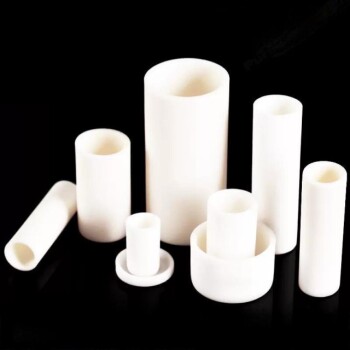
Quartz tubes are specifically selected for their heat permeability and thermal stability. This allows for precise control over the reaction temperature, ensuring that heat is transferred efficiently and uniformly to the sample without the tube itself becoming a source of contamination.

Structural Stability Under Thermal Cycling

Both alumina and quartz exhibit excellent thermal shock resistance, meaning they do not crack or deform during the heating and cooling phases. This structural integrity is critical for maintaining a stable gas-liquid contact interface and ensuring the safety of the experimental setup.

Understanding the Trade-offs

Material Limitations at Extreme Temperatures

While these materials are highly stable, they are not invincible. For instance, at temperatures exceeding 1500°C, minor alumina dissolution can occur in certain environments, which may slightly alter the purity of the melt over long durations.

Cost vs. Purity Requirements

The use of sintered, high-purity alumina significantly increases operational costs compared to lower-grade alternatives. However, using lower-purity vessels often leads to "sample poisoning," where trace elements like silica or iron diffuse into the indium layers, rendering the experimental results unreliable.

How to Apply This to Your Project

When selecting your consumables, evaluate your specific reaction parameters and purity requirements to determine the best material configuration.

  • If your primary focus is preventing trace metal contamination: Utilize high-purity sintered alumina crucibles (>99.7%) to ensure no container components leach into the molten indium.
  • If your primary focus is precise temperature control and visibility: Opt for high-quality quartz tubes, which offer superior heat permeability and allow for visual monitoring of the intercalation process.
  • If your primary focus is long-duration, high-temperature stability: Prioritize alumina components, as they generally offer higher thermal resistance and structural longevity than quartz under sustained heat.

Selecting the right high-purity consumables is the foundation of a successful indium intercalation process, protecting the material's intrinsic properties from the very start.

Summary Table:

Material Key Property Role in Indium Intercalation
High-Purity Alumina Chemical Inertness Prevents "vessel poisoning" and resists erosion from molten indium metals.
Quartz Tubes Heat Permeability Ensures uniform heat transfer and allows for visual monitoring of the reaction.
Sintered Ceramics Thermal Stability Maintains structural integrity under thermal cycling and high-temperature environments.

Elevate Your Research Precision with KINTEK

Don't let impurities compromise your 2D material synthesis. KINTEK specializes in providing premium laboratory equipment and consumables designed for the most sensitive thermal processes. Whether you need high-purity alumina crucibles, quartz tubes, or advanced ceramics, our products ensure the chemical neutrality and thermal stability your indium intercalation demands.

Our extensive portfolio includes:

  • High-Temperature Furnaces: Muffle, tube, and vacuum systems for precise thermal control.
  • Specialized Consumables: PTFE products, high-grade ceramics, and reliable crucibles.
  • Advanced Reactors: High-temperature high-pressure reactors and autoclaves.

Contact KINTEK today to discover how our high-performance solutions can protect your sample integrity and enhance your laboratory's efficiency.

References

  1. Van Dong Pham, Joshua A. Robinson. Atomic structures and interfacial engineering of ultrathin indium intercalated between graphene and a SiC substrate. DOI: 10.1039/d3na00630a

This article is also based on technical information from Kintek Solution Knowledge Base .

Related Products

People Also Ask

Related Products

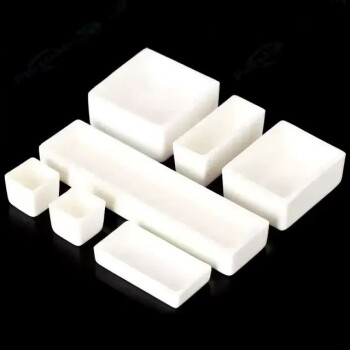
Arc-Shaped Alumina Ceramic Crucible High Temperature Resistant for Engineering Advanced Fine Ceramics

Arc-Shaped Alumina Ceramic Crucible High Temperature Resistant for Engineering Advanced Fine Ceramics

In the journey of scientific exploration and industrial production, every detail is crucial. Our arc-shaped alumina ceramic crucibles, with their excellent high temperature resistance and stable chemical properties, have become a powerful assistant in laboratories and industrial fields. They are made of high-purity alumina materials and manufactured through precision processes to ensure excellent performance in extreme environments.

Alumina Al2O3 Ceramic Crucible Semicircle Boat with Lid for Engineering Advanced Fine Ceramics

Alumina Al2O3 Ceramic Crucible Semicircle Boat with Lid for Engineering Advanced Fine Ceramics

Crucibles are containers widely used for melting and processing various materials, and semicircular boat-shaped crucibles are suitable for special smelting and processing requirements. Their types and uses vary by material and shape.

Engineering Advanced Fine Ceramics Alumina Crucibles (Al2O3) for Thermal Analysis TGA DTA

Engineering Advanced Fine Ceramics Alumina Crucibles (Al2O3) for Thermal Analysis TGA DTA

TGA/DTA thermal analysis vessels are made of aluminum oxide (corundum or aluminum oxide). It can withstand high temperature and is suitable for analyzing materials that require high temperature testing.

Engineering Advanced Fine Ceramics Alumina Al2O3 Crucible With Lid Cylindrical Laboratory Crucible

Engineering Advanced Fine Ceramics Alumina Al2O3 Crucible With Lid Cylindrical Laboratory Crucible

Cylindrical Crucibles Cylindrical crucibles are one of the most common crucible shapes, suitable for melting and processing a wide variety of materials, and are easy to handle and clean.

Engineering Advanced Fine Alumina Al2O3 Ceramic Crucible for Laboratory Muffle Furnace

Engineering Advanced Fine Alumina Al2O3 Ceramic Crucible for Laboratory Muffle Furnace

Alumina ceramic crucibles are used in some materials and metal melting tools, and flat-bottomed crucibles are suitable for melting and processing larger batches of materials with better stability and uniformity.

Ceramic Evaporation Boat Set Alumina Crucible for Laboratory Use

Ceramic Evaporation Boat Set Alumina Crucible for Laboratory Use

It can be used for vapor deposition of various metals and alloys. Most metals can be evaporated completely without loss. Evaporation baskets are reusable.1

Electron Beam Evaporation Coating Gold Plating Tungsten Molybdenum Crucible for Evaporation

Electron Beam Evaporation Coating Gold Plating Tungsten Molybdenum Crucible for Evaporation

These crucibles act as containers for the gold material evaporated by the electron evaporation beam while precisely directing the electron beam for precise deposition.

High Purity Pure Graphite Crucible for Electron Beam Evaporation

High Purity Pure Graphite Crucible for Electron Beam Evaporation

A technology mainly used in the field of power electronics. It is a graphite film made of carbon source material by material deposition using electron beam technology.

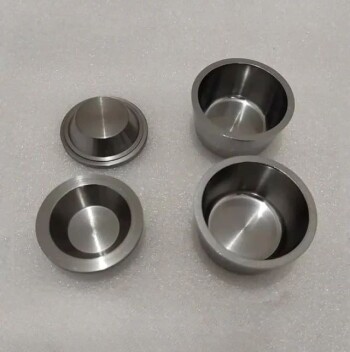
Electron Beam Evaporation Coating Tungsten Crucible and Molybdenum Crucible for High Temperature Applications

Electron Beam Evaporation Coating Tungsten Crucible and Molybdenum Crucible for High Temperature Applications

Tungsten and molybdenum crucibles are commonly used in electron beam evaporation processes due to their excellent thermal and mechanical properties.

High Purity Pure Graphite Crucible for Evaporation

High Purity Pure Graphite Crucible for Evaporation

Vessels for high temperature applications, where materials are kept at extremely high temperatures to evaporate, allowing thin films to be deposited on substrates.

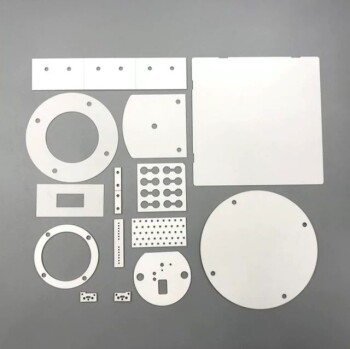
Custom-Made Alumina Zirconia Special-Shaped Ceramic Plates for Engineering Advanced Fine Ceramics Processing

Custom-Made Alumina Zirconia Special-Shaped Ceramic Plates for Engineering Advanced Fine Ceramics Processing

Alumina ceramics have good electrical conductivity, mechanical strength and high temperature resistance, while zirconia ceramics are known for their high strength and high toughness and are widely used.

Advanced Engineering Fine Ceramics Alumina Ceramic Saggar for Fine Corundum

Advanced Engineering Fine Ceramics Alumina Ceramic Saggar for Fine Corundum

Alumina sagger products have the characteristics of high temperature resistance, good thermal shock stability, small expansion coefficient, anti-stripping, and good anti-powdering performance.

High Quality Alumina Ceramic Screw for Engineering Advanced Fine Ceramics with High Temperature Resistance and Insulation

High Quality Alumina Ceramic Screw for Engineering Advanced Fine Ceramics with High Temperature Resistance and Insulation

Alumina ceramic screws are fastening components made of 99.5% alumina, ideal for extreme applications requiring excellent thermal resistance, electrical insulation and chemical resistance.

Electron Beam Evaporation Coating Conductive Boron Nitride Crucible BN Crucible

Electron Beam Evaporation Coating Conductive Boron Nitride Crucible BN Crucible

High-purity and smooth conductive boron nitride crucible for electron beam evaporation coating, with high temperature and thermal cycling performance.

High Purity Alumina Granulated Powder for Engineering Advanced Fine Ceramics

High Purity Alumina Granulated Powder for Engineering Advanced Fine Ceramics

Ordinary alumina granulated powder is alumina particles prepared by traditional processes, with a wide range of applications and good market adaptability. This material is known for its high purity, excellent thermal stability and chemical stability, and is suitable for a variety of high-temperature and conventional applications.

Boron Nitride (BN) Crucible for Phosphorous Powder Sintered

Boron Nitride (BN) Crucible for Phosphorous Powder Sintered

Phosphorus powder sintered boron nitride (BN) crucible has a smooth surface, dense, pollution-free and long service life.

Electron Beam Evaporation Coating Oxygen-Free Copper Crucible and Evaporation Boat

Electron Beam Evaporation Coating Oxygen-Free Copper Crucible and Evaporation Boat

Electron Beam Evaporation Coating Oxygen-Free Copper Crucible enables precise co-deposition of various materials. Its controlled temperature and water-cooled design ensure pure and efficient thin film deposition.

High Temperature Wear-Resistant Alumina Al2O3 Plate for Engineering Advanced Fine Ceramics

High Temperature Wear-Resistant Alumina Al2O3 Plate for Engineering Advanced Fine Ceramics

High temperature wear-resistant insulating alumina plate has excellent insulation performance and high temperature resistance.

E Beam Crucibles Electron Gun Beam Crucible for Evaporation

E Beam Crucibles Electron Gun Beam Crucible for Evaporation

In the context of electron gun beam evaporation, a crucible is a container or source holder used to contain and evaporate the material to be deposited onto a substrate.

Evaporation Crucible for Organic Matter

Evaporation Crucible for Organic Matter

An evaporation crucible for organic matter, referred to as an evaporation crucible, is a container for evaporating organic solvents in a laboratory environment.


Leave Your Message