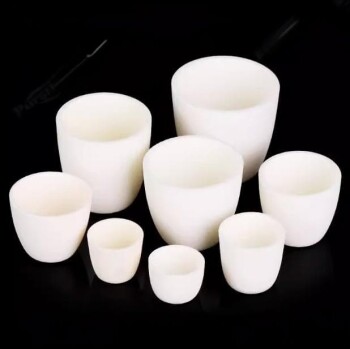
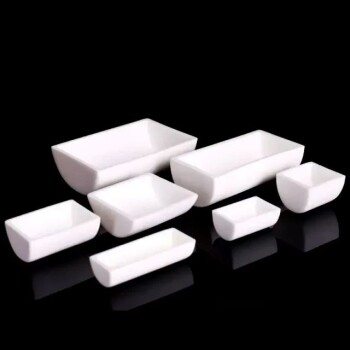
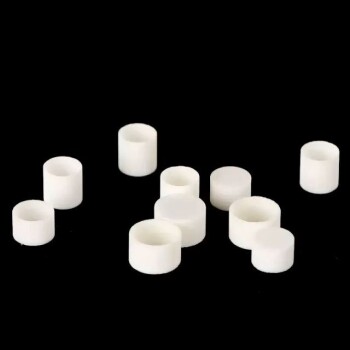
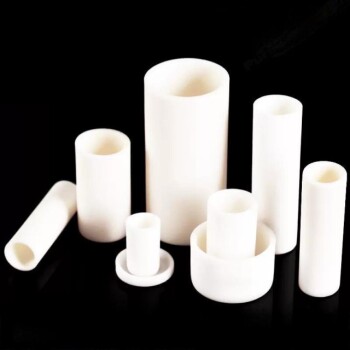
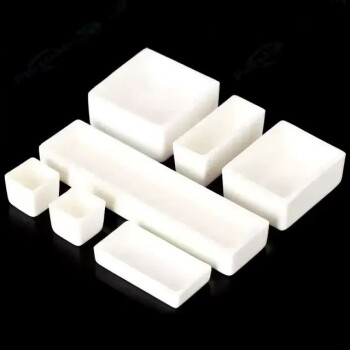
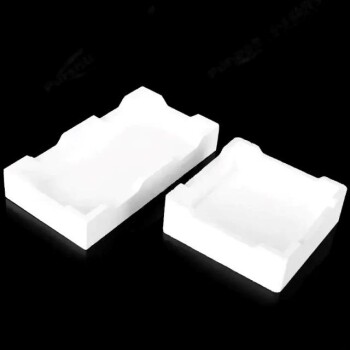
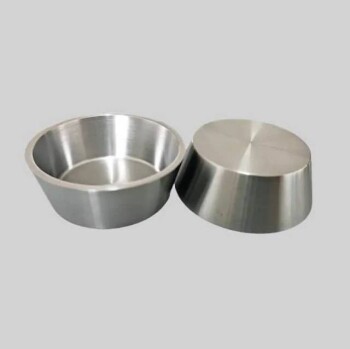
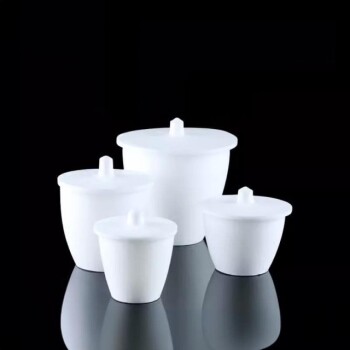
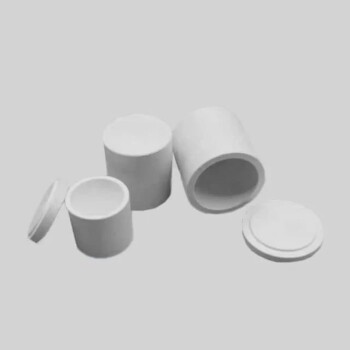
Effective sintering of LATP powders relies on a dual-protection strategy involving chemical isolation and atmospheric control. Alumina crucibles provide a thermally stable, inert container that prevents contamination, while the application of "mother powder" creates a localized, lithium-rich environment. Together, these elements prevent chemical degradation and ensure the material retains the specific stoichiometry required for high ionic conductivity.
The core challenge in sintering LATP is preventing lithium loss at high temperatures, which destroys electrochemical performance. Alumina crucibles prevent external contamination, while mother powder actively inhibits internal lithium evaporation, ensuring the final crystal structure remains intact.
The Protective Role of Alumina Crucibles
Ensuring Chemical Inertness
The synthesis of LATP involves temperatures as high as 1100°C. High-purity alumina crucibles are essential because they possess exceptional thermal stability and chemical inertness. Unlike other container materials, alumina resists reacting with the phosphate components in LATP, effectively acting as a neutral barrier.
Preventing Impurity Contamination
Using an incorrect vessel can lead to side reactions where the container material leaches into the powder. Alumina crucibles ensure the LATP powder remains free from impurity contamination. This isolation is critical for maintaining the high purity required for battery-grade solid electrolytes.
The Critical Function of Mother Powder
Counteracting Lithium Volatilization
At sintering temperatures (e.g., 1100°C), lithium ions within the LATP crystal lattice become volatile and prone to evaporation. Covering the pressed green bodies with mother powder—powder made of the exact same LATP material—is the standard solution to this problem.
Creating a Localized Atmosphere
The mother powder acts as a sacrificial buffer. As it is heated, it releases lithium, creating a local lithium-rich atmosphere directly surrounding the sample. This saturation creates an equilibrium that inhibits further volatilization of lithium ions from the actual LATP sample being sintered.
Preserving Phase Stability and Conductivity
Preventing lithium loss is not just about mass preservation; it is about performance. Significant lithium loss triggers unwanted phase transitions within the material. By maintaining the correct stoichiometry, the mother powder ensures the LATP retains the specific crystal structure necessary for optimal ionic conductivity.
Common Pitfalls in Processing
The Risk of Inadequate Coverage
The effectiveness of the mother powder is entirely dependent on coverage. If the sample is only partially buried, the exposed sections will suffer from differential lithium loss. This results in a sample with inconsistent ionic conductivity and potential structural weaknesses.
Crucible Quality Matters
Not all alumina crucibles are equal. You must ensure the use of high-purity alumina. Lower-grade crucibles may contain binders or impurities that can degrade at 1100°C or react with the highly reactive lithium components, negating the benefits of the inert vessel.
Making the Right Choice for Your Goal
To maximize the performance of your LATP solid electrolytes, apply these principles based on your specific processing targets:
- If your primary focus is Chemical Purity: Prioritize high-purity alumina crucibles to strictly prevent side reactions between phosphate components and the container wall.
- If your primary focus is Ionic Conductivity: Ensure complete burial of samples in mother powder to maintain a saturated lithium atmosphere and prevent phase transitions caused by volatilization.
Correct sintering is not just about heat; it is about controlling the chemical environment to preserve the material's fundamental utility.
Summary Table:
| Component | Primary Function | Impact on LATP Performance |
|---|---|---|
| Alumina Crucible | Chemical isolation & thermal stability | Prevents impurity contamination and side reactions |
| Mother Powder | Creates lithium-rich atmosphere | Inhibits lithium volatilization and maintains stoichiometry |
| Synergy | Dual-protection strategy | Preserves phase stability and ensures high ionic conductivity |
Maximize Your Material Performance with KINTEK
Achieving the perfect sintering environment for LATP requires more than just heat—it requires precision tools. KINTEK specializes in high-performance laboratory equipment and consumables designed for advanced battery research. From high-purity alumina crucibles and ceramics to specialized high-temperature furnaces (muffle, tube, and vacuum) and hydraulic pellet presses, we provide the comprehensive solutions you need to prevent contamination and lithium loss.
Whether you are working on solid-state electrolytes, battery research, or advanced ceramics, our team is ready to support your lab's efficiency with premium materials and technical expertise.
Ready to upgrade your research outcomes? Contact us today to find the right equipment for your lab!
Related Products
- Arc-Shaped Alumina Ceramic Crucible High Temperature Resistant for Engineering Advanced Fine Ceramics
- Alumina Al2O3 Ceramic Crucible Semicircle Boat with Lid for Engineering Advanced Fine Ceramics
- Engineering Advanced Fine Ceramics Alumina Crucibles (Al2O3) for Thermal Analysis TGA DTA
- Engineering Advanced Fine Ceramics Alumina Al2O3 Crucible With Lid Cylindrical Laboratory Crucible
- Engineering Advanced Fine Alumina Al2O3 Ceramic Crucible for Laboratory Muffle Furnace
People Also Ask
- Why Use Alumina Crucibles & Powder Burial for NaSICON? Ensure Phase Purity and Prevent Elemental Volatilization
- What is the primary purpose of using alumina crucibles for LLTO ceramics? Optimize Your High-Temperature Sintering
- Why are high-purity alumina crucibles used for liquid lead corrosion experiments? Ensure Data Accuracy at 550°C
- Primary considerations for choosing alumina crucibles and quartz tubes in indium intercalation: Ensure Material Purity
- Why is an alumina crucible selected for the CaCl2-NaCl molten salt system? Ensure High Purity and Thermal Stability