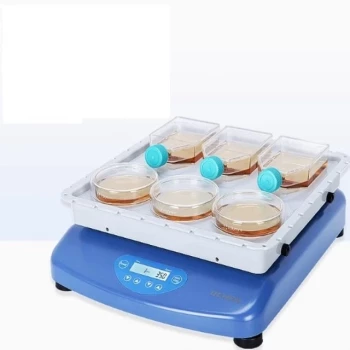
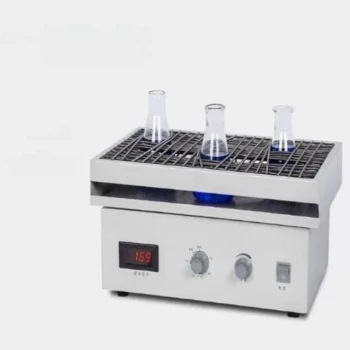
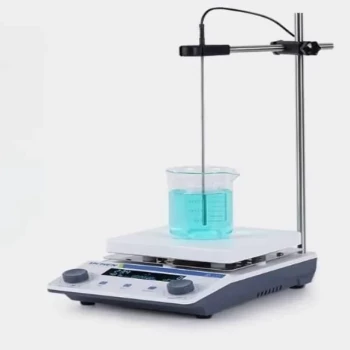
Thermostatic shakers and Erlenmeyer flasks act as the primary control system for the microbial bioconversion of xylose to xylitol. They function in tandem to create a stable growth environment by strictly regulating temperature and agitation, ensuring that microbial strains have the optimal conditions required for metabolic activity.
Core Insight: Success in bioconversion relies on the precise balance of material mixing and oxygen transfer. By using these tools to adjust rotation speeds, researchers can optimize dissolved oxygen levels and ensure uniform nutrient contact, generating the critical data necessary for scaling the process to industrial fermenters.
The Mechanics of Environmental Control
Optimizing Dissolved Oxygen
Oxygen availability is frequently the limiting factor in aerobic bioconversion processes.
The rotation of the thermostatic shaker constantly agitates the liquid within the Erlenmeyer flask.
This movement increases the surface area of the liquid, facilitating the efficient transfer of oxygen from the headspace into the solution to support microbial respiration.
Ensuring Uniform Mixing
In a static environment, nutrients settle, creating "dead zones" where microbes starve.
Continuous agitation ensures that xylose (the substrate) is evenly distributed throughout the culture media.
This uniform contact guarantees that the microbial community has consistent access to carbon sources, maximizing the conversion rate to xylitol.
Thermal Regulation
Bioconversion is an enzymatic process highly sensitive to temperature fluctuations.
Thermostatic shakers maintain a constant thermal environment.
This stability is essential for keeping the microbial strains within their optimal metabolic range throughout the fermentation cycle.
The Role in Process Scalability
Simulating Industrial Dynamics
Erlenmeyer flasks serve as a crucial testing ground before moving to expensive infrastructure.
They allow researchers to simulate the kinetic conditions of larger vessels on a benchtop scale.
Data Collection for Scale-Up
The utility of this setup extends beyond small-batch production.
It generates critical process data regarding the relationship between agitation speed and conversion efficiency.
Engineers rely on this data to calibrate industrial-grade fermenters, ensuring the process remains efficient when expanded to thousands of liters.
Understanding the Trade-offs
Limitations of Passive Aeration
While effective for research, flasks generally rely on surface aeration rather than forced air injection.
At very high cell densities, the oxygen demand of the microbes may eventually exceed the transfer rate that shaking alone can provide.
Process Control Gaps
Flasks provide excellent agitation and temperature control, but typically lack the automated pH regulation found in bioreactors.
This means that while they are perfect for establishing baseline kinetics, they may not perfectly mimic the closed-loop control of a production environment.
Making the Right Choice for Your Goal
- If your primary focus is Yield Optimization: Adjust shaker speeds incrementally to maximize dissolved oxygen without creating excessive shear force that could damage sensitive cells.
- If your primary focus is Industrial Scaling: Use the flask data to map the specific agitation rates required to maintain homogeneity, then apply those kinetic ratios to your larger fermenter design.
By mastering the variables of agitation and temperature at the flask level, you establish the roadmap for a commercially viable bioconversion process.
Summary Table:
| Feature | Function in Bioconversion | Impact on Xylitol Yield |
|---|---|---|
| Thermostatic Control | Maintains constant metabolic temperature | Ensures stable enzymatic activity and cell growth |
| Rotary Agitation | Facilitates gas exchange and surface aeration | Prevents oxygen limitation in aerobic microbial strains |
| Flask Geometry | Increases surface area during movement | Optimizes nutrient contact and substrate distribution |
| Process Simulation | Benchtop-scale kinetic testing | Provides critical data for industrial fermentation scaling |
Elevate Your Bioprocessing Efficiency with KINTEK
Transitioning from benchtop research to industrial-scale production requires precision and reliability. KINTEK specializes in high-performance laboratory equipment designed to meet the rigorous demands of bioconversion and material science.
Whether you are optimizing dissolved oxygen levels or scaling up fermentation kinetics, our comprehensive range of thermostatic shakers, shakers, and homogenizers provides the stability your microbial strains need. We also offer essential lab consumables, including high-quality PTFE products, ceramics, and crucibles, to support your most sensitive experiments.
Ready to optimize your yield and streamline your scale-up process? Contact our laboratory specialists today to find the perfect equipment solution for your research goals.
References
- David Warren-Walker, David Bryant. Process Optimization of Steam Explosion Parameters on Multiple Lignocellulosic Biomass Using Taguchi Method—A Critical Appraisal. DOI: 10.3389/fenrg.2018.00046
This article is also based on technical information from Kintek Solution Knowledge Base .
Related Products
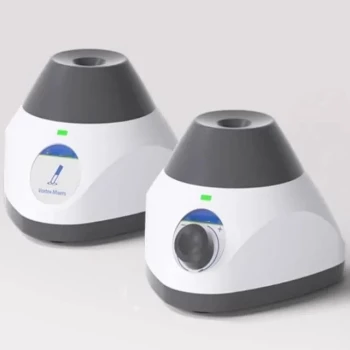
- Laboratory Vortex Mixer Orbital Shaker Multifunctional Rotation Oscillation Mixer
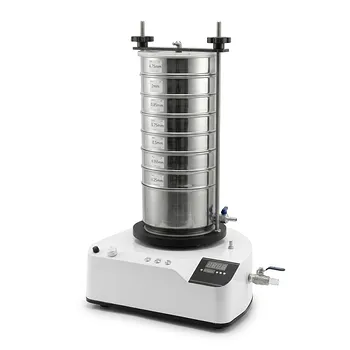
- Laboratory Vibratory Sieve Shaker Machine for Dry and Wet Three-Dimensional Sieving
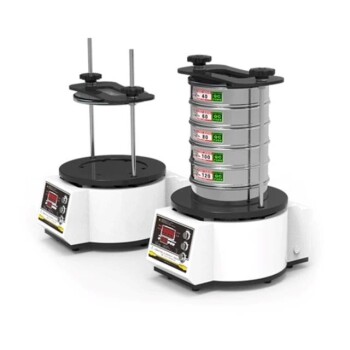
- Laboratory Wet Three-Dimensional Vibratory Sieve Shaker Machine
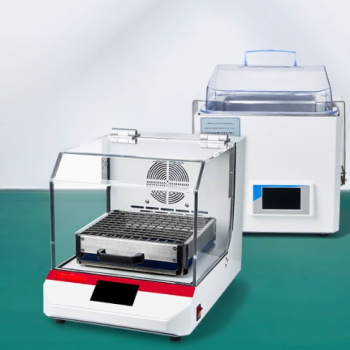
- Shaking Incubators for Diverse Laboratory Applications
- Laboratory Oscillating Orbital Shaker
People Also Ask
- What is the role of a laboratory orbital shaker in copper recovery? Optimize Industrial Waste Liquid Processing
- What is the role of a laboratory orbital shaker in activated carbon synthesis? Maximize Pore Depth & Surface Area
- What is a laboratory mixer used for? Choose the Right Tool for Liquids or Solids
- What is a laboratory mixer? A Guide to Achieving Perfect Sample Homogeneity
- What are laboratory mixers used for? Achieve Perfect Sample Homogeneity and Reliable Results