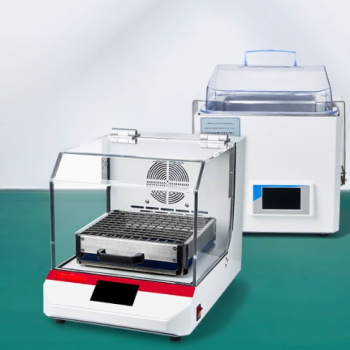
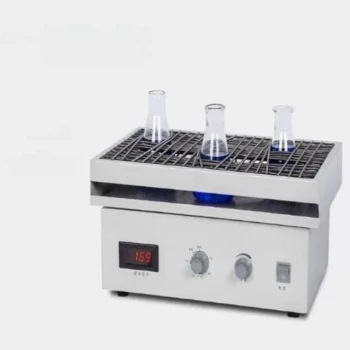
A benchtop incubator shaker acts as the central control unit for environmental variables during antimicrobial testing. It provides precise temperature control and stable rotation speeds to simulate an ideal growth environment for bacteria such as Escherichia coli and Pseudomonas aeruginosa. By maintaining these conditions, the device ensures the bacterial suspension remains uniform, oxygenated, and in constant contact with the composite film sample.
The shaker does more than just mix; it guarantees that bacterial exposure to the test material is uniform and constant. By preventing sedimentation and ensuring adequate oxygen exchange, it secures the accuracy and repeatability of your antimicrobial data.
Creating the Ideal Biological Environment
To accurately assess how well a composite film inhibits bacterial growth, you must first ensure the bacteria have the opportunity to thrive. The incubator shaker standardizes the physical conditions required for this biological activity.
Precise Temperature Control
Bacteria differ in their thermal requirements. The incubator shaker maintains a consistent temperature throughout the experiment to simulate the specific environment where the bacteria typically grow.
This eliminates temperature fluctuations as a variable, ensuring that any reduction in bacterial growth is due to the film's properties, not environmental stress.
Stable Rotation Speeds
The device provides stable oscillation rather than random agitation. This consistency is crucial for replicating results across multiple trials.
By controlling the speed, you create a reproducible mechanical environment that treats every sample in the batch exactly the same.
Optimizing Bacterial Interaction
The core challenge in testing solid films against liquid suspensions is ensuring interaction. If the bacteria and the film do not touch, the test is invalid.
Preventing Bacterial Sedimentation
Without constant motion, bacteria tend to settle at the bottom of the vessel. The shaker’s oscillation prevents this sedimentation, keeping the biomass suspended within the broth medium.
This ensures the bacteria are evenly distributed throughout the liquid rather than clumping in areas where they might avoid the test sample.
Facilitating Oxygen Exchange
Aerobic bacteria require oxygen to survive and replicate. The continuous shaking motion increases the surface area of the liquid, facilitating adequate oxygen exchange.
This prevents the bacteria from dying of suffocation, which could be mistaken for antimicrobial activity by the film.
Ensuring Sufficient Contact
The ultimate goal of the setup is to facilitate interaction between the pathogen and the composite film. The rotation ensures sufficient contact between the film sample and the suspended bacteria.
This constant exposure allows the antimicrobial agents in the film to actively engage with the cell walls of the bacteria.
Understanding the Trade-offs
While a benchtop incubator shaker is essential for accuracy, it is important to understand the implications of improper settings or equipment limitations.
The Risk of Variable Inconsistency
If the shaker cannot maintain a stable speed or precise temperature, the resulting data will lack repeatability. Fluctuations can lead to inconsistent antimicrobial rates, making it difficult to verify the efficacy of the film.
False Positives via Poor Contact
If the shaking speed is too low, sedimentation may occur. This prevents the bacteria from interacting with the film, potentially leading to inaccurate assessments of the film's true performance.
Conversely, if the agitation is too aggressive for the specific setup, it might physically damage the film or the bacteria in ways that do not reflect true antimicrobial activity.
Making the Right Choice for Your Experiment
To derive meaningful data from your antimicrobial activity assessment, align your equipment settings with your specific experimental goals.
- If your primary focus is Data Accuracy: Ensure your shaker is calibrated to maintain precise temperatures and rotation speeds to eliminate environmental variables.
- If your primary focus is Bacterial Viability: Prioritize oscillation speeds that maximize oxygen exchange without causing shear stress to the bacterial cells.
- If your primary focus is Sample Interaction: Adjust rotation to prevent sedimentation, guaranteeing the film remains in constant contact with the suspension.
The benchtop incubator shaker is the guarantor of your experiment's validity, transforming a simple mixture into a controlled, scientific assessment.
Summary Table:
| Feature | Role in Antimicrobial Assessment | Experimental Benefit |
|---|---|---|
| Temperature Control | Simulates ideal growth conditions (e.g., 37°C) | Eliminates thermal stress as a variable |
| Stable Oscillation | Prevents bacterial sedimentation | Ensures uniform exposure to the composite film |
| Oxygen Exchange | Facilitates gas transfer in aerobic cultures | Prevents suffocation-induced bacterial death |
| Agitation Speed | Maintains biomass in suspension | Guarantees consistent contact between pathogen and sample |
Elevate Your Research Precision with KINTEK
Maximize the accuracy and repeatability of your antimicrobial assessments with KINTEK’s high-performance laboratory equipment. From advanced incubator shakers and homogenizers to precise crushing systems and ceramic consumables, we provide the tools essential for rigorous composite film testing.
Why choose KINTEK?
- Uniformity: Achieve stable rotation and thermal precision for consistent data.
- Versatility: A full range of lab solutions including cooling systems, hydraulic presses, and high-temperature reactors.
- Quality Assurance: Reliable equipment designed for the demanding needs of battery research, materials science, and microbiology.
Ready to optimize your lab’s workflow? Contact KINTEK today to discuss your equipment needs!
References
- A. Pérez, Karen Esquivel. Antimicrobial Hydrophobic SiO2-TiO2-PDMS Films: Effect of Indirect Ultrasonic Irradiation on the Synthesis Process. DOI: 10.3390/jcs8030104
This article is also based on technical information from Kintek Solution Knowledge Base .
Related Products
- Shaking Incubators for Diverse Laboratory Applications
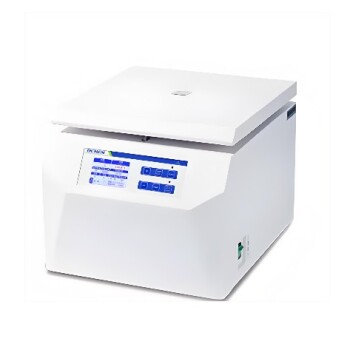
- Benchtop High Speed Small Lab Centrifuge for Serum Separation and Low Temperature Dehydration
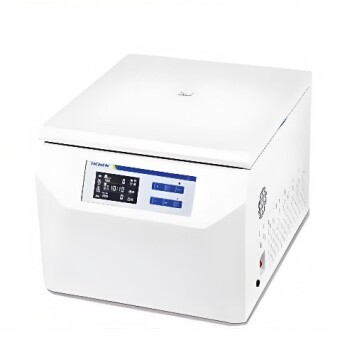
- Laboratory Benchtop High Speed Small Centrifuge for Low Temp Serum Separation Dehydration Research
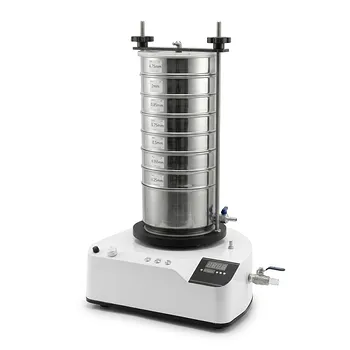
- Laboratory Vibratory Sieve Shaker Machine for Dry and Wet Three-Dimensional Sieving
- Laboratory Test Sieves and Vibratory Sieve Shaker Machine
People Also Ask
- What physical conditions does a shaking incubator provide for bioethanol fermentation? Optimize Yeast Productivity
- Why is the mechanical agitation provided by a shaking incubator necessary for the enzymatic hydrolysis of biomass?
- What critical reaction conditions does a shaking incubator provide? Optimize Cassava Cellulose Enzymatic Hydrolysis
- What are the primary functions of a shaking incubator? Optimize Biomass Fenton Pretreatment Efficiency
- What function does a laboratory shaking incubator serve for halophilic archaea? Optimize Your Seed Cultivation Today