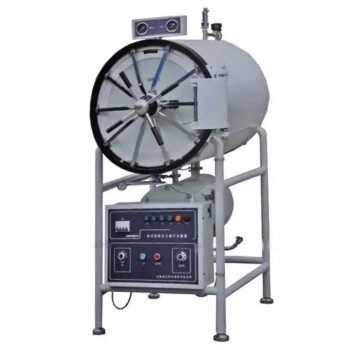
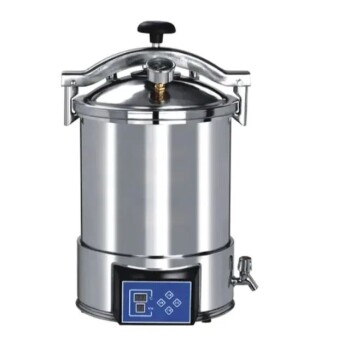
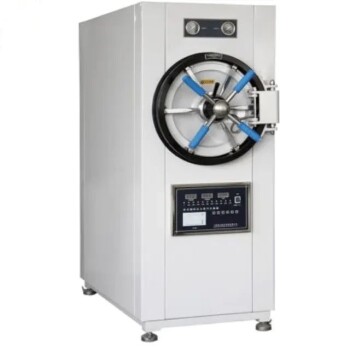
The high-pressure hydrothermal autoclave acts as the essential reaction vessel that enables the self-assembly of graphene oxide (GO) into robust, three-dimensional composite materials. By creating a sealed, high-temperature, and high-pressure liquid-phase environment, this equipment forces the simultaneous reduction of graphene oxide and the in-situ growth of metal nanoparticles into a unified porous network. This specific process is required to achieve the structural stability and surface chemistry necessary for advanced applications like pollutant removal.
Core Takeaway The autoclave provides the thermodynamic conditions—specifically high pressure and heat in a closed system—required to transform 2D graphene oxide sheets into 3D porous frameworks. This "one-pot" synthesis ensures uniform loading of active components and creates the high specific surface area needed for maximum efficiency in filtration and catalysis.
Creating the Ideal Reaction Environment
The Necessity of a Closed System
The autoclave functions by creating a sealed environment that isolates the reactants from external variables.
This closed system allows pressure to build significantly beyond atmospheric levels as the temperature rises.
Enabling Liquid-Phase Reactions
Inside the vessel, the process occurs within a liquid phase system.
The high pressure prevents the solvent from boiling off, maintaining a liquid medium where graphene oxide and metal precursors can interact intimately and continuously.
Mechanisms of Material Formation
Driving Self-Assembly
Under these specific hydrothermal conditions, graphene oxide sheets undergo a process of self-assembly.
The sheets cross-link and reduce, transforming from flat 2D structures into a complex, sponge-like 3D network.
In-Situ Growth of Nanoparticles
Simultaneously, the environment facilitates the full reaction of metal precursors, such as iron-based nanoparticles, manganese dioxide, or metal sulfides.
These inorganic materials grow directly onto the surface of the graphene lattice, rather than simply being physically mixed in later.
Uniform Loading
The pressurized liquid phase ensures that these active components are distributed evenly throughout the graphene foam.
This uniform loading prevents clumping and ensures that the active material is accessible throughout the entire 3D structure.
Resulting Material Properties
High Specific Surface Area
The primary outcome of this method is a material with an exceptionally high specific surface area.
This vast surface area provides more contact points for chemical reactions, which is critical for adsorbing pharmaceutical pollutants or catalyzing reactions.
Stable Porous Structures
The autoclave process yields a stable porous structure that does not collapse under its own weight or during use.
This structural integrity ensures that fluids can flow through the material efficiently, maintaining performance over time.
Excellent Mechanical Strength
Beyond porosity, the 3D composites exhibit excellent mechanical strength.
The hydrothermal treatment hardens the network, making the material durable enough for practical industrial applications.
Critical Performance Factors
Strong Interfacial Connections
The high-temperature and high-pressure conditions promote the formation of strong interfacial connections between the graphene and the metal nanoparticles.
These strong chemical bonds are superior to weak physical attachments, leading to better electron transfer and stability.
Enhanced Catalytic Activity
For applications like carbon dioxide hydrogenation, these strong connections significantly enhance catalytic activity.
The intimate contact between the support (graphene) and the active phase (metal) improves the overall efficiency of the reaction.
Long-Term Stability
The structural integration achieved in the autoclave results in superior long-term stability.
Because the components are grown together rather than mixed, the composite resists degradation and maintains its performance over repeated cycles.
Making the Right Choice for Your Goal
When utilizing hydrothermal autoclaves for graphene composites, your processing parameters should align with your end-goal application:
- If your primary focus is Pollutant Removal: Prioritize conditions that maximize high specific surface area and porous stability to ensure efficient trapping of pharmaceutical contaminants.
- If your primary focus is Catalysis: Focus on achieving strong interfacial connections and uniform loading to maximize reaction activity and stability, as seen in CO2 hydrogenation applications.
By controlling the hydrothermal environment, you can tailor the self-assembly process to produce high-performance, application-specific 3D materials.
Summary Table:
| Key Role | Impact on 3D-GO Material Properties |
|---|---|
| High-Pressure Environment | Prevents solvent evaporation, enabling liquid-phase reactions. |
| Thermal Self-Assembly | Transforms 2D graphene oxide sheets into a robust 3D porous framework. |
| In-Situ Growth | Ensures uniform loading and strong interfacial bonding of metal nanoparticles. |
| Structural Control | Maximizes specific surface area and enhances mechanical strength. |
Elevate Your Material Research with KINTEK
Ready to synthesize next-generation 3D graphene composites? KINTEK specializes in precision laboratory equipment designed to meet the rigorous demands of hydrothermal synthesis. Our advanced range of high-temperature high-pressure reactors and autoclaves provides the exact thermodynamic control needed for uniform loading and stable porous structures.
Whether your goal is pollutant removal or advanced catalysis, we offer a comprehensive portfolio including:
- High-Pressure Autoclaves & Reactors for seamless self-assembly.
- Crushing & Milling Systems for precursor preparation.
- Sieving Equipment & Hydraulic Presses for material characterization.
- High-Temperature Furnaces (Muffle, Tube, Vacuum) for post-synthesis treatment.
Contact KINTEK today to find the perfect solution for your lab and accelerate your breakthrough in material science!
References
- Saeed Bahadorikhalili, Elahe Ahmadi. Carbon-based composites for removal of pharmaceutical components from water. DOI: 10.52547/jcc.4.4.7
This article is also based on technical information from Kintek Solution Knowledge Base .
Related Products
- High Pressure Laboratory Autoclave Reactor for Hydrothermal Synthesis
- Mini SS High Pressure Autoclave Reactor for Laboratory Use
- Stainless High Pressure Autoclave Reactor Laboratory Pressure Reactor
- Laboratory High Pressure Horizontal Autoclave Steam Sterilizer for Lab Use
- Customizable High Pressure Reactors for Advanced Scientific and Industrial Applications
People Also Ask
- What role does a high-pressure reactor (autoclave) play in the synthesis of NiCuFe-LDH? Master Hydrothermal Growth
- What Role Does a High-Pressure Reactor or Autoclave Play in HA Catalyst Synthesis? Achieve High Surface Area Materials
- What equipment is required for hydrothermal synthesis of Ga0.25Zn4.67S5.08? Optimize Your Semiconductor Production
- What is the function of a high-pressure reactor in the hydrothermal synthesis of boehmite? Expert Process Insights
- What role does an autoclave play in the synthesis of MnO2 nanofibers? Mastering Hydrothermal Growth