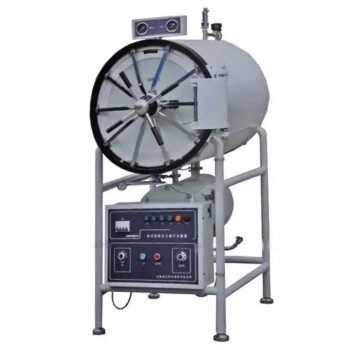
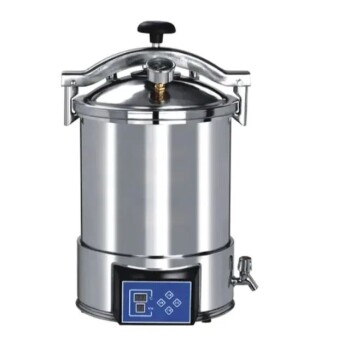
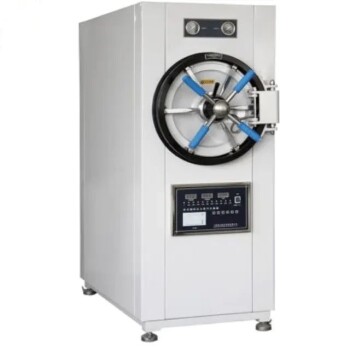
The high-pressure reactor (autoclave) serves as the fundamental engine for Ag/ZnO nanocomposite synthesis by creating a sealed, high-energy environment. This specialized equipment maintains the precursors—typically zinc nitrate, urea, glycerol, and silver nitrate—at elevated temperatures (such as 130°C) and pressures for extended periods. These conditions facilitate deep hydrothermal reactions, ensuring full molecular-level contact and the growth of nanoparticles with high crystallinity and uniform morphology.
Core Takeaway: The autoclave provides the necessary high-pressure, high-temperature environment to increase precursor solubility and accelerate reaction kinetics, enabling the precise crystalline growth and uniform assembly of Ag/ZnO nanocomposites.
The Mechanics of the Hydrothermal Environment
Enhancing Solubility and Ion Diffusion
The primary role of the reactor is to reach temperatures well above the boiling point of the solvent while maintaining a liquid phase through pressure. This significantly increases the solubility of metal salts and the reactivity of precursors like zinc nitrate and silver nitrate.
Increased solubility leads to higher ion diffusion rates within the aqueous solution. This acceleration is critical for the "deep" hydrothermal reaction required to bond silver (Ag) and zinc oxide (ZnO) at the molecular level.
Preventing Solvent Evaporation
Because the autoclave is a closed system, it prevents the evaporation of the solvent during long reaction cycles, such as the standard 7-hour period. This ensures that the chemical concentrations remain constant throughout the growth phase.
Maintaining a stable solvent volume allows for the slow decomposition of reagents like urea. This stability provides the steady supersaturation needed for the controlled growth of nanostructures without sudden precipitation.
Impact on Material Characteristics
Achieving High Crystallinity and Uniformity
The controlled high-pressure environment induces uniform nucleation, where the Ag and ZnO particles begin to form simultaneously throughout the solution. This results in a product with a very narrow particle size distribution.
The sustained energy within the reactor promotes crystalline growth, ensuring that the resulting Ag/ZnO nanocomposites possess a high degree of structural integrity. High crystallinity is essential for the electrical and photocatalytic performance of these materials.
Facilitating Molecular-Level Contact
The reactor forces precursors into intimate contact, which is difficult to achieve at atmospheric pressure. This molecular-level interaction is what allows silver ions to integrate effectively with the ZnO matrix.
In more complex structures, this pressure facilitates the in-situ growth and tight assembly of particles. This creates the strong physical and chemical interfaces required for efficient charge transfer within the nanocomposite.
Understanding the Trade-offs and Challenges
The "Black Box" Limitation
One primary challenge of using high-pressure reactors is the inability to observe the reaction in real-time. Because the vessel is sealed and pressurized, researchers cannot monitor the intermediate stages of crystal growth or adjust precursors mid-process.
Safety and Maintenance Requirements
Operating at 130°C or higher under pressure introduces significant safety risks if the equipment is not maintained. High-pressure autoclaves require specialized seals and pressure-release valves that must be inspected regularly to prevent catastrophic failure.
Processing Time and Scalability
Hydrothermal synthesis is often a slow process, frequently requiring 7 hours or more for a single batch. While this produces high-quality crystals, it can be a bottleneck for high-volume industrial production compared to continuous flow methods.
Applying These Principles to Your Synthesis
Making the Right Choice for Your Goal
- If your primary focus is Maximum Crystallinity: Prioritize a longer reaction time (7+ hours) at a stable, constant temperature to allow for complete crystal lattice formation.
- If your primary focus is Controlling Particle Size: Utilize the reactor’s stirring frequency controls, if available, to ensure uniform heat distribution and prevent particle agglomeration.
- If your primary focus is Morphological Precision: Carefully calibrate the ratio of precursors like urea and glycerol, as the high-pressure environment will amplify the effects of these growth-directing agents.
By mastering the high-pressure environment of the autoclave, you can move beyond simple mixing to achieve the precise molecular engineering required for advanced Ag/ZnO nanocomposites.
Summary Table:
| Key Feature | Role in Hydrothermal Synthesis | Impact on Ag/ZnO Nanocomposites |
|---|---|---|
| High Pressure/Temp | Increases precursor solubility & ion diffusion | Deep molecular-level bonding and reactivity |
| Closed System | Prevents solvent evaporation & maintains concentration | Controlled supersaturation for steady growth |
| Sustained Energy | Facilitates uniform nucleation | High crystallinity and narrow particle size distribution |
| Pressurized Contact | Forces intimate molecular interaction | Strong physical/chemical interface for charge transfer |
Elevate Your Material Research with KINTEK Precision
Maximize the potential of your hydrothermal synthesis with KINTEK’s high-performance high-pressure reactors and autoclaves. Specifically engineered for the rigorous demands of nanocomposite fabrication, our equipment provides the stability and safety required to achieve superior crystallinity and uniform morphology in Ag/ZnO and other advanced materials.
As a global leader in laboratory solutions, KINTEK offers a comprehensive portfolio including:
- High-Pressure Reactors & Autoclaves for precise hydrothermal reactions.
- High-Temperature Furnaces (Muffle, Tube, Vacuum, CVD/PECVD) for post-synthesis annealing.
- Hydraulic Presses and Crushing/Milling Systems for material preparation.
- Essential Consumables including high-purity PTFE products, ceramics, and crucibles.
Whether you are a researcher focused on molecular engineering or a distributor seeking reliable laboratory equipment with robust support, KINTEK delivers the quality and certifications you need to succeed.
Ready to optimize your lab's performance? Contact our technical experts today to find the ideal solution for your specific application.
References
- Junsheng Li, Yuyang Wang. Novel Photocatalyst Ag/ZnO/BC Nanofilms Degradation of Low Concentration Ammonia Nitrogen Wastewater. DOI: 10.3390/coatings13122043
This article is also based on technical information from Kintek Solution Knowledge Base .
Related Products
- High Pressure Laboratory Autoclave Reactor for Hydrothermal Synthesis
- Stainless High Pressure Autoclave Reactor Laboratory Pressure Reactor
- Mini SS High Pressure Autoclave Reactor for Laboratory Use
- Customizable High Pressure Reactors for Advanced Scientific and Industrial Applications
- Portable High Pressure Laboratory Autoclave Steam Sterilizer for Lab Use
People Also Ask
- What role does a high-pressure reactor (autoclave) play in the synthesis of NiCuFe-LDH? Master Hydrothermal Growth
- What Role Does a High-Pressure Reactor or Autoclave Play in HA Catalyst Synthesis? Achieve High Surface Area Materials
- What equipment is required for hydrothermal synthesis of Ga0.25Zn4.67S5.08? Optimize Your Semiconductor Production
- What is the function of a high-pressure reactor in the hydrothermal synthesis of boehmite? Expert Process Insights
- What role does an autoclave play in the synthesis of MnO2 nanofibers? Mastering Hydrothermal Growth