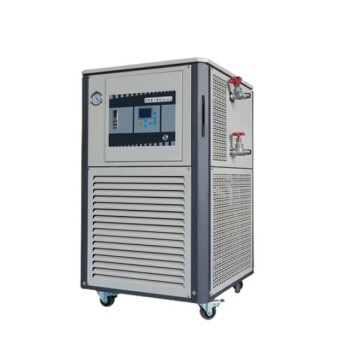
A high-temperature high-pressure hydrothermal reactor acts as the essential containment vessel for the subcritical water carbonization process, providing a sealed environment where biomass undergoes simultaneous dehydration, decarboxylation, and polycondensation. This specialized environment is critical because it enables the in-situ transformation of iron ions into magnetic components while simultaneously constructing a stable biochar skeleton rich in oxygen-containing functional groups.
Core Takeaway: The hydrothermal reactor facilitates a unique liquid-phase reaction environment that elevates the solubility and activity of reactants, allowing for the precise synthesis of magnetic biochar with enhanced pore structures and high surface functionality that cannot be achieved through traditional dry pyrolysis.
Facilitating the Chemical Transformation of Biomass
Subcritical Water Reactions
The reactor maintains water in a liquid state well above its atmospheric boiling point, typically reaching temperatures around 180°C and autogenous pressures between 2 and 10 MPa. In this state, the ion product of water increases, allowing it to act as an acid-base catalyst that triggers the hydrolysis of biomass polysaccharides without external chemicals.
Building the Carbon Skeleton
Within this high-pressure environment, the biomass undergoes a "deep thermochemical conversion" that forms hydrothermal carbon intermediates. These intermediates are characterized by a high density of oxygen-containing functional groups, which are vital for the material’s subsequent ability to bind with metal ions or pollutants.
Acceleration of Degradation
The sealed nature of the reactor prevents the loss of volatile components prematurely, accelerating the dehydration and degradation of the biomass. This results in a more efficient conversion of raw organic matter into a stable, aromatic carbon matrix.
Integrating Magnetic Functionality
In-Situ Mineralization
The hydrothermal reactor is the primary site where iron ions are transformed in-situ into magnetic nanoparticles, such as magnetite or ferrites, within the bio-matrix. The constant temperature and high pressure drive the redox reactions necessary to anchor these magnetic particles firmly onto the carbon surface and within the internal pores.
Precision Phase Control
By controlling the temperature and pressure within the vessel, researchers can achieve precise control over the phase composition and morphology of the magnetic additives. This ensures that the resulting biochar exhibits high magnetic susceptibility, which is essential for the easy recovery of the material from aqueous solutions using external magnets.
Enhancing Surface Affinity
The hydrothermal process increases the number of aromatic and oxygen-rich functional groups on the biochar surface. These groups significantly enhance the material's affinity for metal ions, creating a synergistic effect between the magnetic properties and the adsorption capacity of the biochar.
Development of Physical and Mesoporous Structures
Formation of Pore Networks
The high-pressure environment facilitates the development of a rich mesoporous structure, significantly increasing the specific surface area of the final product. This structural evolution is a direct result of the high-pressure liquid medium forcing its way into the biomass cellular structure (such as wood pores or mushroom substrates).
Solvent Activity and Solubility
The reactor environment significantly increases the solubility and activity of reactants, promoting a more uniform distribution of magnetic particles. This prevents the agglomeration of nanoparticles, ensuring they remain highly dispersed throughout the carbon skeleton for maximum effectiveness.
Impact on Adsorption Performance
The combination of increased surface area and functional groups leads to dramatic improvements in performance; for example, hydrothermal treatment can improve cadmium ion adsorption from 28 mg/L to as high as 92 mg/L. This makes the reactor indispensable for producing high-performance environmental adsorbents.
Understanding the Trade-offs and Challenges
Technical Complexity and Safety
Operating at pressures up to 10 MPa requires high-grade stainless steel or alloy reactors (such as Hastelloy) and rigorous safety protocols. The complexity of managing autogenous pressure adds a layer of operational risk and equipment cost compared to atmospheric carbonization methods.
Scalability Constraints
While hydrothermal reactors offer excellent reproducibility at the laboratory scale, scaling the process for industrial biochar production is challenging. The need for batch processing in heavy, pressure-rated vessels can limit throughput compared to continuous-flow pyrolysis systems.
Energy Demands
Maintaining water at subcritical temperatures for extended periods requires significant thermal energy. However, this is often partially offset by the fact that the biomass does not need to be pre-dried, as the process occurs in the liquid phase.
Applying This Technology to Your Synthesis Goals
How to Select Your Reactor Parameters
To maximize the quality of your magnetic biochar, you must align the reactor's capabilities with your specific material objectives.
- If your primary focus is maximizing adsorption capacity: Target temperatures around 180°C to 200°C to optimize the density of oxygen-containing functional groups and mesopore development.
- If your primary focus is magnetic stability: Ensure the reactor is equipped for precise temperature control (e.g., ±1°C) to facilitate the consistent in-situ growth of magnetic nanoparticles within the bio-matrix.
- If your primary focus is process efficiency: Utilize the reactor's ability to process "wet" biomass directly, bypassing the energy-intensive drying stages required by traditional thermal methods.
The hydrothermal reactor is not merely a container, but a precision tool that dictates the chemical architecture and functional performance of magnetic biochar.
Summary Table:
| Process Phase | Reactor Function | Impact on Biochar Properties |
|---|---|---|
| Subcritical Water Reaction | Maintains liquid state (180°C, 2-10 MPa) | Triggers hydrolysis and builds oxygen-rich carbon skeletons. |
| In-Situ Mineralization | Facilitates redox reactions in-situ | Anchors magnetic nanoparticles (magnetite) firmly into the matrix. |
| Structural Evolution | Applies high autogenous pressure | Develops rich mesoporous networks and high specific surface area. |
| Surface Engineering | Precise temperature & phase control | Enhances affinity for metal ions and improves adsorption capacity. |
Elevate Your Material Synthesis with KINTEK Precision
Unlock the full potential of your research with KINTEK’s high-temperature high-pressure reactors and autoclaves. Specifically designed for demanding applications like magnetic biochar synthesis and subcritical water carbonization, our reactors offer the safety, durability, and precise control necessary to achieve superior pore structures and magnetic stability.
Beyond reactors, KINTEK provides a comprehensive range of laboratory equipment including muffle and vacuum furnaces, hydraulic presses, and advanced cooling solutions to support every stage of your workflow.
Ready to optimize your lab's performance? Contact our specialists today to find the perfect solution for your synthesis goals!
References
- Yi Wen, Rui Xu. Cadmium Elimination via Magnetic Biochar Derived from Cow Manure: Parameter Optimization and Mechanism Insights. DOI: 10.3390/pr11082295
This article is also based on technical information from Kintek Solution Knowledge Base .
Related Products
- Customizable Laboratory High Temperature High Pressure Reactors for Diverse Scientific Applications
- High Pressure Laboratory Autoclave Reactor for Hydrothermal Synthesis
- Manual High Temperature Heated Hydraulic Press Machine with Heated Plates for Lab
- Customizable High Pressure Reactors for Advanced Scientific and Industrial Applications
- Automatic High Temperature Heated Hydraulic Press Machine with Heated Plates for Lab
People Also Ask
- How do high-pressure and high-temperature reactors ensure the effective treatment of lignocellulosic wastewater in WAO?
- What equipment is required for high-pressure high-temperature reactions? Master Extreme Chemistry Safely
- How do you control high pressure in a reactor? A Guide to Safe & Stable Operation
- How does initial oxygen pressure affect the wet oxidation of pharmaceutical sludge? Master Your Oxidation Depth
- Why is argon better than nitrogen for inert atmosphere? Ensure Absolute Reactivity & Stability