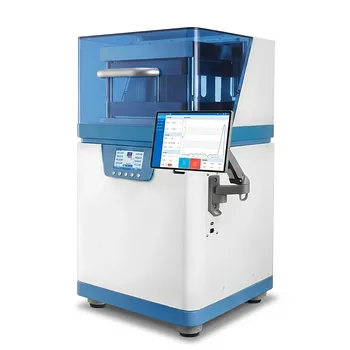
The high-temperature high-pressure reactor is the critical vessel for creating a sealed hydrothermal environment necessary for the in-situ growth of c-Co/Co3Mo electrocatalyst precursors. By maintaining conditions far exceeding atmospheric boiling points, it facilitates the uniform nucleation of alpha-Co(OH)2 nanosheet arrays on carbon cloth substrates and enables precise control over the final material’s phase composition.
The reactor functions as a thermodynamic catalyst, providing the high-energy, pressurized environment required for the thorough hydrolysis and ordered crystal growth of metal ions. This ensures that the precursors achieve the specific morphologies and high crystallinity necessary for efficient electrocatalytic performance.
Facilitating In-Situ Growth and Nucleation
Creation of a Superheated Environment
The reactor allows the solvent to reach temperatures well above its atmospheric boiling point while remaining in a liquid or vapor-saturated state. This high-energy environment is essential for the thorough hydrolysis of cobalt and molybdate salts.
Uniform Nucleation on Substrates
By maintaining constant internal pressure, the reactor ensures a controlled and uniform nucleation process. This is specifically required for the in-situ growth of alpha-Co(OH)2 nanosheet arrays directly onto the surface of carbon cloth.
Enhanced Reactivity and Coordination
The sealed conditions significantly increase the reactivity of the precursors. This promotes complex coordination reactions and the uniform integration of metal ions into the growing crystal lattice, which is difficult to achieve in open systems.
Precision Regulation of Material Properties
Phase Composition Control
The reactor allows for the precise regulation of the precursor’s chemical phase by adjusting internal parameters. Engineers can tune the final composition of the c-Co/Co3Mo by varying the reaction time, temperature, and reagent concentrations.
Morphological Engineering
High-pressure conditions are vital for obtaining specific nanostructures, such as nanosheets or nanorods. These structures provide the high surface area and exposed crystal planes necessary for optimal adsorption and reaction performance.
Structural Integrity and Purity
The slow, ordered crystal growth occurring under pressurized hydrothermal conditions results in high-purity materials. This process minimizes defects and ensures the structural foundation for subsequent conversion into single-crystal nanostructures.
Understanding the Trade-offs and Pitfalls
Complexity of Real-Time Monitoring
The primary challenge of using a high-pressure reactor is the inability to easily observe the reaction as it happens. Because the system is sealed and under extreme pressure, adjustments cannot be made mid-process without quenching the reaction.
Sensitivity to Parameter Fluctuations
Minor deviations in temperature or heating rates can lead to significant changes in the final morphology. Overextending the reaction time can cause the degradation of nanosheet arrays or the formation of unintended secondary phases.
Safety and Equipment Scaling
Operating at high temperatures and pressures requires specialized, high-cost equipment and strict safety protocols. Scaling these hydrothermal processes for industrial production presents significant engineering hurdles compared to ambient-pressure synthesis.
How to Optimize Your Synthesis Process
To achieve the best results when synthesizing c-Co/Co3Mo precursors, consider the following strategic focuses:
- If your primary focus is phase purity: Prioritize the precise calibration of the temperature sensors and maintain a strictly controlled concentration of cobalt and molybdate salts.
- If your primary focus is surface area and morphology: Focus on optimizing the reaction time and pressure to ensure the uniform growth of nanosheet arrays without over-crystallization.
- If your primary focus is substrate integration: Ensure the carbon cloth is properly pre-treated to facilitate uniform nucleation within the reactor's pressurized environment.
The high-pressure reactor is the indispensable tool that transforms chemical precursors into sophisticated, high-performance electrocatalytic structures through the precise control of hydrothermal thermodynamics.
Summary Table:
| Key Role | Function & Mechanism | Resulting Benefit |
|---|---|---|
| Environment Creation | Maintains solvent temperatures well above atmospheric boiling points. | Enables thorough hydrolysis and high-energy coordination reactions. |
| In-Situ Nucleation | Provides constant internal pressure on substrates like carbon cloth. | Ensures uniform growth of alpha-Co(OH)2 nanosheet arrays. |
| Phase Regulation | Allows tuning of temperature, time, and reagent concentrations. | Precision control over chemical phase and structural purity. |
| Morphological Engineering | Facilitates ordered crystal growth under pressurized conditions. | Produces high-surface-area structures for optimal catalytic activity. |
Elevate Your Electrocatalyst Research with KINTEK
Achieving the precise morphology and phase purity required for c-Co/Co3Mo electrocatalysts demands reliable and high-performance equipment. KINTEK specializes in advanced laboratory solutions, offering a premium range of high-temperature high-pressure reactors and autoclaves designed specifically for complex hydrothermal synthesis.
Beyond reactors, we provide a comprehensive portfolio of tools to support your entire material science workflow, including:
- High-Temperature Furnaces: Muffle, tube, vacuum, and atmosphere furnaces for precise annealing.
- Material Processing: Crushing, milling, and hydraulic presses (pellet, hot, isostatic) for substrate preparation.
- Lab Essentials: High-purity ceramics, crucibles, and PTFE products.
Ensure the structural integrity and efficiency of your precursors with equipment built for precision. Contact KINTEK today to discuss your synthesis requirements and find the perfect reactor for your lab!
References
- Long Chen, Jianjun Wang. Investigating the Structural Evolution and Catalytic Activity of c-Co/Co3Mo Electrocatalysts for Alkaline Hydrogen Evolution Reaction. DOI: 10.3390/molecules28196986
This article is also based on technical information from Kintek Solution Knowledge Base .
Related Products
- Customizable Laboratory High Temperature High Pressure Reactors for Diverse Scientific Applications
- High Pressure Laboratory Autoclave Reactor for Hydrothermal Synthesis
- Mini SS High Pressure Autoclave Reactor for Laboratory Use
- Stainless High Pressure Autoclave Reactor Laboratory Pressure Reactor
- Customizable High Pressure Reactors for Advanced Scientific and Industrial Applications
People Also Ask
- How do high-pressure and high-temperature reactors ensure the effective treatment of lignocellulosic wastewater in WAO?
- What equipment is required for high-pressure high-temperature reactions? Master Extreme Chemistry Safely
- How do you control high pressure in a reactor? A Guide to Safe & Stable Operation
- How does initial oxygen pressure affect the wet oxidation of pharmaceutical sludge? Master Your Oxidation Depth
- Why is argon better than nitrogen for inert atmosphere? Ensure Absolute Reactivity & Stability