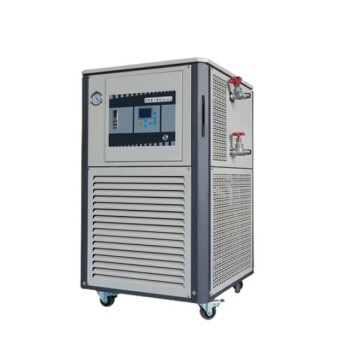
A laboratory reaction vessel with constant temperature control serves as the critical stabilization environment required to synthesize high-quality CoxAl3FeyOm±δ catalyst precursors. By strictly maintaining a temperature of 68°C and facilitating precise pH regulation at 10.5±0.5, this equipment ensures that cobalt, aluminum, and iron nitrates co-precipitate into a uniform structure rather than separating or forming impurities.
Core Takeaway: The reaction vessel is not merely a container; it is a precision instrument that enforces the thermodynamic conditions necessary to create a uniform hydrotalcite-like precursor. This specific precursor structure is the non-negotiable foundation required to generate high-performance spinel catalysts in later processing stages.
The Role of Precision Control in Synthesis
Establishing Thermal Stability
The primary function of the vessel is to lock the reaction environment at exactly 68°C.
At this specific thermal point, the reaction kinetics of the nitrate components are optimized.
Fluctuations in temperature could alter the reaction rates of the individual metals (cobalt, aluminum, and iron), leading to uneven integration.
Enabling Chemical Regulation
Beyond temperature, the vessel facilitates the maintenance of a highly specific alkalinity, kept at a pH of 10.5±0.5.
This pH level is the chemical trigger that forces the dissolved nitrates to precipitate out of the solution.
The constant temperature aids in keeping this pH reading stable, preventing drifts that could alter the chemical composition of the solid forming.
From Components to Crystal Structure
Ensuring Stoichiometric Accuracy
The goal of this synthesis is to combine cobalt nitrate, aluminum nitrate, and iron nitrate in exact ratios.
The controlled environment ensures these components react according to their intended stoichiometric ratios.
Without this control, one metal might precipitate faster than the others, resulting in a catalyst with the wrong elemental balance.
Creating the Hydrotalcite-Like Foundation
The immediate output of this controlled process is a hydrotalcite-like precursor.
This specific crystal structure serves as a blueprint or template.
Ideally formed precursors translate directly into high-performance spinel structures during subsequent calcination steps.
Understanding the Risks of Instability
The Cost of Thermal Drift
If the vessel cannot maintain the 68°C setpoint, the uniformity of the precursor is jeopardized.
Inconsistent temperatures often lead to phase separation, where the metals do not mix intimately at the atomic level.
The Impact on Catalyst Performance
A poor precursor leads inevitably to a poor final catalyst.
If the hydrotalcite-like structure is flawed due to environmental instability, the final spinel structure will lack the necessary active sites for catalysis.
Optimizing Your Synthesis Strategy
To ensure the successful preparation of CoxAl3FeyOm±δ catalysts, you must view the reaction vessel as a variable that defines product quality.
- If your primary focus is Structural Uniformity: Ensure your vessel can hold 68°C with negligible variance to guarantee the formation of a pure hydrotalcite-like precursor.
- If your primary focus is Chemical Composition: Prioritize pH monitoring systems that function accurately at elevated temperatures to maintain the 10.5±0.5 target.
Precision in the reaction vessel is the only path to a high-performance spinel structure.
Summary Table:
| Parameter | Targeted Value | Role in Synthesis |
|---|---|---|
| Temperature | 68°C | Optimizes reaction kinetics and ensures thermal stability. |
| pH Level | 10.5 ± 0.5 | Triggers co-precipitation and maintains chemical regulation. |
| Material Structure | Hydrotalcite-like | Provides the blueprint for high-performance spinel structures. |
| Key Outcome | Stoichiometric Accuracy | Prevents phase separation and ensures uniform metal integration. |
Elevate Your Catalyst Research with KINTEK Precision
Achieving the perfect hydrotalcite-like precursor requires more than just a container—it requires absolute environmental control. KINTEK specializes in advanced laboratory reaction vessels, high-pressure reactors, and autoclaves designed to maintain the rigorous thermal and chemical stability your synthesis demands.
From our robust crushing and milling systems to our precise high-temperature furnaces (CVD, Vacuum, and Muffle), KINTEK provides the comprehensive toolkit necessary for every stage of material development. Whether you are focused on battery research, ceramic synthesis, or advanced catalysis, our high-quality laboratory equipment and consumables (including PTFE and crucibles) ensure your results are repeatable and accurate.
Ready to optimize your stoichiometric accuracy? Contact KINTEK today to discover how our tailored solutions can enhance your laboratory's efficiency and output.
References
- Qiao Wang, Lihong Huang. Effect of Fe on CoxAl3FeyOm±δ Catalysts for Hydrogen Production by Auto-thermal Reforming of Acetic Acid. DOI: 10.15541/jim20180356
This article is also based on technical information from Kintek Solution Knowledge Base .
Related Products
- High Temperature Constant Temperature Heating Circulator Water Bath Chiller Circulator for Reaction Bath
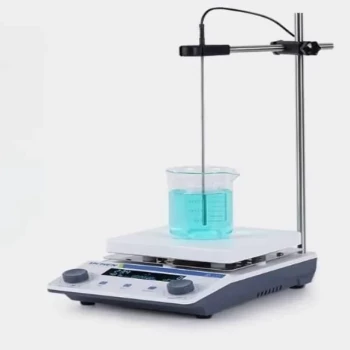
- Laboratory Small Constant Temperature Heated Magnetic Stirrer Heater and Stirrer
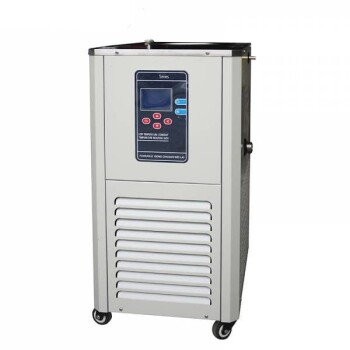
- 5L Chilling Circulator Cooling Water Bath Circulator for Low Temperature Constant Temperature Reaction Bath
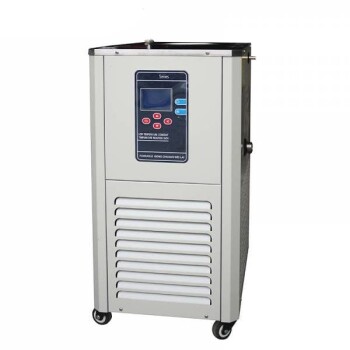
- 10L Chilling Circulator Cooling Water Bath Low Temperature Constant Temperature Reaction Bath
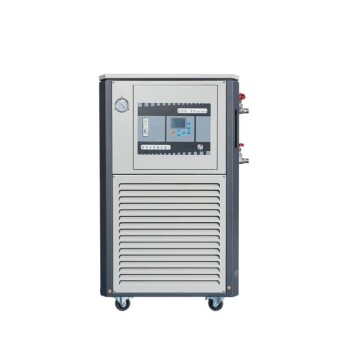
- 30L Chiller Water Bath Cooling Circulator Low Temperature Constant Temperature Reaction Bath
People Also Ask
- What is the necessity of a circulating water bath in chlorate production? Optimize Yield & Purity with Precision
- How does a constant temperature circulator support the leaching reaction of gold scrap? Optimize Gold Recovery Results
- How do constant temperature circulators impact weight-loss immersion tests? Ensure Precision in Corrosion Analysis
- Why is a constant temperature water bath used for precursor storage in CVD? Achieve Stable Nanocrystalline SiC Deposition
- Why is a high-precision constant temperature water bath necessary for anaerobic digestion? Ensure Success at 37±0.02°C