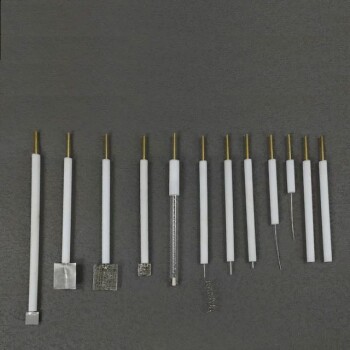
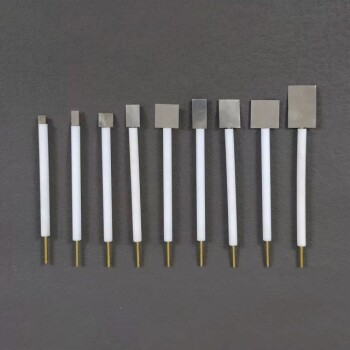
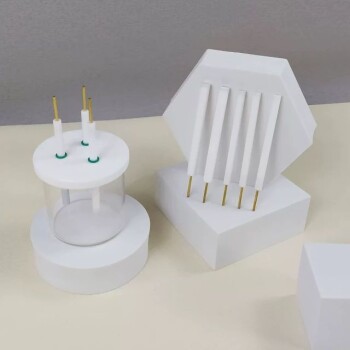
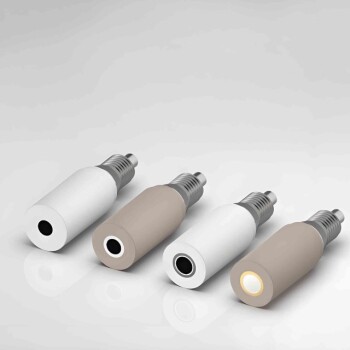
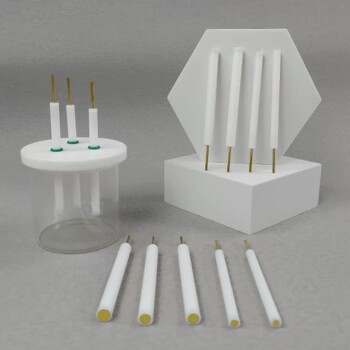
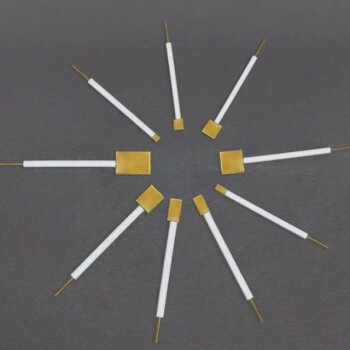
In a three-electrode microbial fuel cell (MFC) testing system, the platinum wire serves as the counter (or auxiliary) electrode. Its primary function is to complete the electrical circuit by allowing current to flow between itself and the working electrode. Because platinum is chemically inert and highly conductive, it facilitates the necessary redox-balancing reactions without participating in them or contaminating the electrolyte, ensuring the data you collect solely reflects the performance of the working electrode.
The counter electrode acts as the silent partner in your electrochemical cell. While the working electrode drives the specific reaction you are studying, the platinum wire manages the current load and balances the cell's chemistry without introducing "noise" or impurities that would distort your results.
The Mechanics of the Three-Electrode System
Completing the Current Loop
In electrochemical testing methods like Cyclic Voltammetry (CV), the potentiostat drives current through the cell.
The platinum wire forms a complete current path with the working electrode. While the reference electrode measures potential (voltage), the platinum counter electrode handles the actual flow of electrons required to sustain the experiment.
Balancing Redox Reactions
Electrochemistry requires balance; if oxidation occurs at the working electrode, reduction must occur at the counter electrode (and vice versa).
The platinum wire provides a surface for these balancing reactions to occur. It transfers electrons between itself and species in the solution to close the circuit, allowing the reaction at the working electrode to proceed unimpeded.
Ensuring Accurate Signal Measurement
The integrity of your data depends on isolating the behavior of the working electrode.
By using a platinum counter electrode, you ensure that the current measured by the potentiostat is the exact current flowing through the working electrode. It prevents external interference signals that could arise from a less stable material.
Why Platinum is the Standard
Superior Chemical Inertness
The most critical attribute of platinum is its resistance to corrosion and oxidation.
Even in aggressive acidic or chloride-rich environments common in MFCs, platinum does not undergo self-dissolution. This prevents the release of impurity ions into the electrolyte, which could otherwise poison the microbial biofilm or alter the catalytic behavior of the working electrode.
High Conductivity and Catalytic Activity
Platinum is an excellent electrical conductor.
It facilitates rapid electron transfer, ensuring that the kinetics at the counter electrode never become the "bottleneck" of the system. This guarantees that the limits you observe in your data are the actual limits of your working electrode, not a failure of the test setup.
Understanding the Trade-offs
Surface Area Limitations
While platinum wire is excellent for analytical measurements, a simple wire has a relatively small geometric surface area.
If your experiment involves very high currents, a simple wire might not provide enough surface area to facilitate the balancing reaction quickly enough. In these cases, the counter electrode could become the rate-limiting factor, artificially capping the performance of your system.
Cost Considerations
Platinum is a precious metal with a high material cost.
While a wire is generally sufficient and affordable for small-scale benchtop testing, scaling up to larger reactor sizes often requires alternative materials (like carbon or stainless steel) or different form factors (like platinum mesh) to balance cost with performance.
Making the Right Choice for Your Goal
To ensure the reliability of your MFC data, select your electrode configuration based on your specific experimental constraints.
- If your primary focus is high-precision analytical testing (e.g., Cyclic Voltammetry): Stick with the platinum wire to ensure zero chemical interference and maximum data fidelity.
- If your primary focus is high-current generation or larger scale systems: Consider using a platinum mesh or a high-surface-area carbon electrode to prevent the counter electrode from limiting the current flow.
By utilizing a platinum wire counter electrode, you eliminate chemical variables, ensuring that every signal you measure is a true reflection of your microbial system's biology.
Summary Table:
| Feature | Function in Three-Electrode MFC System |
|---|---|
| Core Role | Serves as the Counter (Auxiliary) Electrode to complete the electrical circuit. |
| Current Management | Facilitates electron flow to balance redox reactions occurring at the working electrode. |
| Chemical Property | High inertness prevents electrolyte contamination or microbial biofilm poisoning. |
| Measurement Impact | Isolates the working electrode behavior for accurate CV and electrochemical data. |
| Key Advantage | High conductivity ensures counter electrode kinetics do not limit the system's performance. |
Elevate Your Electrochemical Research with KINTEK
Precision in microbial fuel cell testing starts with high-quality components. KINTEK specializes in premium laboratory equipment and specialized consumables, providing the high-conductivity platinum electrodes and electrolytic cells essential for your high-precision analytical research.
From high-temperature furnaces and vacuum systems to advanced battery research tools, reactors, and high-purity ceramics, we empower researchers with the tools needed for reliable, repeatable results.
Ready to optimize your lab setup? Contact us today to discover how our comprehensive range of electrodes and consumables can enhance your data fidelity!
References
- Youssef Naimi, İlhan Garip. Effects of Open Circuit Potential and Characterization of Electro-Active Biofilm for Microbial Fuel Cells using Compost Leachate. DOI: 10.20508/ijrer.v13i3.14059.g8795
This article is also based on technical information from Kintek Solution Knowledge Base .
Related Products
- Platinum Auxiliary Electrode for Laboratory Use
- Platinum Sheet Electrode for Laboratory and Industrial Applications
- Rotating Platinum Disk Electrode for Electrochemical Applications
- Platinum Sheet Electrode for Battery Lab Applications
- RRDE rotating disk (ring disk) electrode / compatible with PINE, Japanese ALS, Swiss Metrohm glassy carbon platinum
People Also Ask
- What is the function of a platinum electrode as an auxiliary electrode? Ensure Precise Nickel Coating Corrosion Testing
- Why is platinum typically selected as the auxiliary electrode for electrochemical testing of oxazoline inhibitors?
- What does the auxiliary electrode do? Ensuring Accurate Electrochemical Measurements
- What are the roles of Pt counter and reference electrodes in nitrided steel testing? Optimize Your Electrochemical Data
- What are the advantages of using a platinum counter electrode? Ensure Purity in Photocatalytic Coating Deposition