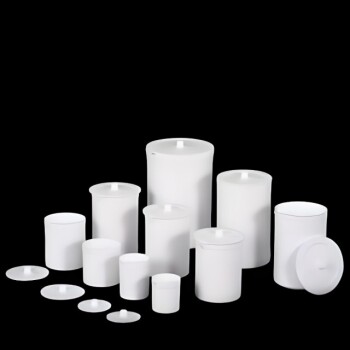
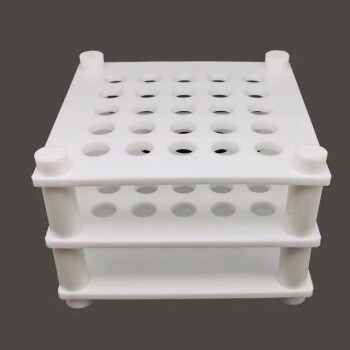
The Teflon-lined (PTFE) high-pressure reactor serves as the critical hydrothermal environment required to transform metal precursors into nickel-cobalt sulfides (NCS). By providing a sealed, corrosion-resistant chamber, the reactor facilitates a high-pressure anion exchange reaction at a constant temperature (typically 120 °C) that is essential for developing the material's hierarchical nanostructure and electrochemical activity.
A Teflon-lined reactor enables controlled hydrothermal sulfurization by generating autogenous pressure, which drives the conversion of metal hydroxides into sulfides. This process ensures high chemical purity and creates the complex morphologies necessary for high-performance energy storage applications.
The Mechanics of Hydrothermal NCS Synthesis
Generating Autogenous Pressure for Anion Exchange
The primary role of the reactor is to provide a closed system where heating the liquid solution generates autogenous pressure. This internal pressure is the driving force that promotes the anion exchange reaction between sulfur ions (from sources like sodium sulfide) and metal hydroxide precursors.
Maintaining Liquid Phase Stability
Under the high-pressure conditions within the reactor, solvents can remain in a liquid state at temperatures that would otherwise cause them to boil or evaporate in an open system. This stable liquid environment allows for thorough chelation and in-situ reactions between nickel and cobalt ions and the sulfur source.
Facilitating Dissolution and Recrystallization
The hydrothermal environment facilitates the continuous dissolution and recrystallization of components. This leads to the formation of a uniform phase and a solid structural foundation, which is necessary before any subsequent high-temperature processing or sintering.
The Critical Protective Role of the PTFE Liner
Resistance to Corrosive Sulfurization Agents
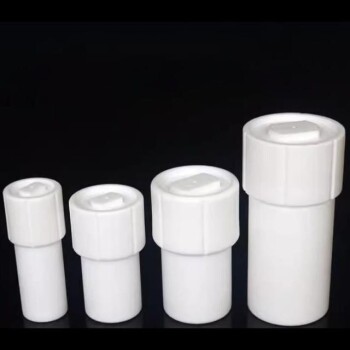
NCS synthesis often involves aggressive reagents, such as strong alkaline solutions or sodium sulfide. The PTFE (polytetrafluoroethylene) liner is chosen for its exceptional chemical inertness, which prevents these corrosive chemicals from attacking the reactor's outer walls.
Preventing Metal Ion Contamination
A key benefit of the Teflon lining is that it acts as a barrier between the reaction solution and the stainless steel shell. By preventing the solution from corroding the steel, it eliminates the risk of introducing metallic impurities that would degrade the electrochemical performance of the NCS.
Ensuring Stoichiometric Accuracy
By maintaining a sealed and non-reactive environment, the PTFE-lined reactor ensures that the stoichiometric ratio of nickel, cobalt, and sulfur remains precise. This chemical purity is vital for achieving the high crystallinity and specific phase structures required for advanced battery or supercapacitor materials.
Impact on Material Morphology and Performance
Building Hierarchical Nanostructures
The hydrothermal conversion process within the reactor is essential for creating hierarchical nanostructures, such as nanowires or nanosheets. These complex shapes significantly increase the number of active sites available for electrochemical reactions.
Promoting Uniform Nucleation and Growth
The constant temperature and pressure allow for uniform nucleation and self-assembled growth of the NCS on substrates like nickel mesh or conductive glass. This results in a highly consistent morphology across the entire material surface, which improves overall device reliability.
Understanding Technical Trade-offs and Limitations
Thermal Constraints of PTFE
While PTFE is highly inert, it has strict temperature limitations, generally becoming unstable or losing structural integrity above 250 °C. For NCS synthesis, which typically occurs at 120 °C, this is well within safety margins, but it prevents the use of this specific liner for ultra-high-temperature solvothermal processes.
Pressure and Safety Management
The stainless steel outer shell is required to provide the structural safety that the PTFE liner cannot offer on its own. Operators must carefully calculate the filling degree of the liner to avoid excessive pressure buildup, which could lead to mechanical failure of the reactor.
Making the Right Choice for Your Goal
How to Apply This to Your Project
Successful synthesis of nickel-cobalt sulfides requires balancing chemical activity with structural control.
- If your primary focus is Maximum Electrochemical Activity: Ensure the reactor is maintained at a constant 120 °C to promote the formation of hierarchical nanostructures with high surface areas.
- If your primary focus is High Material Purity: Always inspect the PTFE liner for cracks or staining before use to prevent the leaching of iron or chromium from the stainless steel shell into your NCS sample.
- If your primary focus is Structural Uniformity: Use a reactor with a reliable heating mantle to ensure even temperature distribution, which facilitates uniform nucleation and self-assembly of the sulfides.
The PTFE-lined reactor is the indispensable tool that bridges the gap between raw metal salts and high-performance energy materials through controlled hydrothermal chemistry.
Summary Table:
| Feature/Mechanism | Role in NCS Synthesis | Key Benefit for Research |
|---|---|---|
| Autogenous Pressure | Drives anion exchange between sulfur and metal ions | Successful conversion of metal precursors to sulfides |
| PTFE (Teflon) Liner | Provides an inert barrier against aggressive reagents | Prevents metal contamination; ensures stoichiometric purity |
| Hydrothermal Control | Maintains solvents in liquid state above boiling point | Facilitates uniform nucleation and hierarchical nanostructures |
| Thermal Stability | Enables constant temperature reactions (typically 120°C) | Ensures consistent morphology and electrochemical activity |
Elevate Your Materials Research with KINTEK
Achieve precision and purity in your hydrothermal synthesis with KINTEK’s industry-leading high-temperature high-pressure reactors and autoclaves. Specifically designed to handle corrosive environments and demanding chemical reactions, our PTFE-lined solutions are the trusted choice for developing high-performance energy materials like nickel-cobalt sulfides.
At KINTEK, we specialize in providing researchers with a comprehensive suite of laboratory excellence, including:
- Advanced Reactors: CVD, PECVD, and high-pressure hydrothermal systems.
- Thermal Processing: Muffle, tube, and vacuum furnaces for precise sintering.
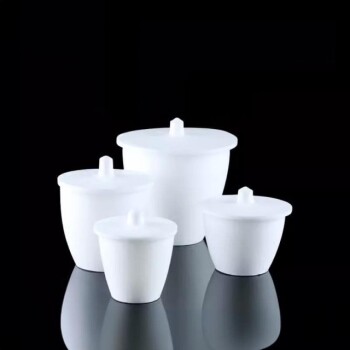
- Specialized Consumables: High-quality PTFE liners, ceramics, and crucibles to prevent sample contamination.
Ready to optimize your synthesis workflow and achieve superior material performance? Contact KINTEK today to discuss your laboratory equipment needs!
References
- Xin Chen, Muge Ding. A flexible wearable self-supporting hybrid supercapacitor device based on hierarchical nickel cobalt sulfide@C electrode. DOI: 10.1038/s41598-023-42278-9
This article is also based on technical information from Kintek Solution Knowledge Base .
Related Products
- Custom PTFE Teflon Parts Manufacturer for Hydrothermal Synthesis Reactor Polytetrafluoroethylene Carbon Paper and Carbon Cloth Nano-growth
- Custom PTFE Teflon Parts Manufacturer for Reagent Wide Mouth Fine Mouth Sample High Temperature Bottles
- Stainless High Pressure Autoclave Reactor Laboratory Pressure Reactor
- Customizable High Pressure Reactors for Advanced Scientific and Industrial Applications
- Custom PTFE Teflon Parts Manufacturer for Microwave Digestion Tank
People Also Ask
- What is the function of a PTFE reactor in MXene etching? Ensure Safe, High-Purity MAX Phase Conversion
- Why is a PTFE reactor required for titanium-based nano-ceramic coating solutions? Ensure Chemical Inertness & Purity
- Why must a Polytetrafluoroethylene (PTFE) reactor be used for Ti3C2TX MXene etching? Ensure Safety and Purity
- Why are PTFE reactors preferred for silver phosphate glass testing? Ensure Purity and Kinetic Accuracy
- What are the advantages of using polytetrafluoroethylene (PTFE) liners in hydrothermal synthesis reactors? High Purity