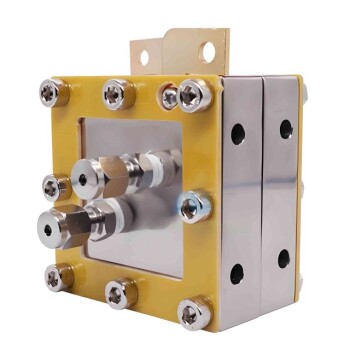
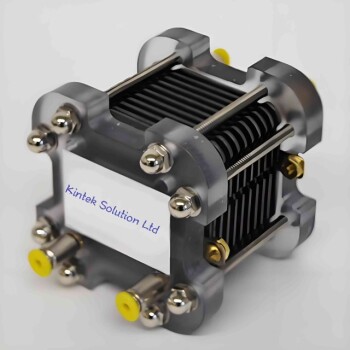
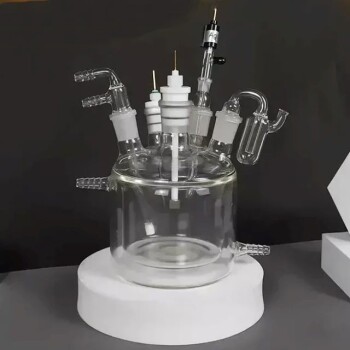
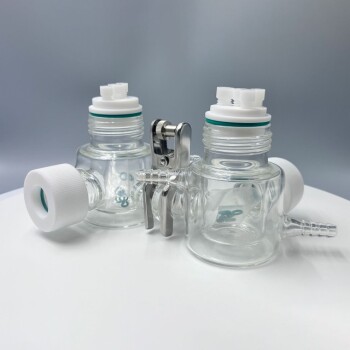
An electrolytic hydrogen charging device functions as a critical simulation tool used to artificially introduce atomic hydrogen into metal specimens for testing purposes. By employing specific electrolytes and a constant current density, the device triggers a cathodic reaction that actively forces hydrogen atoms into the metal lattice and its structural defects.
Core Takeaway: This technology enables the quantitative assessment of material degradation by achieving hydrogen saturation at room temperature. It provides the data necessary to measure exactly how much hydrogen reduces the structural integrity of critical components, specifically within welded joints.
The Mechanism of Hydrogen Introduction
Creating the Cathodic Reaction
The device does not simply expose metal to hydrogen; it drives it in. By maintaining a constant current density, the system creates a controlled environment where the metal specimen acts as the cathode.
Penetrating the Lattice
This electrochemical process forces atomic hydrogen directly into the metal's internal structure. It permeates the crystal lattice and accumulates in microscopic defects, mimicking long-term exposure to hydrogen-rich environments.
Room Temperature Efficiency
A distinct advantage of this method is its ability to achieve hydrogen saturation without requiring elevated temperatures. This allows researchers to study embrittlement under standard thermal conditions, isolating the chemical impact of hydrogen from thermal effects.
Quantifying Mechanical Degradation
Measuring Notch Tensile Strength
Once the specimen is charged, researchers can test its notch tensile strength. This metric reveals how the presence of hydrogen reduces the load-bearing capacity of the metal, particularly in areas with geometric stress concentrators (notches).
Evaluating Fracture Toughness
The device facilitates the study of fracture toughness, or the material's ability to resist crack propagation. Hydrogen embrittlement typically lowers this threshold, making metals brittle and prone to sudden, catastrophic failure.
Critical Application: Welded Joints
Focusing on Heat-Affected Zones (HAZ)
The primary reference highlights the specific utility of this device in analyzing T24/T92 welded joints. These materials are often used in high-stress applications.
Vulnerability of the HAZ
The device allows for targeted study of the heat-affected zone, the area surrounding a weld. This region is often the most susceptible to hydrogen embrittlement due to microstructural changes that occur during the welding process.
Understanding the Trade-offs
The Necessity of Specific Electrolytes
The success of the evaluation depends heavily on the chemical medium. Specific electrolytes must be selected to match the material and the desired charging rate to ensure the reaction is effective and reproducible.
Current Density Control
Precision is paramount. If the current density fluctuates, the amount of hydrogen introduced becomes variable, rendering the quantitative data unreliable. The device must maintain absolute consistency to produce valid fracture mechanics data.
Implications for Material Testing
To effectively utilize electrolytic hydrogen charging in your material evaluation strategy:
- If your primary focus is Weld Integrity: Concentrate your testing on the heat-affected zones (HAZ) of T24/T92 joints, as these are the critical failure points this device is designed to isolate.
- If your primary focus is Material Research: Use the device to correlate saturation levels with specific drops in notch tensile strength to build a predictive model of failure.
By using this device to force hydrogen saturation, you move from theoretical risk assessment to quantifiable material verification.
Summary Table:
| Feature | Function in Hydrogen Embrittlement Testing |
|---|---|
| Mechanism | Employs cathodic reaction via constant current density to force atomic hydrogen into the metal lattice. |
| Operating Condition | Achieves hydrogen saturation at room temperature, isolating chemical impact from thermal effects. |
| Key Metrics | Measures reduction in notch tensile strength and fracture toughness. |
| Primary Application | Focused analysis of heat-affected zones (HAZ) in critical welded joints like T24/T92. |
| Output | Provides quantitative data for predictive failure modeling and material verification. |
Secure Your Material Integrity with KINTEK Precision Solutions
Don't leave the structural integrity of your critical components to chance. KINTEK provides the advanced laboratory equipment necessary for rigorous material verification, including high-performance electrolytic cells and electrodes specifically designed for hydrogen charging and electrochemical research.
Whether you are analyzing the heat-affected zones of welded joints or researching advanced metal alloys, our comprehensive portfolio—ranging from high-temperature furnaces and reactors to precise crushing, milling, and hydraulic press systems—ensures your lab has the tools to achieve quantifiable results.
Ready to elevate your material testing accuracy? Contact a KINTEK specialist today to discover how our specialized laboratory solutions can enhance your research and protect your projects from catastrophic failure.
References
- Ladislav Falat, Peter Ševc. Hydrogen pre-charging effects on the notch tensile properties and fracture behaviour of heat-affected zones of thermally aged welds between T24 and T92 creep-resistant steels. DOI: 10.4149/km_2016_6_417
This article is also based on technical information from Kintek Solution Knowledge Base .
Related Products
- Customizable PEM Electrolysis Cells for Diverse Research Applications
- FS Electrochemical Hydrogen Fuel Cells for Diverse Applications
- Optical Water Bath Electrolytic Electrochemical Cell
- Double Layer Five-Port Water Bath Electrolytic Electrochemical Cell
- Double-Layer Water Bath Electrolytic Electrochemical Cell
People Also Ask
- What are the risks of improper voltage control in an electrolysis cell? Avoid Costly Damage and Inefficiency
- What are the opening configurations for the non-sealed and sealed versions of the electrolysis cell? Optimize Your Electrochemical Setup
- What is an electrolysis cell? A Guide to Driving Chemical Reactions with Electricity
- What parameters must be strictly controlled during the electrolysis process? Ensure Precision and Efficiency
- What are the precautions for heating or sterilizing an electrolysis cell? Avoid Damaging Sensitive Components