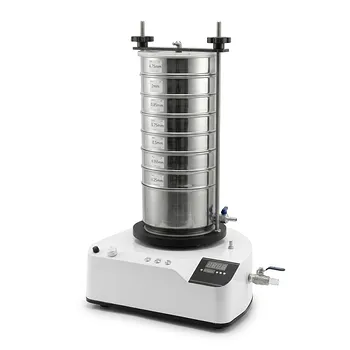
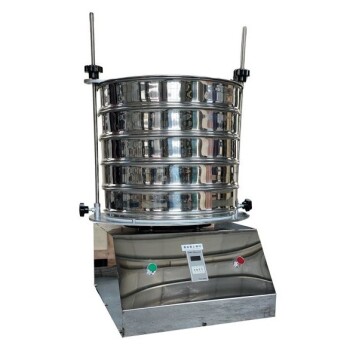
Standard sieving equipment is the primary tool for quantifying the physical dimensions of coal and coke. It classifies materials into specific fractions—such as coal powder under 3 mm or coke between 25 mm and 80 mm—to provide the raw data required for calculating grinding degrees. This process is essential for ensuring particle uniformity, which directly dictates the chemical reactivity of the coal and the operational efficiency of the blast furnace.
Core Takeaway: Standard sieving provides the foundational metrics necessary to optimize the grinding degree of coal charges and ensure the uniformity of finished coke. By controlling particle size distribution (PSD), operators can precisely manage gas permeability in blast furnaces and the accuracy of laboratory-scale chemical analyses.
Foundational Role in Process Optimization
Determining the Optimal Grinding Degree
Standard sieving equipment allows operators to measure the specific fraction of coal powder under 3 mm. This data is the primary variable used to calculate the grinding degree of the coal charge.
An optimized grinding degree ensures that different coal components are blended intimately. This leads to a more robust coke structure during the carbonization process.
Measuring Particle Size Distribution (PSD)
Equipment like sieve shakers utilize a series of mesh sizes to determine the cumulative mass fraction of the sample. This reveals the uniformity of the crushing process.
Precise PSD data, including indicators like D50 and D90, helps engineers understand the average particle size. This is critical for maintaining the grading continuity of the material before it enters the coke oven.
Impact on Reaction Kinetics and Analysis
Eliminating Internal Heat Resistance
High-standard sieving ensures coal powder is ground to fine specifications, often below 74 μm. This level of fineness is vital for accurate thermogravimetric analysis.
By ensuring particle uniformity, sieving eliminates differences in internal heat diffusion resistance. This allows for the measurement of true reaction kinetics without distortion from inconsistent particle geometry.
Ensuring Representative Chemical Extraction
In laboratory settings, sieving maintains coal samples within a tight range, such as 74 µm to 150 µm. This consistency is required for continuous chemical extraction processes.
A uniform particle size ensures a consistent contact area between the coal and the solvents. This leads to more repeatable experimental results and a better understanding of the coal’s chemical properties.
Influence on Downstream Industrial Efficiency
Maintaining Gas Permeability
The size of finished coke particles, specifically those above 80 mm or below 25 mm, directly affects the gas permeability of a blast furnace.
If the coke particle size distribution is inconsistent, it can restrict the flow of gases. This reduces the production efficiency and increases the energy consumption of the smelting process.
Predicting Material Performance
Calculations such as the geometric mean diameter (dgw) are derived from sieving data. These metrics help predict the specific energy consumption required for further processing, such as pelleting.
Uniform particle sizes also impact steam conditioning and the final hardness of molded coal products. Without standard sieving, the mechanical stability of the final product remains unpredictable.
Understanding the Trade-offs
Mechanical Limitations and Wear
While standard sieving is highly reliable, it is subject to sieve blinding, where particles become trapped in the mesh. This can lead to inaccurate mass distribution data if the equipment is not maintained.
Furthermore, mechanical sieving classifies particles based on their smallest cross-section. This may not fully account for elongated or "flaky" particles, which can behave differently in a furnace compared to spherical ones.
Sample Representative Reliability
The accuracy of the sieving result is heavily dependent on the sampling technique. If the initial sample does not represent the entire bulk lot, even the most precise sieving will yield misleading quality data.
How to Apply This to Your Project
To maximize the value of standard sieving in your operations, consider your primary objective:
- If your primary focus is Blast Furnace Efficiency: Use sieving to strictly monitor the "under 25 mm" coke fraction to ensure high gas permeability and stable furnace pressure.
- If your primary focus is Laboratory Accuracy: Focus on high-mesh sieves (e.g., 100-mesh or 200-mesh) to eliminate particle size as a variable in thermal and chemical reactivity tests.
- If your primary focus is Grinding Optimization: Utilize multi-stage sieve stacks to calculate the geometric standard deviation ($S_{gw}$), allowing for precise adjustment of your crushing equipment.
By integrating standard sieving into your quality control protocol, you transform raw physical measurements into a strategic advantage for both production and research.
Summary Table:
| Application Area | Key Metric Measured | Primary Benefit |
|---|---|---|
| Grinding Optimization | Coal powder fraction < 3 mm | Enhances coke structure and blending uniformity. |
| Laboratory Analysis | Particle fineness (< 74 μm) | Ensures accurate thermogravimetric and chemical extraction. |
| Blast Furnace Efficiency | Coke size (25 mm - 80 mm) | Maintains gas permeability and reduces energy consumption. |
| Process Prediction | Geometric mean diameter ($d_{gw}$) | Predicts energy requirements and final product hardness. |
| Quality Control | D50 and D90 distribution | Monitors crushing consistency and material grading. |
Precision Sieving for Superior Coal Quality
Don't let inconsistent particle sizes compromise your industrial efficiency or research accuracy. KINTEK specializes in high-performance laboratory equipment, including precision sieving equipment, crushing and milling systems, and hydraulic pellet presses, designed to meet the rigorous demands of coal and coke analysis.
Whether you need to optimize blast furnace gas permeability or ensure representative chemical extraction, KINTEK provides the reliable tools and high-quality consumables—including ceramics and crucibles—to deliver repeatable results.
Take control of your material quality today. Contact our experts at KINTEK to find the perfect solution for your laboratory or production needs!
References
- Д. В. Мірошниченко, Maryna Kormer. Factors Affecting the Formation the Carbon Structure of Coke and the Method of Stabilizing Its Physical and Mechanical Properties. DOI: 10.3390/c9030066
This article is also based on technical information from Kintek Solution Knowledge Base .
Related Products
- Three-dimensional electromagnetic sieving instrument
- Laboratory Vibratory Sieve Shaker Machine for Dry and Wet Three-Dimensional Sieving
- Laboratory Test Sieves and Sieving Machines
- Laboratory Wet Three-Dimensional Vibratory Sieve Shaker Machine
- Laboratory Test Sieves and Vibratory Sieve Shaker Machine
People Also Ask
- Why is sieving equipment essential for the classification of processed bio-activated carbon? Optimize Performance
- What are the limitations of sieving? Understanding the Constraints of Particle Size Analysis
- What are advantages and disadvantages of sieving method? A Guide to Reliable & Cost-Effective Particle Sizing
- How is sieving important? The Critical Role of Particle Size Analysis in Quality Control
- What is sieving and how does it work? A Guide to Accurate Particle Size Analysis