Knowledge high pressure reactor What roles do high-pressure reactors and fluoropolymer liners play in the solvothermal synthesis of Bi-BDC? Expert Guide
Author avatar

Tech Team · Kintek Solution

Updated 2 months ago

What roles do high-pressure reactors and fluoropolymer liners play in the solvothermal synthesis of Bi-BDC? Expert Guide


High-pressure reactors and fluoropolymer liners are the essential hardware components that enable the solvothermal synthesis of Bismuth-based Metal-Organic Frameworks (Bi-BDC). The reactor provides a controlled, high-temperature, and pressurized environment that keeps solvents in a liquid state above their boiling points to facilitate crystal growth. Simultaneously, the fluoropolymer liner ensures chemical inertness, protecting the reactor vessel from corrosion and preventing metal impurities from contaminating the synthesized MOF.

The core role of these components is to create a stable, contamination-free environment that overcomes the solubility and coordination barriers of bismuth ions and organic ligands. By utilizing autogenous pressure and chemical isolation, researchers can achieve the high crystallinity and purity required for Bi-BDC materials.

The Role of High-Pressure Reactors

Facilitating Coordination and Nucleation

A high-pressure reactor, often called an autoclave, provides the closed reaction environment necessary for solvothermal synthesis. This setup allows the mixture to be heated significantly above the solvent's atmospheric boiling point.

Under these conditions, the autogenous pressure increases the solubility of the bismuth precursors and organic ligands. This ensures that the metal ions and ligands can react thoroughly to form stable coordination bonds, leading to uniform crystal nucleation.

Controlling Crystal Growth and Morphology

The sealed environment allows for stable, long-duration heating, which is critical for the growth of high-quality crystals. This precise control over temperature and pressure facilitates the development of specific crystal planes.

By maintaining a liquid phase at elevated temperatures, the reactor ensures the structural integrity of the MOF precursors. This results in materials with regular pore structures and well-defined geometric morphologies.

The Role of Fluoropolymer Liners

Preventing Chemical Corrosion

Fluoropolymer liners, such as Polytetrafluoroethylene (PTFE), are used for their exceptional chemical inertness. They act as a barrier between the corrosive reaction mixture—often containing high concentrations of organic solvents and metal salts—and the metal walls of the reactor.

Without this protection, the acidic or basic nature of the precursors could corrode the reactor vessel. This would not only damage the equipment but also compromise the structural safety of the high-pressure system.

Ensuring Material Purity

A primary function of the PTFE liner is to prevent metal impurity contamination. If the reaction fluid were in direct contact with the stainless steel walls of a reactor, trace metals could leach into the solution.

By isolating the reaction, the liner ensures that the Bi-BDC synthesis remains free from foreign ions. This is vital for safeguarding the purity and the specific electronic or catalytic properties of the resulting MOF.

Understanding the Trade-offs

Temperature and Pressure Limitations

While PTFE liners are excellent for chemical resistance, they have physical limits, typically around 220°C to 250°C. Exceeding these temperatures can cause the liner to deform or "creep," which may lead to seal failure.

Furthermore, the pressure generated inside the reactor must be carefully monitored. If the solvent filling degree is too high, the autogenous pressure can exceed the mechanical safety limits of the reactor vessel.

Maintenance and Sealing Issues

Liners must be inspected regularly for signs of pitting or discoloration. Over time, repeated thermal cycling can cause the liner to lose its shape, potentially creating leaks in the seal.

Failure to achieve a perfect seal prevents the buildup of pressure, which stops the solvent from reaching the required supercritical or high-temperature liquid state. This directly results in poor crystallinity or a complete failure of the synthesis.

How to Apply This to Your Project

When setting up your solvothermal synthesis for Bi-BDC, consider the following recommendations:

  • If your primary focus is high crystallinity: Ensure your high-pressure reactor is rated for at least 20% higher than your target autogenous pressure to allow for safe, stable growth.
  • If your primary focus is product purity: Use a high-quality, virgin PTFE liner and perform a "blank" cleaning run with pure solvent before your actual synthesis to remove residual ions.
  • If your primary focus is high-temperature synthesis (above 250°C): Replace standard PTFE liners with PPL (Polyphenylene polymers) or quartz liners, which offer higher thermal stability.

The synergy between the mechanical strength of the reactor and the chemical resistance of the liner is what makes the precision synthesis of Bi-BDC possible.

Summary Table:

Component Primary Function Impact on Bi-BDC Synthesis
High-Pressure Reactor Controlled heating & autogenous pressure Facilitates coordination, nucleation, and crystal growth
Fluoropolymer Liner Chemical isolation & inertness Prevents reactor corrosion and metal impurity contamination
Synergistic System Stable reaction environment Ensures high crystallinity and well-defined morphology

Elevate Your MOF Synthesis Precision with KINTEK

Achieving high crystallinity and purity in Bismuth-based Metal-Organic Frameworks requires equipment that can withstand extreme conditions without compromising material integrity. KINTEK specializes in premium laboratory solutions, offering a comprehensive range of high-temperature high-pressure reactors and autoclaves equipped with high-quality PTFE, PPL, or quartz liners.

Whether you are scaling up Bi-BDC production or exploring new coordination polymers, our equipment—including advanced furnace systems, hydraulic presses, and specialized consumables—is designed to meet the rigorous demands of material science.

Ready to optimize your solvothermal processes? Contact our technical experts today to discuss how our reactors and laboratory tools can enhance your research outcomes.

References

  1. Min Hu, Chen Liu. Bi-MOF-Derived Carbon Wrapped Bi Nanoparticles Assembly on Flexible Graphene Paper Electrode for Electrochemical Sensing of Multiple Heavy Metal Ions. DOI: 10.3390/nano13142069

This article is also based on technical information from Kintek Solution Knowledge Base .

Related Products

People Also Ask

Related Products

Custom PTFE Teflon Parts Manufacturer for Hydrothermal Synthesis Reactor Polytetrafluoroethylene Carbon Paper and Carbon Cloth Nano-growth

Custom PTFE Teflon Parts Manufacturer for Hydrothermal Synthesis Reactor Polytetrafluoroethylene Carbon Paper and Carbon Cloth Nano-growth

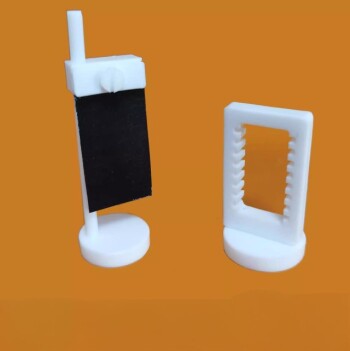
Acid and alkali resistant polytetrafluoroethylene experimental fixtures meet different requirements. The material is made of brand new polytetrafluoroethylene material, which has excellent chemical stability, corrosion resistance, airtightness, high lubricity and non-stickiness, electrical corrosion and good anti-aging ability, and can work for a long time at temperatures from -180℃ to +250℃.

Stainless High Pressure Autoclave Reactor Laboratory Pressure Reactor

Stainless High Pressure Autoclave Reactor Laboratory Pressure Reactor

Discover the versatility of Stainless High Pressure Reactor - a safe and reliable solution for direct and indirect heating. Built with stainless steel, it can withstand high temperatures and pressures. Learn more now.

High Pressure Laboratory Autoclave Reactor for Hydrothermal Synthesis

High Pressure Laboratory Autoclave Reactor for Hydrothermal Synthesis

Discover the applications of Hydrothermal Synthesis Reactor - a small, corrosion-resistant reactor for chemical labs. Achieve rapid digestion of insoluble substances in a safe and reliable way. Learn more now.

Customizable High Pressure Reactors for Advanced Scientific and Industrial Applications

Customizable High Pressure Reactors for Advanced Scientific and Industrial Applications

This laboratory-scale high-pressure reactor is a high-performance autoclave engineered for precision and safety in demanding research and development environments.

Custom PTFE Teflon Parts Manufacturer for Microwave Digestion Tank

Custom PTFE Teflon Parts Manufacturer for Microwave Digestion Tank

PTFE digestion tanks are renowned for their exceptional chemical resistance, high-temperature stability, and non-stick properties. These tanks are ideal for harsh laboratory environments, Their low coefficient of friction and inert nature prevent chemical interactions, ensuring purity in experimental results.

Mini SS High Pressure Autoclave Reactor for Laboratory Use

Mini SS High Pressure Autoclave Reactor for Laboratory Use

Mini SS High Pressure Reactor - Ideal for medicine, chemical, and scientific research industries. Programmed heating temp and stirring speed, up to 22Mpa pressure.

Customizable Laboratory High Temperature High Pressure Reactors for Diverse Scientific Applications

Customizable Laboratory High Temperature High Pressure Reactors for Diverse Scientific Applications

High-pressure lab reactor for precise hydrothermal synthesis. Durable SU304L/316L, PTFE liner, PID control. Customizable volume & materials. Contact us!

Visual High-Pressure Reactor for In-Situ Observation

Visual High-Pressure Reactor for In-Situ Observation

The visual high-pressure reactor uses transparent sapphire or quartz glass, maintaining high strength and optical clarity under extreme conditions for real-time reaction observation.

Custom Machined and Molded PTFE Teflon Parts Manufacturer with PTFE Crucible and Lid

Custom Machined and Molded PTFE Teflon Parts Manufacturer with PTFE Crucible and Lid

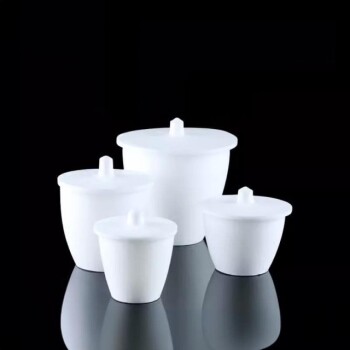
PTFE crucibles, made from pure Teflon, offer chemical inertness and resistance from -196°C to 280°C, ensuring compatibility with a wide range of temperatures and chemicals. These crucibles feature machine-finished surfaces for easy cleaning and prevention of contamination, making them ideal for precise laboratory applications.

Custom PTFE Teflon Parts Manufacturer for Reagent Wide Mouth Fine Mouth Sample High Temperature Bottles

Custom PTFE Teflon Parts Manufacturer for Reagent Wide Mouth Fine Mouth Sample High Temperature Bottles

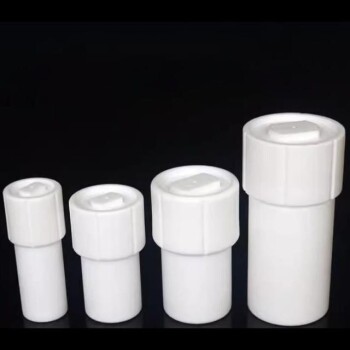
The PTFE Reagent Bottle, also known as PTFE Chemical Bottles or Teflon Reagent Bottle, is a robust alternative to traditional glass reagent bottles. These bottles are highly resistant to both acids and alkalis, featuring a leak-proof screw cap. Ideal for laboratory use, they offer excellent chemical resistance, high temperature capabilities up to 260°C, and superior durability.

Custom PTFE Teflon Parts Manufacturer Laboratory High Temperature Mixing Paddle Mixer

Custom PTFE Teflon Parts Manufacturer Laboratory High Temperature Mixing Paddle Mixer

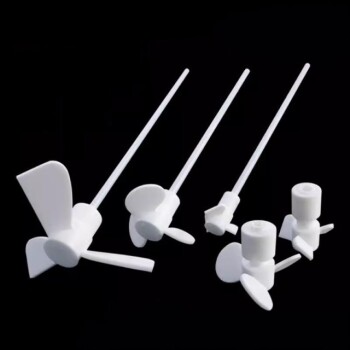
The PTFE mixing paddle mixer is a versatile and robust tool designed for laboratory use, particularly in environments requiring high resistance to chemicals and extreme temperatures. Crafted from high-quality PTFE, this mixer boasts several key features that enhance its functionality and durability.

Laboratory High Pressure Vacuum Tube Furnace

Laboratory High Pressure Vacuum Tube Furnace

KT-PTF High Pressure Tube Furnace: Compact split tube furnace with strong positive pressure resistance. Working temp up to 1100°C and pressure up to 15Mpa. Also works under controller atmosphere or high vacuum.

Custom PTFE Teflon Parts Manufacturer PTFE Beaker and Lids

Custom PTFE Teflon Parts Manufacturer PTFE Beaker and Lids

The PTFE beaker is a laboratory container that is resistant to acid, alkali, high and low temperatures and is suitable for temperatures ranging from -200ºC to +250ºC. This beaker has excellent chemical stability and is widely used for heat treatment samples and volume analysis.

Automatic High Temperature Heated Hydraulic Press Machine with Heated Plates for Lab

Automatic High Temperature Heated Hydraulic Press Machine with Heated Plates for Lab

The High Temperature Hot Press is a machine specifically designed for pressing, sintering and processing materials in a high temperature environment. It is capable of operating in the range of hundreds of degrees Celsius to thousands of degrees Celsius for a variety of high temperature process requirements.

Custom PTFE Teflon Parts Manufacturer for PTFE Measuring Cylinder 10/50/100ml

Custom PTFE Teflon Parts Manufacturer for PTFE Measuring Cylinder 10/50/100ml

PTFE measuring cylinder are a rugged alternative to traditional glass cylinders. They are chemically inert over a wide temperature range (up to 260º C), have excellent corrosion resistance and maintain a low coefficient of friction, ensuring ease of use and cleaning.

Manual High Temperature Heated Hydraulic Press Machine with Heated Plates for Lab

Manual High Temperature Heated Hydraulic Press Machine with Heated Plates for Lab

The High Temperature Hot Press is a machine specifically designed for pressing, sintering and processing materials in a high temperature environment. It is capable of operating in the range of hundreds of degrees Celsius to thousands of degrees Celsius for a variety of high temperature process requirements.

Custom PTFE Teflon Parts Manufacturer for Centrifuge Tubes

Custom PTFE Teflon Parts Manufacturer for Centrifuge Tubes

PTFE centrifugal tubes are highly valued for their exceptional chemical resistance, thermal stability, and non-stick properties, making them indispensable in various high-demand sectors. These tubes are particularly useful in environments where exposure to corrosive substances, high temperatures, or stringent cleanliness requirements are prevalent.

Custom PTFE Teflon Parts Manufacturer F4 Conical Flask Triangular Flask 50 100 250ml

Custom PTFE Teflon Parts Manufacturer F4 Conical Flask Triangular Flask 50 100 250ml

The PTFE triangular flask, also known as a Teflon reagent bottle, is a robust, chemical-resistant alternative to traditional glass bottles, suitable for handling both acids and alkalis. These bottles are unbreakable, lightweight, and feature a leak-proof screw cap, making them ideal for laboratory use.

Custom PTFE Teflon Parts Manufacturer for PTFE Containers

Custom PTFE Teflon Parts Manufacturer for PTFE Containers

PTFE container is a container with excellent corrosion resistance and chemical inertness.

PTFE Electrolytic Cell Electrochemical Cell Corrosion-Resistant Sealed and Non-Sealed

PTFE Electrolytic Cell Electrochemical Cell Corrosion-Resistant Sealed and Non-Sealed

Choose our PTFE Electrolytic Cell for reliable, corrosion-resistant performance. Customize specifications with optional sealing. Explore now.


Leave Your Message