Laboratory high-pressure autoclaves used for secondary growth must primarily deliver exceptional thermal precision and superior liner chemical stability. Specifically, the system requires exact control over heating rates and continuous temperature durations to ensure uniform shell formation, alongside liners capable of withstanding harsh alkaline or organic environments without leaching impurities.
Success in encapsulating metal nanoparticles relies on minimizing experimental variables. The autoclave serves as a critical stabilization vessel, where precise thermal management drives uniform crystallization, and liner inertness preserves the chemical purity required for regular pore structures.
The Imperative of Thermal Precision
Controlling Heating Rates
For the encapsulation of metal nanoparticles within a zeolite or metal-organic framework (MOF) shell, the rate at which temperature increases is critical.
You must utilize an autoclave system that allows for precise control over heating rates.
Uncontrolled or rapid heating can lead to uneven nucleation, disrupting the uniformity of the shell layer growth.
Maintaining Constant Temperatures
Beyond the ramp-up phase, the synthesis requires a stable thermal environment for specific durations.
The autoclave must be capable of maintaining constant temperature durations without fluctuation.
This stability is the driving force behind the consistent secondary growth necessary for a high-quality core-shell structure.
Material Compatibility and Liner Stability
Resisting Harsh Environments
The chemical environment inside the autoclave during secondary growth is often aggressive.
Liners must demonstrate high chemical stability to withstand strong alkaline solutions or organic solvents.
Standard liners that degrade under these conditions will inevitably compromise the integrity of the synthesis.
Preventing Contamination
The degradation of an autoclave liner does more than just damage equipment; it introduces foreign variables into your chemistry.
High-stability liners are vital to prevent impurities from leaching into the reaction mixture.
Avoiding these impurities is essential for maintaining controllable shell thickness and ensuring the formation of regular pore structures.
Common Pitfalls to Avoid
Neglecting Liner Composition
A common oversight is prioritizing the pressure rating of the stainless steel shell while ignoring the chemical resistance of the inner liner.
If the liner reacts with your solvent, even slightly, you risk altering the stoichiometry of the reaction.
Overlooking Thermal Hysteresis
Some basic autoclaves suffer from significant temperature lag or overshoot.
In secondary growth processes, this lack of precision results in shell layers with irregular thicknesses or structural defects.
Making the Right Choice for Your Synthesis
To ensure reproducible core-shell nanoparticle encapsulation, align your equipment selection with your specific experimental goals:
- If your primary focus is Uniformity: Prioritize autoclaves with programmable PID controllers that guarantee precise heating ramp rates and stable dwell times.
- If your primary focus is Purity and Structure: Ensure your liners are explicitly rated for inertness against the specific alkaline or organic solvents used in your protocol.
Select your equipment not just for containment, but for its ability to act as a precise variable control tool.
Summary Table:
| Technical Requirement | Critical Function | Impact on Core-Shell Quality |
|---|---|---|
| Precise Heating Rates | Controls nucleation & growth speed | Ensures uniform shell layer formation |
| Thermal Stability | Maintains constant dwell temperature | Promotes consistent secondary growth |
| Chemical Stability | Resists alkaline/organic solvents | Prevents degradation and reaction failure |
| Inert Liner Material | Eliminates impurity leaching | Maintains regular pore structure & purity |
Elevate Your Nanoparticle Synthesis with KINTEK
Precision is non-negotiable when it comes to the secondary growth of core-shell structures. KINTEK specializes in high-performance laboratory equipment, providing high-temperature high-pressure reactors and autoclaves specifically designed to meet the rigorous demands of material science. Our systems offer the programmable thermal control and ultra-stable liner materials necessary to prevent contamination and ensure uniform crystallization.
Whether you are refining battery research, developing catalysts, or mastering MOF encapsulation, KINTEK’s comprehensive range—including crushing systems, hydraulic presses, and specialized ceramics—supports every stage of your workflow.
Ready to eliminate variables and achieve reproducible results? Contact our technical experts today to find the perfect autoclave solution for your laboratory.
References
- Moussa Zaarour, Javier Ruiz‐Martínez. Recent developments in the control of selectivity in hydrogenation reactions by confined metal functionalities. DOI: 10.1039/d0cy01709d
This article is also based on technical information from Kintek Solution Knowledge Base .
Related Products
- Mini SS High Pressure Autoclave Reactor for Laboratory Use
- High Pressure Laboratory Autoclave Reactor for Hydrothermal Synthesis
- Stainless High Pressure Autoclave Reactor Laboratory Pressure Reactor
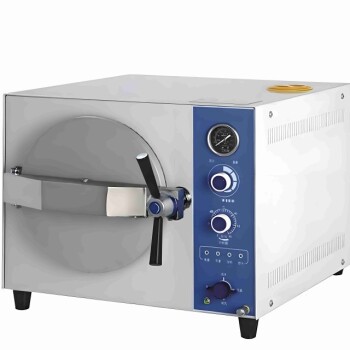
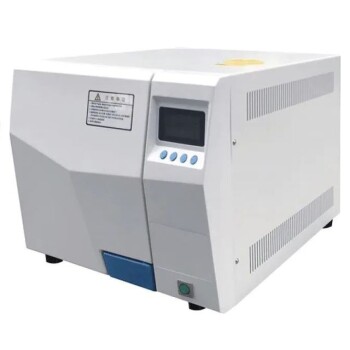
- Desktop Fast High Pressure Laboratory Autoclave Sterilizer 16L 24L for Lab Use
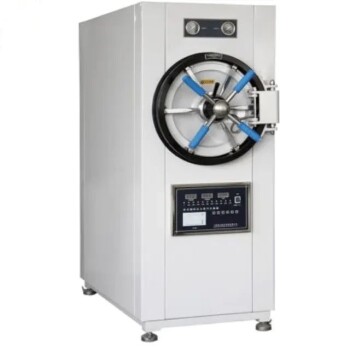
- Laboratory High Pressure Horizontal Autoclave Steam Sterilizer for Lab Use
People Also Ask
- Why use high-pressure reactors for molecular sieve synthesis? Unlock Superior Crystallinity and Framework Control
- Why are high-pressure reactors or autoclaves necessary for the synthesis of new functional materials? Unlock Precision.
- What are the advantages of using a high-pressure reactor like an autoclave? Maximize Liquefaction Speed & Yield
- What is the function of a high-pressure reactor autoclave? Enhancing Cu/N Co-Doped Carbon Catalyst Synthesis
- How are high-pressure reactors used to prepare metaphosphate electrocatalysts? Master In-Situ Precursor Growth