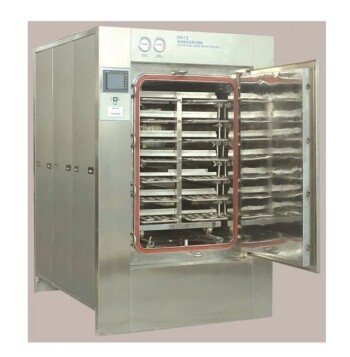
High-pressure autoclaves are engineered to strictly replicate the aggressive physical environment of a Supercritical Water Reactor (SCWR). Specifically, these systems simulate a closed environment capable of maintaining temperatures up to 450°C and pressures of 25 MPa.
The core function of this equipment is to integrate heating and precision pressure controls to create a stable, high-stress environment. This allows researchers to observe how materials degrade, oxidize, and fracture under conditions identical to those found in next-generation nuclear reactors.
Replicating the SCWR Environment
To understand stress corrosion cracking in this context, you must look at the specific parameters the autoclave is designed to hold.
Precise Temperature Regulation
The autoclave utilizes integrated heating systems to reach and sustain temperatures up to 450°C.
This thermal condition is critical because it pushes water beyond its critical point, altering its density and solvent properties.
Extreme Pressure Maintenance
Simultaneously, the system applies precision pressure controls to maintain 25 MPa.
This pressure is necessary to keep the water in a supercritical state, which is physically distinct from liquid water or steam.
The Closed System Dynamic
The autoclave creates a closed high-temperature and high-pressure environment.
This isolation ensures that the chemical and physical interactions remain constant, allowing for accurate long-term testing of material behavior.
The Goals of Simulation
The physical conditions are not an end in themselves; they are generated to test specific material failure modes.
Analyzing Material Degradation
The primary goal is to study general material degradation under SCW conditions.
By sustaining the 450°C/25 MPa environment, engineers can predict the lifespan of reactor components.
Measuring Oxide Layer Growth
The simulation allows for the observation of oxide layer growth on metal surfaces.
This is a key indicator of how a material interacts chemically with supercritical water over time.
Detecting Crack Initiation
The ultimate purpose is to monitor crack initiation and stress corrosion.
The reference specifically highlights 12Cr steel as a material tested under these conditions to determine its susceptibility to cracking.
Understanding the Trade-offs
While high-pressure autoclaves are essential for SCW research, there are inherent challenges in their operation.
Complexity of Simultaneous Control
Maintaining high pressure (25 MPa) and high temperature (450°C) simultaneously requires rigorous precision.
Any fluctuation in one variable can alter the state of the water, potentially invalidating the simulation of SCWR conditions.
Material Specificity
The reference specifically notes the testing of 12Cr steel.
While effective for this alloy, the specific degradation rates observed may not immediately translate to other materials without separate validation.
Making the Right Choice for Your Goal
When designing or evaluating tests for supercritical water applications, consider your specific data needs.
- If your primary focus is reactor fidelity: Ensure your autoclave can maintain the 25 MPa and 450°C thresholds without deviation to accurately mimic an SCWR.
- If your primary focus is material selection: Prioritize tests that measure oxide layer growth and crack initiation to determine the viability of alloys like 12Cr steel.
Accurate simulation of these extreme physical conditions is the only way to reliably predict material safety in supercritical water reactors.
Summary Table:
| Parameter | Simulated Condition | Research Goal |
|---|---|---|
| Temperature | Up to 450°C | Reach supercritical state & alter solvent properties |
| Pressure | Constant 25 MPa | Maintain water in supercritical phase |
| Environment | Closed High-Stress System | Measure oxide layer growth & material degradation |
| Primary Metric | Stress Corrosion Cracking | Monitor crack initiation in alloys like 12Cr steel |
Optimize Your Nuclear & Material Research with KINTEK
Ensure the highest level of reactor fidelity with KINTEK’s precision high-temperature high-pressure reactors and autoclaves. Specifically engineered for supercritical water (SCW) testing, our systems provide the stable 450°C/25 MPa environment required to accurately predict material lifespans, observe oxide layer growth, and detect crack initiation in critical alloys.
From high-performance crushing and milling systems to advanced ceramic and PTFE consumables, KINTEK delivers the comprehensive laboratory solutions needed for next-generation energy research.
Ready to elevate your lab's simulation accuracy?
Contact our technical experts today to find the perfect autoclave for your research.
References
- Б. З. Марголин, I.M. Safonov. Investigation of Stress Corrosion Cracking Resistance of Irradiated 12Cr Ferritic-Martensitic Stainless Steel in Supercritical Water Environment. DOI: 10.3390/ma16072585
This article is also based on technical information from Kintek Solution Knowledge Base .
Related Products
- Mini SS High Pressure Autoclave Reactor for Laboratory Use
- High Pressure Laboratory Autoclave Reactor for Hydrothermal Synthesis
- Stainless High Pressure Autoclave Reactor Laboratory Pressure Reactor
- Desktop Fast High Pressure Laboratory Autoclave Sterilizer 16L 24L for Lab Use
- Laboratory High Pressure Horizontal Autoclave Steam Sterilizer for Lab Use
People Also Ask
- Why use high-pressure reactors for molecular sieve synthesis? Unlock Superior Crystallinity and Framework Control
- Why are high-pressure reactors or autoclaves necessary for the synthesis of new functional materials? Unlock Precision.
- What is the function of a high-pressure reactor autoclave? Enhancing Cu/N Co-Doped Carbon Catalyst Synthesis
- What are the advantages of using a high-pressure reactor like an autoclave? Maximize Liquefaction Speed & Yield
- How are high-pressure reactors used to prepare metaphosphate electrocatalysts? Master In-Situ Precursor Growth