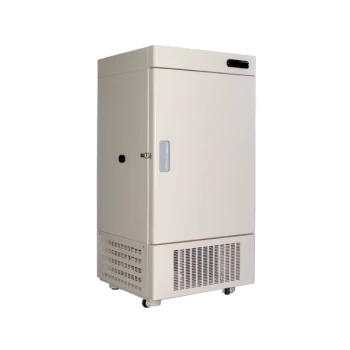
In laboratory-scale plastic pyrolysis, the cold trap is the defining boundary between raw chemical potential and measurable data. It is essential because it provides the immediate, extremely low-temperature environment required to rapidly cool volatile gases exiting the reactor, condensing them into stable liquid oil products before they can escape.
The core function of a cold trap is to enforce a rapid phase change from gas to liquid. By capturing volatile components that would otherwise be lost to the atmosphere, it ensures the integrity of the mass balance and the accuracy of product yield analysis.
The Mechanics of Volatile Capture
Rapid Condensation
When plastic undergoes pyrolysis, it generates a stream of hot, volatile components. The cold trap acts as a thermal shock zone, providing an extremely low-temperature environment. This forces the hot gases to instantly lose thermal energy and condense into liquid oil products.
Capturing Light Components
The specific challenge in pyrolysis is retaining "light" components—small molecules that want to remain as gases. Without the intense cooling provided by the cold trap, these light fractions would bypass collection systems entirely. The trap ensures these fleeting components are secured for analysis.
Ensuring Experimental Integrity
Preventing Material Loss
In a research setting, accounting for every gram of material is critical. If volatile gases exit the reactor and are not condensed, they represent lost data points. The cold trap prevents this loss, ensuring that the researcher captures the full spectrum of oil and gas generated during the reaction.
Accuracy of Yield Analysis
The ultimate goal of many pyrolysis experiments is to determine the yield—how much usable oil is produced from a specific plastic. Because the cold trap captures the complete product stream, including the difficult-to-catch light ends, it allows for precise calculation of product yields. Without this auxiliary equipment, yield data would be artificially low and scientifically invalid.
Operational Criticality and Risks
The Consequence of Insufficient Cooling
While the cold trap is essential, its effectiveness is binary. If the temperature environment is not sufficiently low, the device fails its primary purpose. Incomplete condensation leads to the immediate escape of light components, rendering the resulting data skewed and unreliable.
Dependency on Auxiliary Systems
It is important to recognize that the pyrolysis reactor cannot function as a standalone analytical tool. The accuracy of the entire experiment is dependent on the efficiency of the cold trap. A failure in this auxiliary stage negates the precision of the reaction stage, highlighting the trap's role as a critical failure point in the research workflow.
Making the Right Choice for Your Goal
To ensure your pyrolysis data remains valid, you must align the use of your cold trap with your specific research objectives.
- If your primary focus is quantitative mass balance: You must maintain the lowest possible temperatures to capture the lightest volatile fractions, as these are the most prone to escaping and ruining your yield calculations.
- If your primary focus is oil product analysis: You must ensure the cooling rate is rapid enough to immediately stabilize the liquid oil products, preventing them from remaining in a gaseous state where they cannot be studied.
Ultimately, the cold trap transforms a chaotic stream of hot gas into a measurable, tangible liquid resource.
Summary Table:
| Feature | Role in Pyrolysis Research | Impact on Data Quality |
|---|---|---|
| Rapid Condensation | Immediate phase change from gas to liquid | Prevents loss of volatile chemical potential |
| Volatile Capture | Secures light components and small molecules | Ensures precise calculation of product yields |
| Thermal Shock | Provides extremely low-temperature environment | Stabilizes liquid products for detailed analysis |
| Mass Balance | Accounts for every gram of material used | Validates experimental integrity and accuracy |
Elevate Your Research Precision with KINTEK
Don’t let valuable data escape your lab. KINTEK specializes in high-performance laboratory equipment designed to meet the rigorous demands of plastic pyrolysis and chemical research. From our specialized cold traps and cooling solutions (ULT freezers, freeze dryers) to our advanced high-temperature furnaces (rotary, vacuum, CVD) and crushing and milling systems, we provide the tools you need for absolute experimental integrity.
Whether you are refining yield analysis or conducting complex battery research, KINTEK offers a comprehensive range of high-pressure reactors, autoclaves, and hydraulic presses to ensure your results are scientifically valid and reproducible.
Ready to optimize your collection efficiency and protect your data? Contact our laboratory specialists today to find the perfect cold trap and auxiliary systems for your specific research goals!
References
- Edgar Clyde R. Lopez. Pyrolysis of Polyvinyl Chloride, Polypropylene, and Polystyrene: Current Research and Future Outlook. DOI: 10.3390/asec2023-15376
This article is also based on technical information from Kintek Solution Knowledge Base .
Related Products
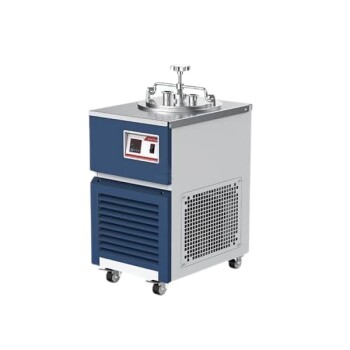
- Vacuum Cold Trap Direct Cold Trap Chiller
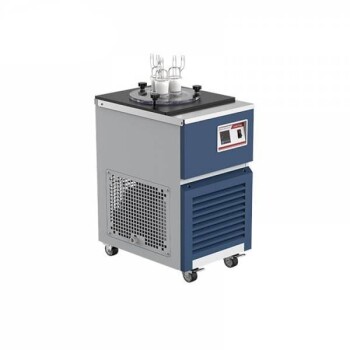
- Vacuum Cold Trap Chiller Indirect Cold Trap Chiller
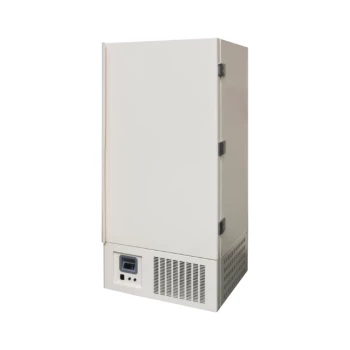
- 608L Essential Laboratory Ultra Low Temperature Freezer For Critical Sample Preservation
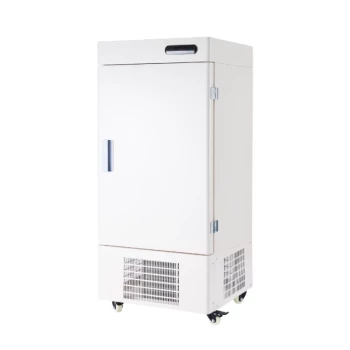
- 158L Precision Vertical Ultra Low Freezer for Laboratory Applications
- 108L Vertical Ultra Low Temperature ULT Freezer
People Also Ask
- What is the role of glass condensation components in arsenic collection? Optimize Niccolite Roasting & Kinetics
- Why is it necessary to configure efficient cold traps in membrane distillation? Ensure Flux Stability & Data Accuracy
- What is the purpose of connecting a cold trap at the reactor outlet? Protect Equipment and Analyze Liquid Products
- What is the primary purpose of a cold trap at a reactor outlet? Protect Analyzers & Ensure Data Integrity
- What is the function of a cold trap in bio-ethanol and methane reforming experiments? Optimize Purity & Protect Systems