Controlled environmental regulation and staged thermal treatment are essential for transforming liquid precursors into a solid structural foundation. The constant temperature humidity chamber provides the stability needed for the initial curing phase, while multi-stage laboratory ovens drive the specific chemical reactions required to turn the liquid precursor into a robust Polysiloxane (PSO) gel film.
Core Insight: The curing process is not merely about drying; it is a chemical transformation that creates a physical architecture. By controlling humidity and using segmented heating, these tools ensure the precursor forms a three-dimensional network structure, which is the mandatory "skeleton" required before high-temperature ceramicization can occur.
The Role of Environmental Stability
Establishing the Baseline
Before high heat is applied, the precursor film requires a stable environment to begin its transition.
The constant temperature humidity chamber serves this specific purpose. It protects the initial precursor film layer from environmental fluctuations that could cause uneven drying or surface defects during the early stages of curing.
The Mechanism of Thermal Curing
Triggering Cross-Linking via Segmented Heating
Once the initial environment is set, the material requires precise thermal energy to change its chemical structure.
Laboratory ovens are used to apply segmented heating, specifically utilizing distinct temperature stages such as 80 degrees Celsius and 120 degrees Celsius. This stepped approach is far more effective than a single blast of heat.
Forming the 3D Network
The heat from the ovens triggers internal chemical cross-linking reactions.
This chemical process is the engine of the transformation. It drives the precursor from a chaotic liquid state into an organized Polysiloxane (PSO) gel film.
Creating the Physical Foundation
The result of this oven treatment is a material with a three-dimensional network structure.
This structure is not the final product, but it is the critical stable physical foundation. Without this intermediate gel state, the material would not be prepared to withstand or properly react during the subsequent high-temperature ceramicization process.
Why Process Control Matters
Avoiding Structural Failure
The primary goal of using these specific tools is to avoid rushing the transition from liquid to solid.
If the "gel" phase is skipped or poorly controlled, the three-dimensional network may fail to form correctly. This renders the material unsuitable for high-performance applications.
The Ceramicization Prerequisite
The reference emphasizes that this curing stage establishes the foundation for high-temperature ceramicization.
You cannot proceed to the final ceramic stage without this foundation. The humidity chamber and multi-stage ovens ensure that the precursor is chemically and physically ready for that intense final processing.
Optimizing Your Curing Strategy
If your primary focus is Film Uniformity: Ensure the constant temperature humidity chamber is utilized to stabilize the precursor film layer before any thermal stress is applied.
If your primary focus is Material Strength: Strictly adhere to the multi-stage oven protocols (80°C and 120°C) to guarantee the complete formation of the three-dimensional PSO network.
The integrity of your final SiOC film is determined by the precision of this intermediate gelation phase.
Summary Table:
| Curing Phase | Equipment Used | Temperature/Condition | Key Outcome |
|---|---|---|---|
| Initial Stabilization | Humidity Chamber | Constant Temp & Humidity | Prevents surface defects and uneven drying. |
| Primary Cross-linking | Laboratory Oven | 80°C (Stage 1) | Triggers internal chemical reactions. |
| Secondary Cross-linking | Laboratory Oven | 120°C (Stage 2) | Completes the 3D Polysiloxane (PSO) network. |
| Final Foundation | Combined Process | Controlled Environment | Stable gel film ready for high-temp ceramicization. |
Elevate Your Thin-Film Research with KINTEK Precision
Precise control over the curing and gelation phase is the difference between a high-performance SiOC film and structural failure. KINTEK provides the advanced laboratory equipment needed to master these critical transitions.
Our specialized range includes:
- Laboratory Ovens & Humidity Chambers: For precise staged thermal treatment and environmental stability.
- High-Temperature Furnaces: (Muffle, Tube, Vacuum, and CVD) for subsequent ceramicization stages.
- Laboratory Solutions: From pellet presses and crushing systems to essential ceramics and crucibles.
Whether you are developing advanced SiOC coatings or researching battery materials, KINTEK's comprehensive portfolio of high-performance tools ensures your 3D network structures are flawless every time.
Ready to optimize your material transformation? Contact KINTEK today for a customized equipment consultation!
References
- Hengguo Jin, Xin Xu. Preparation and Gas Separation of Amorphous Silicon Oxycarbide Membrane Supported on Silicon Nitride Membrane. DOI: 10.3390/membranes14030063
This article is also based on technical information from Kintek Solution Knowledge Base .
Related Products
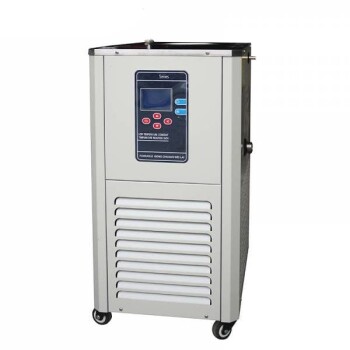
- High Temperature Constant Temperature Heating Circulator Water Bath Chiller Circulator for Reaction Bath
- 50L Chiller Water Bath Cooling Circulator Low Temperature Constant Temperature Reaction Bath
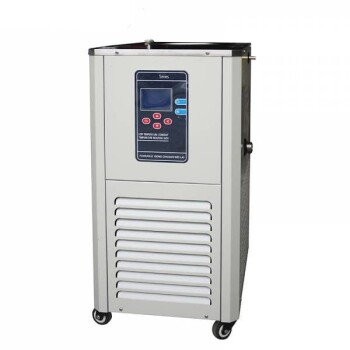
- 10L Chilling Circulator Cooling Water Bath Low Temperature Constant Temperature Reaction Bath
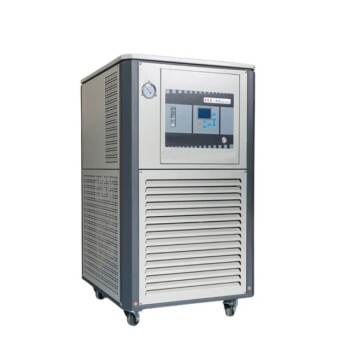
- 30L Chiller Water Bath Cooling Circulator Low Temperature Constant Temperature Reaction Bath
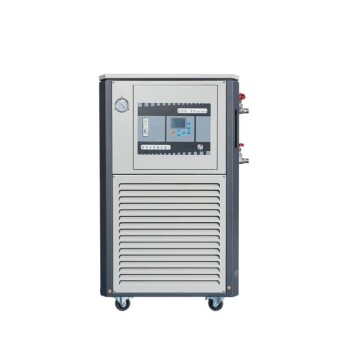
- 50L Heating Chilling Circulator Cooling Water Bath Circulator for High and Low Temperature Constant Temperature Reaction
People Also Ask
- What is the necessity of a circulating water bath in chlorate production? Optimize Yield & Purity with Precision
- How do constant temperature circulators impact weight-loss immersion tests? Ensure Precision in Corrosion Analysis
- How does a constant temperature circulator support the leaching reaction of gold scrap? Optimize Gold Recovery Results
- Why is a constant temperature water bath used for precursor storage in CVD? Achieve Stable Nanocrystalline SiC Deposition
- Why is a high-precision constant temperature water bath necessary for anaerobic digestion? Ensure Success at 37±0.02°C