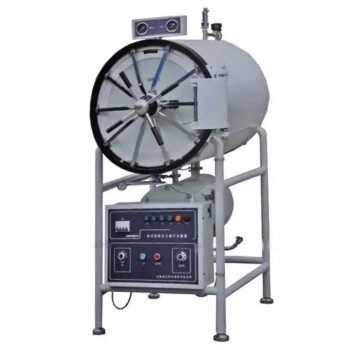
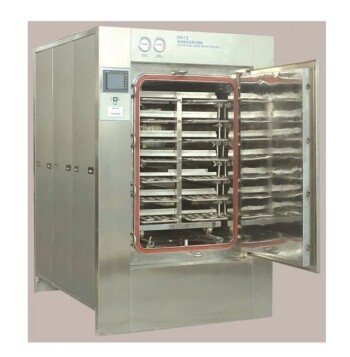
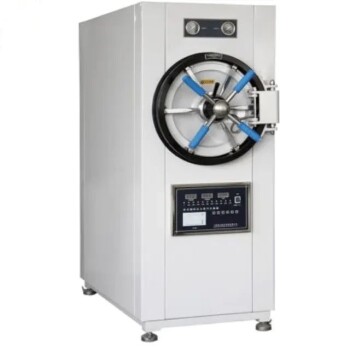
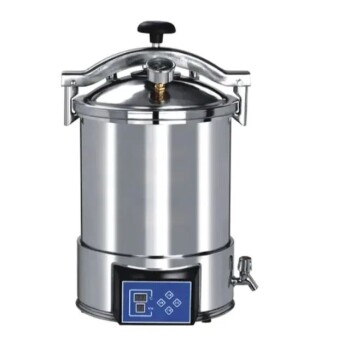
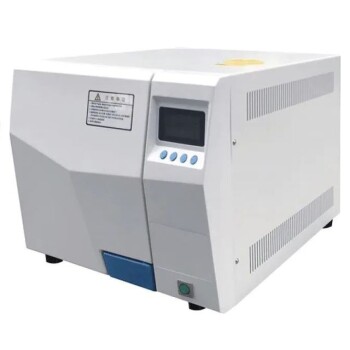
High-Pressure High-Temperature (HPHT) Autoclaves are the only viable mechanism for accurately replicating the aggressive environments found within industrial hydrogen infrastructure. They are required because they allow researchers to generate precisely controlled atmospheres of pure hydrogen or gas mixtures while simultaneously applying the extreme heat and pressure inherent to actual industrial operations, ensuring compliance with standards like ASTM G142-98.
Core Takeaway Standard laboratory conditions cannot predict how metals will react when transporting hydrogen under industrial loads. HPHT autoclaves solve this by enabling in-situ mechanical testing, allowing engineers to evaluate material properties while the sample is actively subjected to high specific hydrogen partial pressures and temperatures.
Simulating the Industrial Environment
Precise Atmosphere Control
To predict material failure, you must control the environment down to the molecular level. HPHT autoclaves allow for the introduction of pure hydrogen or specific gas mixtures.
This capability is essential for mimicking the exact chemical composition a pipeline or vessel will encounter during transport.
Replicating Extreme Conditions
Industrial hydrogen transport does not occur at room temperature or ambient pressure.
Autoclaves are engineered to reach and maintain extreme temperature and pressure conditions. This creates a high-fidelity simulation of the operational stresses that materials will face in the field.
Regulatory Compliance
Safety in hydrogen transport is governed by rigorous standards.
Using these autoclaves ensures that testing methodologies align with established protocols, such as ASTM G142-98. This compliance is critical for validating materials for commercial use.
The Criticality of In-Situ Evaluation
Testing Under Load
The primary reference highlights a distinct advantage: the ability to perform in-situ mechanical property evaluations.
It is not enough to expose a material to hydrogen and test it later. These units allow for mechanical testing (pulling, bending, stressing) while the material is pressurized and heated, revealing how hydrogen affects ductility and strength in real-time.
Long-Term Exposure Experiments
Hydrogen damage, such as embrittlement, is often a time-dependent phenomenon.
Autoclaves are designed to sustain these environments for long-term exposure experiments. This data is vital for predicting the lifespan and durability of transport infrastructure over years of service.
Understanding the Trade-offs
Operational Limitations
While highly effective, these systems operate as batch reactors, meaning they cannot run continuously.
This limitation results in lower testing throughput compared to ambient testing methods. Because reaction rates and conditions must be established for each batch, the process requires more time and setup for every cycle of testing.
Significant Safety Risks
Handling hydrogen at high pressure introduces severe safety challenges.
A major hazard is the potential for internal sparks, which can lead to catastrophic fires or explosions. Operators must be highly trained, and facilities often require Class-I electrical systems and spark-prevention measures to mitigate these risks.
Equipment Complexity
These are not simple "plug-and-play" devices.
They require additional support equipment, such as pressure vessels and specialized monitoring systems. This makes them more complex and expensive to install compared to standard atmospheric testing rigs.
Making the Right Choice for Your Goal
To determine if an HPHT Autoclave is required for your project, consider your specific data needs:
- If your primary focus is Regulatory Approval: You must use an HPHT autoclave to ensure your material testing meets compliance standards like ASTM G142-98 regarding controlled hydrogen atmospheres.
- If your primary focus is Failure Analysis: You need these units to perform in-situ mechanical testing, which reveals exactly how materials degrade whilst under active hydrogen pressure and thermal stress.
Ultimately, while HPHT autoclaves introduce operational complexity, they are the indispensable standard for validating the safety of the global hydrogen supply chain.
Summary Table:
| Feature | Advantage for Hydrogen Research | Industrial Significance |
|---|---|---|
| Atmosphere Control | Pure H2 or custom gas mixtures | Mimics real pipeline chemical compositions |
| Extreme Conditions | Precise high pressure & temperature | Replicates operational stresses of transport |
| In-Situ Testing | Mechanical evaluation under active load | Reveals real-time ductility and strength loss |
| Compliance | Aligns with ASTM G142-98 | Necessary for regulatory approval & safety |
| Durability Data | Supports long-term exposure cycles | Predicts lifespan and embrittlement risks |
Secure Your Hydrogen Infrastructure with KINTEK Precision
Transitioning to a hydrogen economy requires uncompromising material safety. KINTEK specializes in advanced high-temperature high-pressure reactors and autoclaves designed specifically to meet the rigorous demands of hydrogen embrittlement testing and industrial simulation.
From CVD/PECVD systems to specialized crushing, milling, and hydraulic presses, our comprehensive laboratory portfolio empowers researchers to validate materials under the most extreme conditions. Whether you need to ensure ASTM G142-98 compliance or perform critical in-situ mechanical evaluations, our technical experts are ready to provide the high-performance solutions your lab deserves.
Ready to elevate your hydrogen research? Contact KINTEK today to discuss your custom autoclave requirements.
References
- Alexander Ilyushechkin, San Shwe Hla. Material Challenges and Hydrogen Embrittlement Assessment for Hydrogen Utilisation in Industrial Scale. DOI: 10.3390/hydrogen4030039
This article is also based on technical information from Kintek Solution Knowledge Base .
Related Products
- High Pressure Laboratory Autoclave Reactor for Hydrothermal Synthesis
- Laboratory High Pressure Horizontal Autoclave Steam Sterilizer for Lab Use
- Laboratory Sterilizer Lab Autoclave Herbal Powder Sterilization Machine for Plant
- Laboratory Horizontal Autoclave Steam Sterilizer Lab Microcomputer Sterilizer
- Stainless High Pressure Autoclave Reactor Laboratory Pressure Reactor
People Also Ask
- What role does a high-pressure reactor (autoclave) play in the synthesis of NiCuFe-LDH? Master Hydrothermal Growth
- What Role Does a High-Pressure Reactor or Autoclave Play in HA Catalyst Synthesis? Achieve High Surface Area Materials
- What equipment is required for hydrothermal synthesis of Ga0.25Zn4.67S5.08? Optimize Your Semiconductor Production
- What is the function of a high-pressure reactor in the hydrothermal synthesis of boehmite? Expert Process Insights
- What role does an autoclave play in the synthesis of MnO2 nanofibers? Mastering Hydrothermal Growth