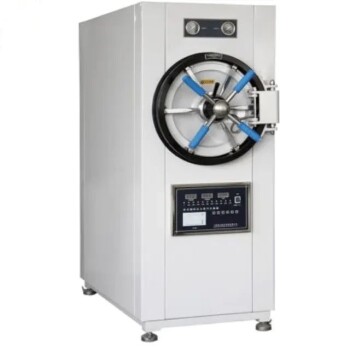
High-pressure reactors, or autoclaves, are non-negotiable for evaluating Alloy 718 because they uniquely simulate the extreme High-Temperature High-Pressure (HTHP) environments inherent to oil and gas extraction. These systems provide the necessary safety containment for toxic corrosive media—specifically H2S, CO2, and chlorides—while subjecting the material to the precise conditions it will face in actual service.
The core value of an autoclave is its ability to serve as a secure platform for Sulfide Stress Cracking (SSC) experiments, verifying the environmental integrity of Alloy 718 under conditions that standard laboratory tests cannot replicate.
Simulating the Service Environment
To accurately predict how Alloy 718 will perform in the field, testing must move beyond standard atmospheric conditions. Autoclaves bridge the gap between theoretical material properties and real-world application.
Replicating HTHP Conditions
Oil and gas wells expose materials to extreme High-Temperature High-Pressure (HTHP) environments. Standard testing equipment cannot sustain these elevated parameters safely.
Autoclaves are engineered to maintain these precise temperature and pressure profiles over long durations. This ensures the material is evaluated in a state that mimics its operational reality, rather than a simplified laboratory approximation.
Handling Aggressive Corrosive Media
The environments where Alloy 718 is deployed often contain highly aggressive and toxic chemicals. The primary reference highlights the presence of H2S (hydrogen sulfide), CO2 (carbon dioxide), and chlorides.
These substances are hazardous to humans and difficult to contain under pressure. High-pressure reactors provide the sealed, robust environment necessary to safely introduce these specific corrosive agents to the test sample.
Verifying Material Integrity
The ultimate goal of using an autoclave is to validate the reliability of the material before it is deployed in critical infrastructure.
Sulfide Stress Cracking (SSC) Testing
The primary failure mode of concern for Alloy 718 in these environments is Sulfide Stress Cracking (SSC).
SSC is a form of embrittlement that occurs specifically when a susceptible material is exposed to sulfide environments under tensile stress. Autoclaves serve as the core platform for these experiments, applying the necessary environmental stressors to verify if the alloy can resist cracking.
Experimental Validation
Theoretical models are often insufficient for predicting corrosion rates and surface stability in complex environments.
Just as autoclaves are used in nuclear and biomass applications to validate oxide film stability or coating performance, they perform the same function here. They provide experimental verification of the alloy's limits, ensuring the structural integrity of the well components.
Understanding the Trade-offs
While high-pressure reactors are essential for accurate testing, they introduce specific complexities that must be managed.
Operational Complexity and Safety
Operating an autoclave involves significant safety risks due to the combination of high pressure and toxic gases like H2S. Rigorous safety protocols and sealing mechanisms are critical to prevent leaks that could be catastrophic in a lab setting.
Specificity of Simulation
An autoclave test is only as good as the environmental parameters programmed into it.
While these reactors are excellent at simulating specific conditions (like PWR nuclear environments or biomass boilers), a test designed for oil and gas (H2S/CO2) will not predict performance in a nuclear setting (radiation/water chemistry). The simulation must be strictly aligned with the intended end-use case to yield valid data.
Making the Right Choice for Your Goal
When determining the testing protocol for Alloy 718, consider your specific validation needs.
- If your primary focus is Oil and Gas validation: Ensure your reactor setup is specifically rated for H2S service (sour service) to accurately test for Sulfide Stress Cracking.
- If your primary focus is Safety and Compliance: Prioritize autoclaves with advanced sealing and containment systems to manage the toxicity of the corrosive media without risk to personnel.
True material confidence comes from testing that refuses to compromise on the reality of the operating environment.
Summary Table:
| Feature | Importance for Alloy 718 Testing |
|---|---|
| HTHP Simulation | Replicates extreme pressure and heat of oil & gas wells |
| Media Containment | Safely handles toxic H2S, CO2, and aggressive chlorides |
| SSC Validation | Essential for testing Sulfide Stress Cracking resistance |
| Safety Integrity | Provides robust sealing for hazardous experimental conditions |
| Operational Data | Offers experimental verification beyond theoretical models |
Secure Your Material Integrity with KINTEK
Don't leave the reliability of Alloy 718 to chance. KINTEK specializes in advanced laboratory solutions, providing the high-temperature high-pressure reactors and autoclaves necessary to simulate the harshest field conditions.
Our equipment empowers your research with precision and safety, whether you are conducting Sulfide Stress Cracking (SSC) experiments or evaluating material stability in sour service environments. Beyond reactors, we offer a comprehensive range of crushing systems, hydraulic presses, and specialized ceramics to support your entire material testing workflow.
Ready to elevate your testing precision? Contact our experts today to find the perfect autoclave solution for your laboratory.
References
- John deBarbadillo, Sarwan Mannan. Alloy 718 for Oilfield Applications. DOI: 10.7449/2010/superalloys_2010_579_593
This article is also based on technical information from Kintek Solution Knowledge Base .
Related Products
- Mini SS High Pressure Autoclave Reactor for Laboratory Use
- High Pressure Laboratory Autoclave Reactor for Hydrothermal Synthesis
- Stainless High Pressure Autoclave Reactor Laboratory Pressure Reactor
- Desktop Fast High Pressure Laboratory Autoclave Sterilizer 16L 24L for Lab Use
- Laboratory High Pressure Horizontal Autoclave Steam Sterilizer for Lab Use
People Also Ask
- Why use high-pressure reactors for molecular sieve synthesis? Unlock Superior Crystallinity and Framework Control
- What are the advantages of using a high-pressure reactor like an autoclave? Maximize Liquefaction Speed & Yield
- What is the function of a high-pressure reactor autoclave? Enhancing Cu/N Co-Doped Carbon Catalyst Synthesis
- Why are high-pressure reactors or autoclaves necessary for the synthesis of new functional materials? Unlock Precision.
- How are high-pressure reactors used to prepare metaphosphate electrocatalysts? Master In-Situ Precursor Growth