High-temperature sintering of LLZO solid electrolytes requires a meticulously controlled chemical environment to preserve the material's electrochemical integrity. The use of high-purity alumina crucible lids and a "mother powder" bed creates a localized thermodynamic equilibrium that prevents the evaporation of lithium. This setup is essential to stop the formation of high-impedance surface layers and protect the electrolyte from chemical contamination during the heating process.
Core Takeaway: To maintain the high ionic conductivity of LLZO, researchers must prevent lithium volatilization and phase transformation. Utilizing lids and mother powder establishes a saturated lithium vapor atmosphere, ensuring the final ceramic remains stoichiometric and phase-pure.
Managing Lithium Volatility and Vapor Pressure
Establishing Localized Chemical Equilibrium
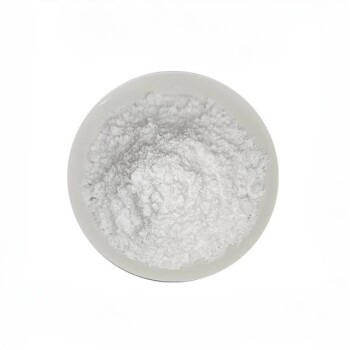
During sintering at temperatures near 1140°C, lithium (Li) becomes highly volatile and escapes the LLZO lattice. By surrounding the sample with a mother powder bed of the same composition, a localized lithium vapor pressure is established. This equilibrium forces the lithium to remain within the electrolyte rather than evaporating into the furnace atmosphere.
The Role of the Crucible Seal
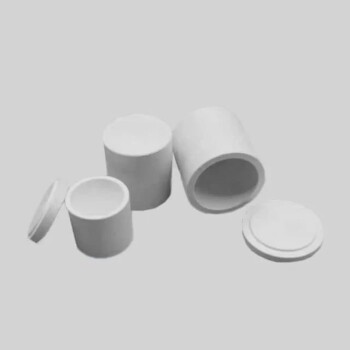
The alumina crucible lids act as a physical barrier that contains the lithium vapor generated by the mother powder. This sealed environment ensures that the atmosphere immediately surrounding the sample remains "lithium-rich" throughout the long sintering cycle. Without this containment, the continuous loss of vapor would lead to a total depletion of lithium from the electrolyte.
Maintaining Phase Purity and Stoichiometry
Preventing High-Impedance Surface Phases
When lithium is lost, the surface of the LLZO sample often transforms into a lithium-deficient pyrochlore phase, such as La2Zr2O7 (LZO). These impurity phases have extremely low ionic conductivity and create a high-resistance barrier at the electrolyte-electrode interface. The mother powder method ensures that the composition remains consistent from the surface to the interior.
Stabilizing the Cubic Phase
LLZO is most conductive in its cubic phase, but lithium loss can trigger a transition to a lower-conductivity tetragonal phase or other non-conductive impurities. The mother powder protects the stoichiometry, which is vital for maintaining the cubic structure during the cooling process. This stability is the key to achieving the high ionic flux required for solid-state batteries.
Mitigating Chemical Contamination and Reactions
Preventing Direct Crucible Contact
LLZO can react chemically with standard ceramic containers at high temperatures, potentially forming impurity phases like LaAlO3. The mother powder bed serves as a sacrificial physical spacer, preventing direct contact between the electrolyte sample and the alumina crucible walls. This isolation preserves the chemical purity of the sintered ceramic membrane.
Managing Intentional and Unintentional Doping
While aluminum from the crucible can sometimes help stabilize the cubic phase, uncontrolled diffusion can lead to unpredictable material properties. Using high-purity alumina and a mother powder barrier allows for more precise control over the doping concentration. This ensures that any aluminum incorporation is a result of intentional design rather than accidental contamination.
Understanding the Trade-offs
Process Complexity vs. Material Quality
While the mother powder method is highly effective, it increases the complexity of the fabrication process and requires significant amounts of sacrificial material. This can increase the cost of production, particularly when using high-purity precursors for the mother powder.
The Risk of Crucible Degradation
Repeated exposure to lithium vapor can eventually degrade alumina crucibles, causing them to become brittle or leak. Researchers must regularly inspect crucibles to ensure the seal remains airtight, as even a minor leak can result in a failed sintering run and a lithium-deficient sample.
How to Apply This to Your Project
Recommendations for Success
- If your primary focus is maximizing ionic conductivity: You must prioritize a fully sealed alumina environment with a generous mother powder bed to eliminate high-impedance pyrochlore phases.
- If your primary focus is preventing aluminum contamination: Consider using platinum crucibles or thick spacer beds of mother powder to ensure no direct contact between the sample and the alumina surface.
- If your primary focus is process scalability: Evaluate the use of reusable mother powder or specialized "crucible-in-crucible" designs to reduce material waste while maintaining a saturated vapor environment.
By mastering the localized vapor environment through the use of lids and mother powder, you ensure that LLZO solid electrolytes reach their full potential for next-generation energy storage.
Summary Table:
| Component | Primary Function | Impact on LLZO Quality |
|---|---|---|
| High-Purity Alumina Lids | Provides a physical seal | Creates a stable, lithium-rich vapor environment. |
| Mother Powder Bed | Acts as a sacrificial Li source | Prevents Li volatilization and stoichiometry changes. |
| Crucible Isolation | Physical separation | Prevents chemical reactions and uncontrolled Al-doping. |
| Atmosphere Control | Thermodynamic equilibrium | Stabilizes the high-conductivity cubic phase. |
Elevate Your Solid-State Battery Research with KINTEK
Precision in LLZO sintering requires more than just high temperatures; it demands the right environment and high-quality labware. KINTEK provides the specialized equipment and consumables needed to master lithium vapor control and achieve phase-pure solid electrolytes.
From high-temperature muffle and tube furnaces for precise thermal cycles to high-purity alumina crucibles and ceramic components that withstand rigorous conditions, our portfolio is designed for advanced materials science. Whether you need hydraulic pellet presses for sample preparation or high-temperature high-pressure reactors, KINTEK is your trusted partner in battery innovation.
Ready to optimize your sintering process? Contact our specialists today for tailored equipment solutions and reliable consumables that ensure your research reaches its full potential.
References
- André Müller, Yaroslav E. Romanyuk. Benchmarking the performance of lithiated metal oxide interlayers at the LiCoO<sub>2</sub>|LLZO interface. DOI: 10.1039/d3ma00155e
This article is also based on technical information from Kintek Solution Knowledge Base .
Related Products
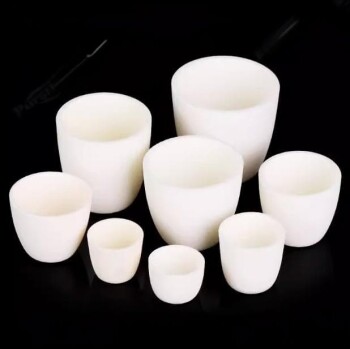
- Engineering Advanced Fine Ceramics Alumina Al2O3 Crucible With Lid Cylindrical Laboratory Crucible
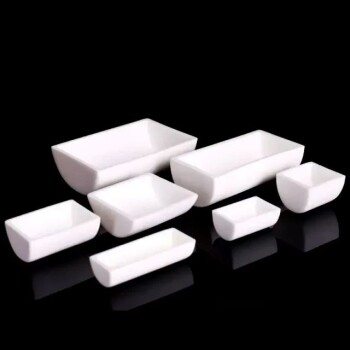
- Alumina Al2O3 Ceramic Crucible Semicircle Boat with Lid for Engineering Advanced Fine Ceramics
- Engineering Advanced Fine Ceramics Alumina Crucibles (Al2O3) for Thermal Analysis TGA DTA
- Engineering Advanced Fine Alumina Al2O3 Ceramic Crucible for Laboratory Muffle Furnace
- Ceramic Evaporation Boat Set Alumina Crucible for Laboratory Use
People Also Ask
- Why are high-purity alumina crucibles used for liquid lead corrosion experiments? Ensure Data Accuracy at 550°C
- Why are alumina crucibles and mother powder essential for LATP sintering? Optimize Your Solid Electrolyte Performance
- What is the primary purpose of using alumina crucibles for LLTO ceramics? Optimize Your High-Temperature Sintering
- Why Use Alumina Crucibles & Powder Burial for NaSICON? Ensure Phase Purity and Prevent Elemental Volatilization
- Why are alumina crucibles used as containers during the tungsten diffusion coating process on diamond surfaces?