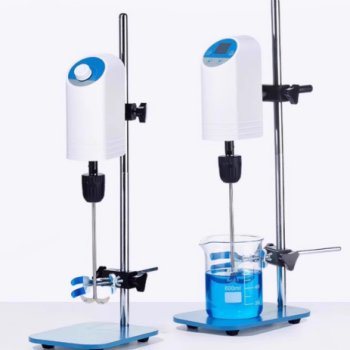
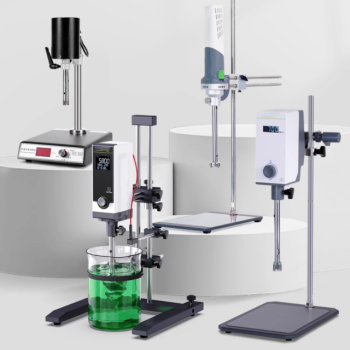
Laboratory mixers with multi-stage speed regulation are critical in Simultaneous Saccharification and Fermentation (SSF) because the physical properties of the reaction mixture change drastically over time. As high-solids paper pulp transforms into liquid, the system's viscosity fluctuates significantly, requiring different mixing intensities at different stages. Multi-stage regulation allows researchers to adjust torque and rotation speed in real-time to match these physical changes.
Simultaneous Saccharification and Fermentation (SSF) presents a unique dual challenge: the material transitions from a thick paste to a thin liquid while biological reactions take place. Multi-stage speed control provides the flexibility to maintain homogenization during the high-viscosity phase and protect sensitive microbial cells during the low-viscosity phase.
The Dynamics of High-Solids SSF
Handling Initial High Viscosity
SSF processes frequently utilize high-solids feedstocks, such as paper pulp. At the beginning of the process, this material is extremely viscous and difficult to agitate.
The Need for High Torque
To initiate the reaction, the mixer requires substantial torque and rotation speed. Without this initial intensity, the thick pulp cannot be moved effectively, resulting in poor enzyme distribution and a stalled reaction.
Adapting to Pulp Liquefaction
As the reaction progresses, enzymes break down the solid pulp, leading to liquefaction. Consequently, the viscosity of the mixture drops significantly, changing the fluid dynamics within the reactor.
Balancing Mass Transfer and Cell Viability
Eliminating Mass Transfer Dead Zones
A primary goal of mixing in SSF is to ensure substrates and enzymes are evenly distributed. Inadequate mixing leads to "dead zones" where mass transfer stops, significantly lowering the overall yield of the fermentation.
The Danger of Constant Speed
If a mixer operates at the high speed required for the initial thick pulp during the later liquid stages, it creates excessive turbulence. This is not only energy-inefficient but also biologically hazardous.
Protecting Microbial Cells from Shear
Microorganisms involved in fermentation are sensitive to physical stress. Excessive shear forces caused by high-speed mixing in low-viscosity fluids can physically rupture or damage these cells, halting fermentation and destroying the product.
Operational Trade-offs and Considerations
Complexity vs. Process Stability
Implementing multi-stage speed regulation adds a layer of complexity to the experimental setup compared to fixed-speed mixers. Operators must monitor the degree of liquefaction and adjust parameters accordingly, or program automated profiles.
The Risk of Over-Mixing
While under-mixing results in dead zones, over-mixing is a silent yield-killer. The trade-off in SSF is that the agitation required to move solids is often higher than what biological cells prefer; dynamic speed regulation is the only way to navigate this conflict.
Making the Right Choice for Your Process
Successful SSF implementation requires matching your equipment capabilities to the rheology of your feedstock.
- If your primary focus is processing high-solids loading: Ensure your mixer offers high torque capabilities at lower speeds to handle the initial resistance of the pulp without stalling.
- If your primary focus is microbial cell viability: Prioritize mixers with precise, granular speed controls that allow you to significantly reduce RPMs immediately upon liquefaction to minimize shear stress.
Dynamic control over mixing intensity is not a luxury in SSF; it is a fundamental requirement for maintaining the biological integrity of the process.
Summary Table:
| Stage of SSF Process | Material Consistency | Mixing Requirement | Primary Objective |
|---|---|---|---|
| Initial Stage | High-solids/Thick Pulp | High Torque & Speed | Overcome viscosity; Enzyme distribution |
| Intermediate Stage | Partial Liquefaction | Moderate Speed | Maintain homogenization; Eliminate dead zones |
| Final Stage | Low-viscosity Liquid | Lower Speed | Reduce shear stress; Protect microbial cells |
Elevate Your SSF Research with KINTEK Precision
Maintaining the delicate balance between high-solids homogenization and microbial cell protection requires superior equipment. KINTEK specializes in advanced laboratory solutions designed for the most demanding biological and chemical processes.
Whether you are scaling up Simultaneous Saccharification and Fermentation (SSF) or conducting precise material analysis, our portfolio offers the reliability you need. We provide:
- High-performance laboratory mixers with granular speed regulation and high-torque capabilities.
- High-temperature high-pressure reactors and autoclaves for diverse feedstock processing.
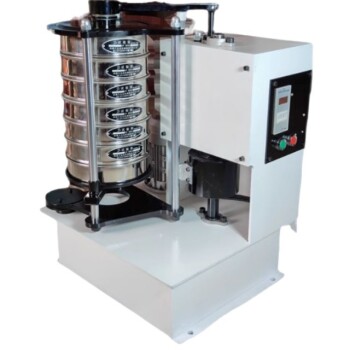
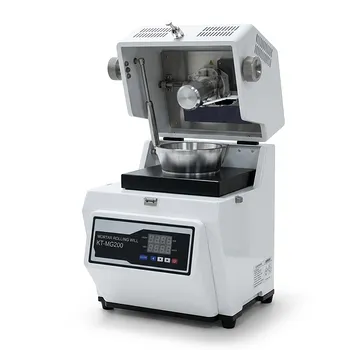
- Precision crushing, milling, and sieving systems to prepare your high-solids substrates.
- Advanced cooling solutions and homogenizers to ensure process stability.
Don't let inadequate mixing stall your yields or damage your cultures. Partner with KINTEK for comprehensive laboratory equipment and consumables tailored to your specific research goals.
Ready to optimize your process? Contact our technical experts today to find the perfect equipment configuration for your lab.
References
- Walainud Congthai, Kaemwich Jantama. Exploiting Mixed Waste Office Paper Containing Lignocellulosic Fibers for Alternatively Producing High-Value Succinic Acid by Metabolically Engineered Escherichia coli KJ122. DOI: 10.3390/ijms26030982
This article is also based on technical information from Kintek Solution Knowledge Base .
Related Products
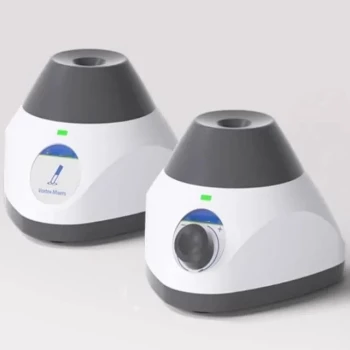
- Laboratory Vortex Mixer Orbital Shaker Multifunctional Rotation Oscillation Mixer
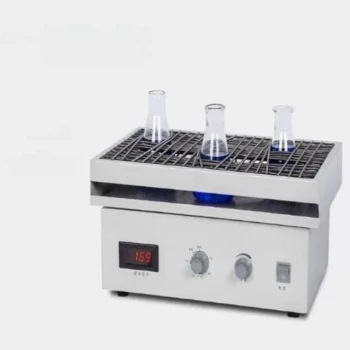
- Laboratory Multifunctional Small Speed-Adjustable Horizontal Mechanical Shaker for Lab
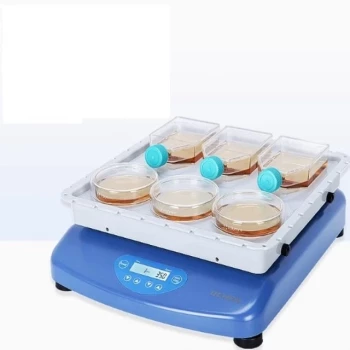
- Laboratory Oscillating Orbital Shaker
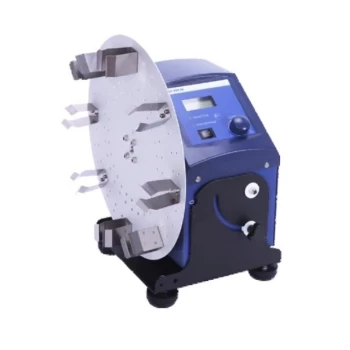
- Laboratory Disc Rotary Mixer for Efficient Sample Mixing and Homogenization
- High Performance Laboratory Stirrers for Diverse Applications
People Also Ask
- What is the role of a laboratory orbital shaker in copper recovery? Optimize Industrial Waste Liquid Processing
- What is the role of a laboratory orbital shaker in activated carbon synthesis? Maximize Pore Depth & Surface Area
- What is a laboratory mixer used for? Choose the Right Tool for Liquids or Solids
- What is a laboratory mixer? A Guide to Achieving Perfect Sample Homogeneity
- What are laboratory mixers used for? Achieve Perfect Sample Homogeneity and Reliable Results