Tungsten carbide balls are the industry standard for this application because of their exceptional density and hardness. For Ni–35Mo–15Cr alloy raw materials, these grinding media provide the high kinetic energy required for mechanical alloying while virtually eliminating the risk of contaminating the powder mixture with impurities.
Core Takeaway Successful mechanical alloying requires a balance of high-impact energy and material purity. Tungsten carbide balls offer the mass necessary to fracture and cold-weld metal powders effectively, without degrading the chemical composition of the final alloy through abrasive wear.
The Physics of Mechanical Alloying
The Critical Role of Density
The primary driver for selecting tungsten carbide is its high density. In a planetary ball mill, the kinetic energy transferred to the powder is directly proportional to the mass of the grinding media.
Because tungsten carbide is significantly denser than alternatives like stainless steel or ceramic, it generates much higher impact energy. This is essential for the extended milling periods (such as 6 hours) required to process Ni–35Mo–15Cr.
Achieving High-Energy Impact
During the milling process, the equipment often operates at high speeds, such as 300 r/min. The grinding media must deliver powerful impact and shear forces to the raw materials.
The heavy tungsten carbide balls effectively crush the micron-sized nickel, molybdenum, and chromium powders. This energy transfer is strong enough to reduce particle size (e.g., down to approximately 4.3 μm) and introduce essential lattice defects that facilitate the alloying process.
Transforming Powder Morphology
The goal of this process is not just mixing, but mechanical alloying. The balls must repeatedly fracture and cold-weld the particles.
The substantial impact energy provided by tungsten carbide ensures the metal powders are transformed from spherical or irregular shapes into a uniform, chemically integrated state. This prepares the material for high-quality hot pressing or sintering.
Ensuring Chemical Purity
Hardness and Wear Resistance
The second critical factor is hardness. Grinding media that is softer than or equal to the hardness of the raw material will wear down rapidly.
Tungsten carbide is extremely hard. This wear resistance ensures that the balls retain their shape and mass throughout the high-intensity milling process, providing consistent results from start to finish.
Minimizing Contamination
A common failure point in ball milling is the introduction of impurities from the grinding media itself. If stainless steel balls were used, iron contamination could alter the chemical properties of the Ni–35Mo–15Cr alloy.
Tungsten carbide minimizes this risk. Its resistance to abrasion drastically reduces the amount of "foreign" material introduced into the alloy mixture, ensuring the final product maintains its intended chemical purity.
Understanding the Trade-offs
The Risk of Minor Wear
While tungsten carbide minimizes contamination, it is not immune to it. Under extreme milling conditions, minor wear of the balls can occur.
While this is generally preferred over steel contamination, users must monitor the process. In some composite preparations, high melting points and corrosion resistance allow for minor wear without negative impact, but for precise alloys, minimizing this wear remains a priority.
Equipment Strain
The high density that makes tungsten carbide effective also creates a drawback: weight.
These balls are significantly heavier than ceramic or steel alternatives. This places greater mechanical stress on the milling jars and the drive mechanism of the planetary mill. Operators must ensure their equipment is rated for the total weight of the high-density media to prevent mechanical failure.
Making the Right Choice for Your Goal
To ensure the highest quality Ni–35Mo–15Cr alloy, apply the following principles:
- If your primary focus is process efficiency: Utilize tungsten carbide to maximize kinetic energy transfer, which significantly reduces the time required to achieve the target particle size (e.g., ~4.3 μm).
- If your primary focus is material purity: Rely on tungsten carbide specifically to replace softer media like stainless steel, preventing elemental contamination that could compromise the alloy's final mechanical properties.
By leveraging the high density and hardness of tungsten carbide, you ensure the raw materials are thoroughly alloyed without sacrificing chemical integrity.
Summary Table:
| Feature | Advantage for Ni–35Mo–15Cr Milling | Impact on Final Product |
|---|---|---|
| High Density | Delivers superior kinetic energy at high speeds (300 r/min) | Ensures efficient particle size reduction to ~4.3 μm |
| Extreme Hardness | Resists abrasive wear during long milling cycles | Maintains chemical purity and prevents media contamination |
| Wear Resistance | Retains media shape and mass over time | Guarantees consistent mechanical alloying results |
| High Impact Force | Facilitates repeated fracturing and cold-welding | Produces a uniform, chemically integrated alloy state |
Elevate Your Material Research with KINTEK
Precision in mechanical alloying starts with the right equipment. KINTEK specializes in high-performance laboratory solutions, providing the crushing and milling systems and high-density tungsten carbide grinding media necessary to achieve superior particle uniformity and chemical purity for your Ni-based alloys.
From high-temperature vacuum furnaces and hydraulic pellet presses to specialized battery research tools and ceramic consumables, our comprehensive portfolio is designed to meet the rigorous demands of advanced material science.
Ready to optimize your milling process? Contact KINTEK today to discover how our premium laboratory equipment and expertise can enhance your lab's efficiency and research outcomes.
Related Products
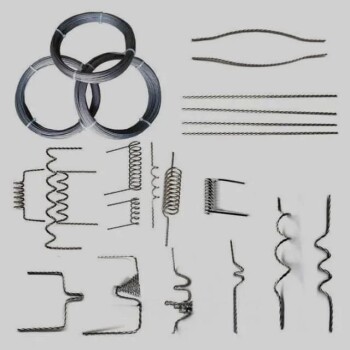
- Thermally Evaporated Tungsten Wire for High Temperature Applications
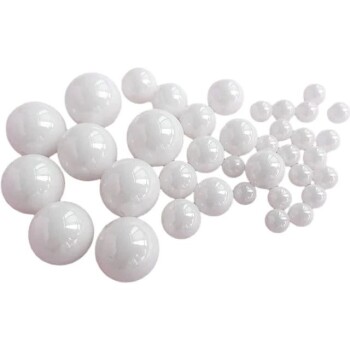
- Precision Machined Zirconia Ceramic Ball for Engineering Advanced Fine Ceramics
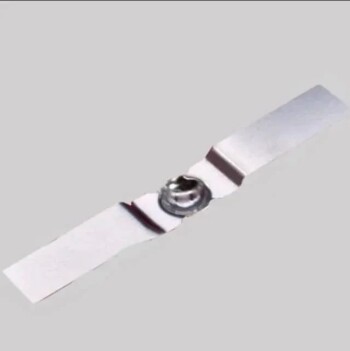
- Hemispherical Bottom Tungsten Molybdenum Evaporation Boat
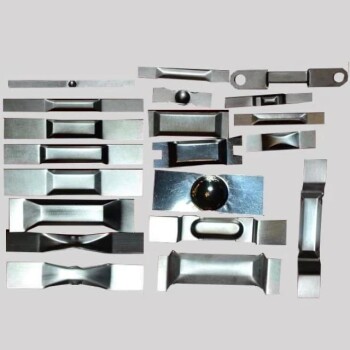
- Molybdenum Tungsten Tantalum Special Shape Evaporation Boat
People Also Ask
- What are the disadvantages of tungsten filament? Key Limitations in Lighting Technology
- Does heat affect tungsten? Harnessing the Power of the Metal with the Highest Melting Point
- Is tungsten the most heat resistant material? It depends on your application's environment.
- What metal is closest to tungsten? Find the Best Alternative for Your High-Temp Needs
- Can tungsten withstand high temperature? Unlocking its full potential in extreme heat environments