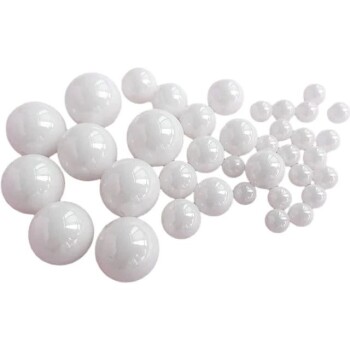
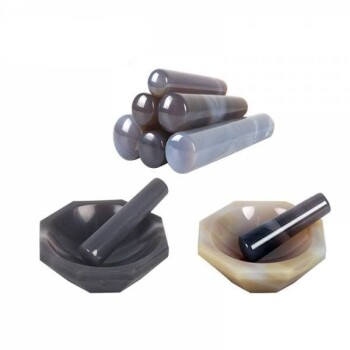
The use of Zirconia (ZrO2) grinding media is the defining standard for synthesizing sulfide-based solid electrolytes because it solves the dual challenge of mechanical efficiency and chemical isolation. By combining extreme hardness with chemical inertness, Zirconia enables the high-energy synthesis required for these materials without introducing the metallic contamination that destroys their performance.
The necessity of Zirconia lies in its ability to deliver high impact energy while remaining chemically invisible. It facilitates the rigorous mechanochemical reaction required to create solid electrolytes while strictly preserving the purity essential for ionic conductivity.
Preserving Chemical Integrity
Eliminating Metallic Impurities
Sulfide solid electrolytes are exceptionally sensitive to foreign contaminants. Using standard stainless steel media invariably introduces metallic particles due to abrasive wear during milling.
Zirconia is chemically inert. Its use prevents the introduction of conductive metal impurities which are detrimental to the electrolyte's electrochemical stability.
Preventing Side Reactions
The mechanochemical synthesis of materials like Li6PS5Cl involves aggressive energy states. Reactive grinding media can chemically interact with sulfide precursors, altering the stoichiometry of the final product.
Zirconia resists these interactions completely. This stability ensures that the chemical reaction remains strictly between the precursor materials, maintaining high purity.
Maximizing Mechanical Efficiency
Superior Wear Resistance
Ball milling is a prolonged process involving intense friction and collision. Media with lower wear resistance will degrade, losing mass and contaminating the batch with ceramic dust.
Zirconia offers exceptional hardness and wear resistance. It withstands the physical stress of high-energy milling, ensuring the media retains its integrity throughout the synthesis.
High Density for Energy Transfer
To successfully synthesize solid electrolytes, the precursor materials often require amorphization (loss of crystalline structure). This phase change demands significant kinetic energy.
Zirconia balls are dense and heavy. This density translates into high impact energy during collisions, which shortens reaction times and ensures thorough refinement and homogenization of the materials.
Operational Considerations and Pitfalls
The Necessity of Sealed Environments
While Zirconia solves the issue of media contamination, it does not inherently solve the issue of atmospheric contamination. Sulfide electrolytes are moisture-sensitive and prone to hydrolysis.
You must use high-quality sealed Zirconia jars. These are essential to maintain an inert argon gas environment inside the jar, preventing the material from degrading due to moisture exposure during the milling process.
The Role of Impact Energy
A common mistake is assuming any ceramic media will suffice. Lighter ceramics may possess the necessary inertness but lack the mass required for effective synthesis.
Density is a functional requirement. Without the specific high density of Zirconia, the milling process may fail to generate sufficient energy to drive the mechanochemical reaction to completion.
Making the Right Choice for Your Project
For researchers and engineers working with sulfide-based solid electrolytes, the choice of milling media is a critical process variable.
- If your primary focus is Ionic Conductivity: Prioritize Zirconia to eliminate metallic impurities that impede ion transport.
- If your primary focus is Process Efficiency: Rely on Zirconia’s high density and hardness to shorten milling times and achieve rapid amorphization.
Ultimately, Zirconia grinding media provides the only reliable path to synthesizing high-purity sulfide electrolytes capable of meeting the rigorous demands of solid-state battery applications.
Summary Table:
| Feature | Advantage of Zirconia (ZrO2) | Benefit for Sulfide Electrolytes |
|---|---|---|
| Chemical Inertness | Prevents metallic contamination | Preserves high ionic conductivity and stability |
| Hardness & Wear | Exceptional resistance to abrasion | Ensures zero ceramic dust or debris in the final batch |
| Material Density | High kinetic energy transfer | Drives efficient amorphization and shorter reaction times |
| Sealing Capability | Compatible with airtight jar designs | Protects moisture-sensitive sulfides from hydrolysis |
Elevate Your Solid-State Battery Research with KINTEK
Precise material synthesis starts with the right tools. KINTEK specializes in high-performance laboratory equipment, providing the crushing and milling systems, including high-density Zirconia (ZrO2) grinding jars and balls, required for high-purity sulfide-based solid electrolyte production.
Whether you are refining precursors or scaling up mechanochemical synthesis, our comprehensive portfolio—from planetary ball mills and hydraulic pellet presses to high-temperature vacuum furnaces and battery research consumables—is designed to meet the rigorous demands of modern material science.
Ready to eliminate contamination and optimize your milling efficiency? Contact KINTEK today to find the perfect solution for your lab!
Related Products
- Laboratory Jar Ball Mill with Alumina Zirconia Grinding Jar and Balls
- Precision Machined Zirconia Ceramic Ball for Engineering Advanced Fine Ceramics
- Laboratory Jar Mill with Agate Grinding Jar and Balls
- Laboratory Ball Mill Jar Mill with Metal Alloy Grinding Jar and Balls
- Nature Agate Mortar and Pestle for Grinding and Mixing
People Also Ask
- What are the primary functions of using a ball mill for BZCY72 powder? Achieve High Purity and Enhanced Sintering
- In what way does a laboratory ball mill affect material properties when modifying PHBV/pulp fiber composites?
- Why is a laboratory ball mill required for ultra-fine fly ash? Unlock Nano-Scale Adsorption Power
- What is the function of a laboratory ball mill in the preparation of AMMCs? Optimize Dispersion & Grain Refinement
- What is the function of a laboratory ball mill in the pretreatment of waste tire char (WTC)? Optimize Material Reactivity