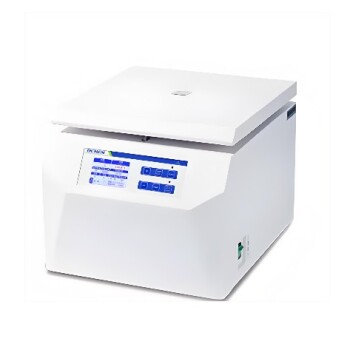
The primary function of the benchtop drying oven during the synthesis of N,S-TiO2/SSA photocatalysts is to facilitate a critical thermal treatment at 90°C for 90 minutes. This specific cycle is utilized to thoroughly eliminate residual moisture accumulated during the prior cleaning and ultrasonic dispersion steps.
While moisture removal is the immediate action, the ultimate goal is structural integrity. This thermal phase cures the sol-gel layer onto the substrate, ensuring the catalyst remains physically stable and reusable over time.
The Mechanics of the Drying Phase
Eliminating Process Residues
The synthesis process involves various cleaning and ultrasonic stages that introduce liquid components. The oven provides a controlled environment to evaporate these residues completely. Failure to remove this moisture would compromise the formation of the solid catalyst film.
Strengthening Interfacial Adhesion
The 90-minute heat treatment is not passive; it actively modifies the material interface. It strengthens the adhesion of the sol-gel layer onto the surface of the silica sulfuric acid (SSA) glass microspheres. This creates a tight, unified bond between the active catalyst and its support structure.
Ensuring Long-Term Durability
Physical Stability of the Film
The thermal treatment solidifies the coating, ensuring the physical stability of the catalyst film. This transforms the loose sol-gel application into a robust, fixed layer. Without this step, the coating would remain fragile and susceptible to mechanical stress.
Preventing Component Detachment
A major failure point in catalyst synthesis is the loss of active material during operation. The drying process locks the active components in place, preventing them from detaching. This is particularly vital for ensuring the catalyst can withstand repeated uses without degrading in performance.
Understanding the Implications of Omission
Skipping or shortening this thermal treatment creates a superficial bond. Without the full 90-minute cycle at 90°C, the sol-gel layer may not adhere correctly to the SSA microspheres. This results in a catalyst that may perform initially but will physically disintegrate or flake off during subsequent experimental cycles or washing steps.
Making the Right Choice for Your Goal
To maximize the effectiveness of your N,S-TiO2/SSA synthesis, consider the following regarding the drying step:
- If your primary focus is Mechanical Stability: Adhere strictly to the 90-minute duration to maximize the adhesive bond strength between the coating and the glass microspheres.
- If your primary focus is Catalyst Reusability: Treat this drying phase as critical for preventing the loss of active material during multi-cycle applications.
This drying step transforms a temporary mixture into a durable, reusable photocatalytic tool.
Summary Table:
| Parameter | Specification | Purpose in Synthesis |
|---|---|---|
| Temperature | 90°C | Evaporate cleaning residues & moisture |
| Duration | 90 Minutes | Facilitate sol-gel curing and film solidification |
| Substrate | SSA Microspheres | Support structure for the active catalyst |
| Key Outcome | Structural Integrity | Prevents material detachment & ensures reusability |
Elevate Your Research with Precision Thermal Solutions
Achieving the perfect N,S-TiO2/SSA photocatalyst requires more than just chemistry—it requires rigorous thermal control. KINTEK specializes in high-performance laboratory equipment designed for the most demanding synthesis protocols. Whether you need reliable benchtop drying ovens, high-temperature furnaces, or advanced high-pressure reactors, we provide the tools to ensure your materials achieve maximum stability and durability.
From battery research tools to specialized ceramics and crucibles, KINTEK is your partner in laboratory excellence. Don't compromise your results with inconsistent equipment.
Ready to optimize your synthesis process? Contact our technical experts today to find the ideal equipment for your lab's unique requirements!
References
- Farhad Mahmoodi, Mehraban Sadeghi. Removal of 1-naphthol from Water via Photocatalytic Degradation Over N,S-TiO2/ Silica Sulfuric Acid under visible Light. DOI: 10.32598/jaehr.10.1.1242
This article is also based on technical information from Kintek Solution Knowledge Base .
Related Products
- Laboratory Scientific Electric Heating Blast Drying Oven
- Benchtop High Speed Small Lab Centrifuge for Serum Separation and Low Temperature Dehydration
- 56L Vertical Laboratory Vacuum Drying Oven
- 23L Laboratory Vacuum Drying Oven
People Also Ask
- How does a laboratory electric drying oven contribute to the formation of the initial coating? Expert Insights
- What role does a precision laboratory drying oven play in the synthesis of GO-PANI nanocomposites? Protect Material Integrity
- What role does a laboratory drying oven play in the preparation of zinc oxide nanoparticle precursors?
- What is the necessity of using a laboratory drying oven when processing MoO3/GO composite nanopowders? Find out here.
- What is the role of a laboratory drying oven in cellulose citrate production? Ensure Material Stability & Purity