A corrosion-resistant stirred reactor is the critical operational backbone required to extract rare earth elements (REEs) from red mud efficiently and safely.
The recovery process relies on aggressive hydrometallurgical treatments using strong acids—such as hydrochloric, sulfuric, or nitric acid—which would rapidly destroy standard equipment. This specialized reactor serves a dual purpose: it provides the structural integrity to withstand severe chemical erosion while simultaneously delivering the continuous agitation needed to keep solid mud particles suspended for optimal reaction kinetics.
Core Takeaway To successfully recover elements like scandium and yttrium, you must balance chemical aggression with precise physical mechanics. The reactor is not just a vessel; it is an active environment that prevents equipment failure while forcing the liquid acid and solid mineral matrix to interact efficiently.
The Role of Chemical Resistance
Withstanding Aggressive Media
The extraction of REEs from red mud requires breaking down a solid mineral matrix using strong acids. Common reagents include hydrochloric, sulfuric, and nitric acids, often heated to temperatures around 90°C to accelerate the reaction. A standard reactor would suffer from immediate chemical erosion under these conditions, leading to catastrophic equipment failure.
Ensuring Product Purity
Corrosion resistance is not merely about preserving the tank; it is about preserving the product. If the reactor walls degrade, metal ions from the equipment leach into the solution, contaminating the rare earth filtrate. Using materials like glass linings or specialized alloys ensures that the extracted REEs remain pure and free from equipment-derived impurities.
Operational Safety
Working with hot, pressurized acid presents significant industrial hazards. As seen in analogous high-pressure acid processes, material integrity is paramount to prevent leaks or structural breaches. A corrosion-resistant vessel guarantees long-term safety for operators by maintaining containment under high-temperature and high-pressure stress.
The Role of Mechanical Agitation
Overcoming Diffusion Barriers
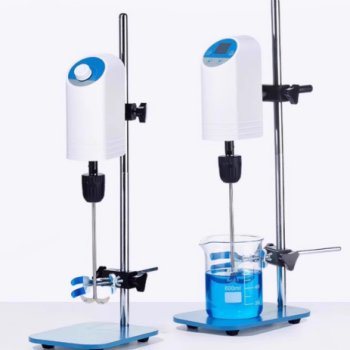
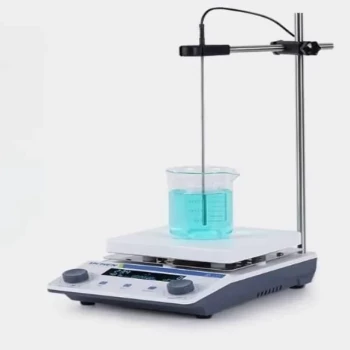
The "stirred" component of the reactor is just as vital as its material composition. Leaching is a diffusion-controlled process; if the fluid is stagnant, a "boundary layer" forms around the solid particles, slowing down the reaction. Forced convection significantly reduces the thickness of this boundary layer, strengthening mass transfer between the acid and the red mud.
Optimizing Leaching Kinetics
To extract elements like scandium and yttrium, the acid must penetrate the solid matrix effectively. Continuous agitation keeps the red mud particles fully suspended rather than settling at the bottom. This thorough mixing ensures maximum surface area exposure, optimizing the reaction kinetics and increasing the overall recovery rate.
Thermal Homogeneity
Heating is often required to reach specific leaching temperatures (e.g., 90°C). Mechanical stirring ensures that heat is distributed distinctively throughout the slurry. This prevents hot spots or cold zones, ensuring the entire batch reacts at the target temperature for consistent results.
Understanding the Trade-offs
Material Cost vs. Lifespan
Constructing reactors from high-grade, corrosion-resistant materials (such as Zirconium, high-nickel-molybdenum alloys, or glass-lined steel) significantly increases initial capital expenditure. However, using cheaper materials results in frequent replacements and downtime due to erosion. You are trading higher upfront costs for operational continuity and reduced long-term maintenance.
Agitation Complexity
Introducing high-precision mechanical stirrers into a sealed, pressurized, and corrosive environment adds engineering complexity. The seals and bearings of the stirrer must also be corrosion-resistant and capable of withstanding the torque required to move dense red mud slurry. Failure in the agitation system immediately halts the process, as the solids will settle and stop reacting.
Making the Right Choice for Your Goal
The selection of your reactor configuration depends on which aspect of the recovery process is your priority.
- If your primary focus is Maximum Yield: Prioritize a high-precision mechanical stirring system to minimize the boundary layer and maximize mass transfer kinetics.
- If your primary focus is Product Purity: Select reactor materials (like glass or high-grade alloys) that are chemically inert to your specific acid cocktail to prevent metal ion contamination.
- If your primary focus is Equipment Longevity: Invest in superior corrosion-resistant alloys that can withstand both the chemical acidity and the physical abrasion of the suspended red mud particles.
Success in rare earth recovery is defined by your ability to maintain aggressive chemical conditions without compromising the vessel that contains them.
Summary Table:
| Key Feature | Functional Benefit in Acid Leaching | Impact on REE Recovery |
|---|---|---|
| Corrosion Resistance | Withstands strong acids (HCl, H2SO4) at 90°C+ | Prevents equipment failure and metal contamination |
| Mechanical Agitation | Reduces boundary layer & keeps solids suspended | Accelerates mass transfer and improves leaching kinetics |
| Thermal Control | Ensures uniform heat distribution | Prevents hot spots and ensures consistent reaction rates |
| Structural Integrity | Maintains containment under pressure/heat | Guarantees operator safety and long-term durability |
Optimize Your Rare Earth Recovery with KINTEK Solutions
Don't let aggressive acid leaching compromise your laboratory's safety or product purity. KINTEK specializes in high-performance laboratory equipment, providing the high-temperature high-pressure reactors and autoclaves required to survive severe chemical erosion. Whether you are scaling up REE extraction or refining battery research, our corrosion-resistant stirred reactors ensure maximum yield through superior agitation and material integrity.
From high-temperature furnaces and hydraulic presses to specialized PTFE products and ceramics, KINTEK provides the robust tools your researchers need to succeed.
Ready to upgrade your leaching efficiency?
Contact KINTEK Today to Find Your Ideal Reactor Solution
References
- Ata Akçıl, Seydou Dembele. Overview on Hydrometallurgical Recovery of Rare-Earth Metals from Red Mud. DOI: 10.3390/min14060587
This article is also based on technical information from Kintek Solution Knowledge Base .
Related Products
- PTFE Electrolytic Cell Electrochemical Cell Corrosion-Resistant Sealed and Non-Sealed
- Stainless High Pressure Autoclave Reactor Laboratory Pressure Reactor
- Custom PTFE Teflon Parts Manufacturer for Hydrothermal Synthesis Reactor Polytetrafluoroethylene Carbon Paper and Carbon Cloth Nano-growth
- High Performance Laboratory Stirrers for Diverse Applications
- Customizable Laboratory High Temperature High Pressure Reactors for Diverse Scientific Applications
People Also Ask
- What is the necessity of selecting a PTFE electrolytic cell? Ensure Precise Graphene Corrosion Testing Accuracy
- What is the proper method for cleaning the surface of an all-PTFE electrolytic cell? Ensure Accurate Results with a Pristine Surface
- How should an all-PTFE electrolytic cell be stored after use? Expert Maintenance Tips for Long-Lasting Performance
- What is the proper cleaning method for an all-PTFE electrolytic cell? Essential Tips for Surface Integrity
- What are the standard opening specifications for all-PTFE electrolytic cells? A Guide to Sealed vs. Non-Sealed Ports