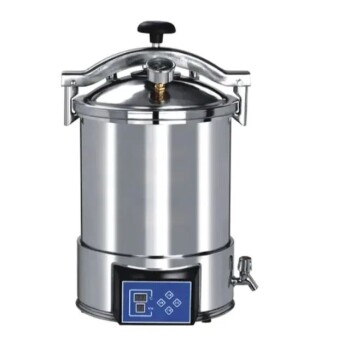
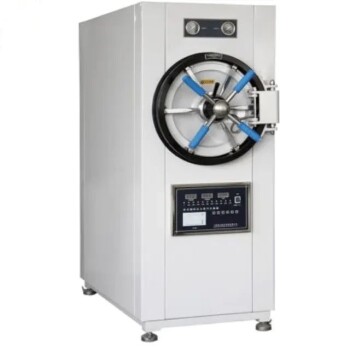
The high-pressure autoclave is the fundamental catalyst for Ag@PVA synthesis. It provides the necessary high-temperature (160 °C) and high-pressure closed environment required to drive chemical cross-linking. This sealed, high-energy state is essential for forcing the encapsulation of Polyvinyl Alcohol (PVA) molecular chains onto the silver nanowire framework, creating a stable, cable-like network.
The autoclave acts as a critical reaction vessel that enables solvents to exceed their normal boiling points, facilitating deep chemical cross-linking and structural encapsulation. Without this controlled high-pressure environment, the silver nanowires and PVA chains would fail to bond into a cohesive, high-performance hybrid sponge.
Overcoming Thermal and Physical Barriers
Exceeding Standard Boiling Points
Under normal atmospheric pressure, water and many solvents evaporate before reaching the temperatures required for complex polymer-metal bonding. The autoclave creates a closed system that allows the reaction solution to reach 160 °C without boiling away.
Increasing Molecular Collision Frequency
The high-pressure environment significantly enhances the collision frequency and diffusion capabilities of the reactants. This ensures that the PVA molecular chains have sufficient kinetic energy to navigate the silver nanowire framework and find bonding sites.
Enhancing Precursor Solubility
High-pressure conditions increase the solubility of precursors, allowing them to dissolve and re-condense more effectively. This accelerated ion diffusion is critical for the in-situ growth and tight assembly of the silver and polymer components.
Facilitating Structural Transformation
Driving Chemical Cross-Linking
The 160 °C environment within the autoclave is the threshold required to trigger thorough chemical cross-linking. This process ensures that the PVA is not merely mixed with the silver but is chemically integrated into the material's architecture.
Encouraging Molecular Encapsulation
The autoclave’s confined reaction space forces the PVA molecular chains to encapsulate the surface of the silver nanowires. This specific physical interaction is what converts individual components into a unified hybrid material.
Constructing the Cable-Like Network
By maintaining stable pressure, the autoclave allows for the formation of a cable-like network structure. This architecture is responsible for the mechanical stability and electrical conductivity of the Ag@PVA hybrid sponge.
Understanding the Trade-offs and Constraints
Safety and Equipment Maintenance
Operating at 160 °C and high pressure requires high-strength sealing structures and specialized materials. Neglecting maintenance on the autoclave's seals or pressure release valves can lead to catastrophic failure or inconsistent synthesis results.
Limited Real-Time Observation
Because the reaction occurs inside a thick-walled, sealed steel vessel, researchers cannot monitor the progress in real-time. This necessitates precise pre-calculation of reaction times and precursor concentrations to ensure the desired framework structure is achieved.
Scalability Challenges
Batch synthesis in autoclaves can be difficult to scale compared to open-air processes. The thermal lag associated with heating a large, pressurized vessel can affect the crystallinity and grain size of the resulting silver/polymer material.
Optimizing Synthesis for Your Project Goals
Applying This to Your Material Research
Success in hydrothermal synthesis depends on aligning your pressure settings with your specific structural requirements. The autoclave should be viewed as a precision tool for manipulating molecular geometry.
- If your primary focus is mechanical stability: Ensure the temperature is maintained at exactly 160 °C to promote the maximum density of PVA encapsulation around the silver framework.
- If your primary focus is silver morphology: Use the autoclave to drive crystallization without surfactants, which allows for silver nanowires with higher aspect ratios and better uniformity.
- If your primary focus is chemical purity: Leverage the closed system of the autoclave to prevent contamination from the external environment while ensuring precursors are fully reacted.
By mastering the high-pressure environment of the autoclave, you can transform simple precursors into a sophisticated, high-performance Ag@PVA hybrid sponge.
Summary Table:
| Key Mechanism | Function in Ag@PVA Synthesis | Impact on Material Properties |
|---|---|---|
| High Temp (160°C) | Facilitates deep chemical cross-linking | High mechanical & thermal stability |
| Sealed Pressure | Exceeds solvent boiling points | Prevents evaporation, ensures reactant density |
| Confined Space | Forces PVA molecular encapsulation | Creates a conductive cable-like network |
| Solubility Shift | Increases precursor diffusion & reaction | Homogeneous hybrid framework structure |
Unlock Precision in Your Material Research with KINTEK
Creating high-performance Silver/PVA hybrid sponges requires more than just a recipe—it demands a perfectly controlled thermal and pressure environment. KINTEK specializes in advanced laboratory solutions, offering a robust portfolio of high-temperature high-pressure reactors and autoclaves engineered for the rigors of hydrothermal synthesis.
Beyond reactors, we provide the complete ecosystem for your research, including crushing systems, hydraulic presses, and specialized ceramics and crucibles. Whether you are focus on maximizing mechanical stability or optimizing silver morphology, KINTEK delivers the reliability and safety your lab needs to achieve consistent, high-yield results.
Ready to elevate your synthesis capabilities? Contact our experts today to find the ideal high-pressure solution for your specific project goals.
References
- Shengdu Yang, Junhua Zhang. Synergistic Dual‐Mechanism Localized Heat Channeling and Spectrum‐Tailored Liquid Metal Hydrogels for Efficient Solar Water Evaporation and Desalination. DOI: 10.1002/smll.202302526
This article is also based on technical information from Kintek Solution Knowledge Base .
Related Products
- Mini SS High Pressure Autoclave Reactor for Laboratory Use
- Stainless High Pressure Autoclave Reactor Laboratory Pressure Reactor
- High Pressure Laboratory Autoclave Reactor for Hydrothermal Synthesis
- Desktop Fast High Pressure Laboratory Autoclave Sterilizer 16L 24L for Lab Use
- Customizable High Pressure Reactors for Advanced Scientific and Industrial Applications
People Also Ask
- Why use high-pressure reactors for molecular sieve synthesis? Unlock Superior Crystallinity and Framework Control
- What are the advantages of using a high-pressure reactor like an autoclave? Maximize Liquefaction Speed & Yield
- What is the function of a high-pressure reactor autoclave? Enhancing Cu/N Co-Doped Carbon Catalyst Synthesis
- Why are high-pressure reactors or autoclaves necessary for the synthesis of new functional materials? Unlock Precision.
- How are high-pressure reactors used to prepare metaphosphate electrocatalysts? Master In-Situ Precursor Growth